Can-Am Outlander 570 Problems: Recalls, Causes and Fixes
Last updated on October 18th, 2026 at 12:35 am
This post contains Amazon affiliate links. As an Amazon Associate I earn from qualifying purchases, at no extra cost to you.
The Can-Am Outlander 570 problems owners hit most are a no-start from a weak battery or flooded engine, heat on the left leg, a CVT that revs without moving after water, and oil weeping from the differential. BRP’s own operator’s guide has a free check for each one. Six recalls from 2017 to 2022 also touch 570 models, so run your VIN before you pick up a wrench.
Every spec and check below comes from BRP’s operator’s guides for the 2017, 2020 and 2022 Outlander 450/570, or from CPSC and BRP recall notices. Where the guide gives owners no procedure, the table says dealer. Owner reports are labeled as reports, not facts.
Running a bigger Can-Am? See our Can-Am Defender problems guide, or the general ATV and UTV troubleshooting guide for belts, heat and no-start basics.
Can-Am Outlander 570 problems at a glance
| What you see | Free check first | What BRP lists as the cause | Who fixes it |
|---|---|---|---|
| Starter silent, or engine will not turn over | D.E.S.S. key seated, stop switch ON, PARK or NEUTRAL, fuses F1 and F8 | Wrong or dirty key, burnt fuse, weak battery or loose connections, weak starter | You first, then dealer |
| Turns over, will not fire | Spark plug wet or dry, fuel level, fuse F5 and pump relay | Flooded engine, no fuel, failed fuel pump, no spark | You first, dealer for the pump |
| CHECK ENGINE or LIMP HOME on the display | Read the message and check the oil level | Engine fault or protection mode | Dealer |
| HI TEMP or the engine runs very hot | Coolant level when cold, radiator fins, fan fuse F12 | Low coolant, dirty radiator fins, fan not running | You first, then dealer |
| Hot left leg, but no HI TEMP message | Clean the radiator and engine bay, confirm all panels are fitted | Not listed as a fault; the guide only warns that exhaust parts get hot | You, or ask a dealer about approved shielding |
| Engine revs but the ATV does not move | Lever in R, HI or LO, then the CVT drain reservoir for water | CVT dirty or worn, or water in the CVT housing | Dealer |
| Lacks power or will not reach full speed | Parking brake off, air filter and housing drain | Dirty air filter, fouled plug, worn CVT, limp mode | You first, then dealer |
| Shift lever hard to move | Rock the ATV back and forth | Gears blocking the lever, or a dirty or worn CVT | You first, then dealer |
| Reduced steering assist, or CHECK DPS | Ease off sustained heavy steering | DPS protection mode, or a DPS fault | Dealer |
| NO ECM COMMUNICATION | Nothing owner-fixable in the guide | Communication error between speedometer and ECM | Dealer |
| Oil at a differential, final drive or axle | Look for the source; the schedule checks level and contamination | Not in the troubleshooting list; seals are inspected on the schedule | Dealer for seals |
The first nine rows are BRP’s own troubleshooting pages. The last two come from the display-message list and the maintenance schedule, because the guide has no repair steps for them.
Most of the “free check first” column is a key, a fuse or a look under a panel. Anything that needs the CVT opened or a scan tool is dealer work.
What is your Outlander 570 doing?
The checker follows the order in BRP’s troubleshooting pages, free checks first and dealer work last. It is based on the 2022 guide, pp. 104–107, 138–139, 169–178, and on the CPSC and BRP recall notices below. It does not replace your own model-year manual.
Pick the model year even if the symptom has nothing to do with recalls. Steering, fuel and wheel recalls are the ones worth ruling out first.
Which recalls cover the Outlander 570?
| Model year | Date | Notice | 570 models named | Hazard | Fix |
|---|---|---|---|---|---|
| 2017 | Apr 10, 2018 | CPSC (18-735) | DPS 570, XT 570, Hunter Edition 570, XMR 570, MAX DPS 570, MAX XT 570 (about 6,500 US units) | Dynamic power steering shaft can break and cause loss of steering control | Free dealer repair |
| 2018 | Jun 29, 2018 | CPSC (18-750) | Outlander 570, DPS 570, DPS LE 570, MAX 570, MAX DPS 570 (about 13,300 units with other 2018 models) | Fuel can spray from the tank when the gas cap is opened | Free dealer repair |
| 2021 | Dec 22, 2020 | CPSC (21-715) | Outlander 570, DPS 570, XT 570 (about 135 US units) | A rear wheel can separate from the vehicle | Free dealer repair |
| 2021 | Jun 10, 2021 | CPSC (21-753) | Outlander 570, DPS 570, MAX 570, MAX DPS 570, MAX XT 570 (about 4,600 units with other 2021 models) | Steering knuckle can detach from the lower arm | Free dealer repair |
| 2022 | Feb 10, 2022 | CPSC (22-721) | Outlander 570 and MAX 570 (about 1,300 units) | Speedometer can show half the true speed | Free ECM update at a dealer |
| 2022 | Jun 7, 2022 | BRP notice (no CPSC number) | Certain serial numbers of Outlander and MAX with 570, 650, 850 or 1000R engines | Steering column half bushings may be missing, which can lead to DPS shaft failure | Free inspection and install, about one hour |
We found no CPSC recall for a 2019, 2020 or 2023 Outlander 570. Recall lists change, so confirm with BRP’s safety recall page or a dealer using your VIN.
Two details differ from many older write-ups. The 2021 wheel notice does not say why the wheel can separate, so the axle-nut explanation you may have read is not in the CPSC text. And the May 2026 speed-limiter recall covers Outlander PRO models, not the 570.
Why won’t my Outlander 570 start?
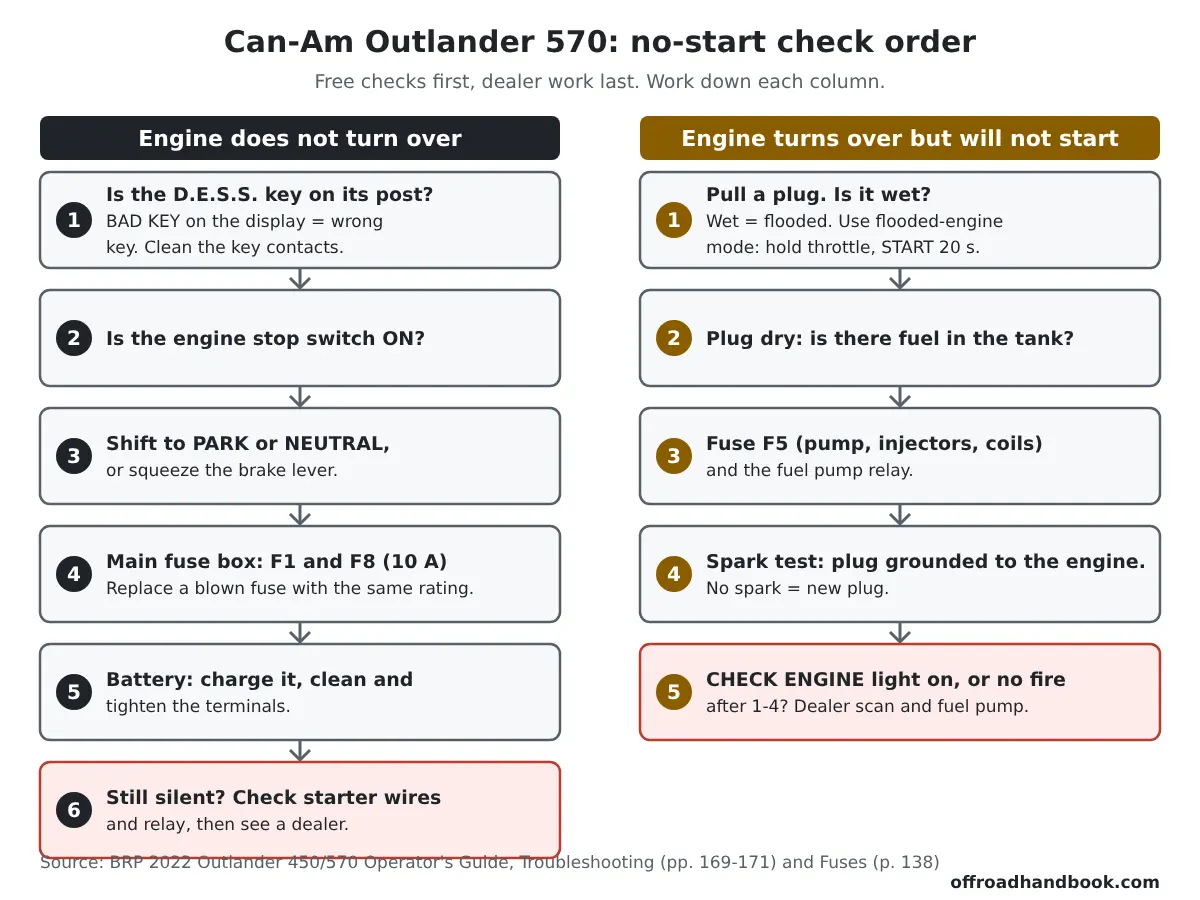
BRP’s troubleshooting list splits a no-start into two cases: the engine does not turn, or it turns and will not fire. The flowchart above puts BRP’s steps in order, cheapest first.
Start with what you can see on the display. BAD KEY, LO BATT, CHECK ENGINE and LOW OIL each point somewhere different, and the message table further down says where.
The engine does not turn over
- Seat the D.E.S.S. key on its post. If the display shows BAD KEY or DESS KEY NOT RECOGNIZED, the key is wrong or dirty; pull it out and clean the contacts.
- Make sure the engine stop switch is ON.
- Shift to PARK or NEUTRAL, or squeeze the brake lever.
- Open the main fuse box under the gauge support. F1 (cluster and start switch) and F8 (key switch and ECM) are 10 A. Replace a blown fuse with the same rating.
- Charge the battery, then clean and tighten the terminals. Check the starter connections and relay last.
If the engine still does not turn, the guide says to have the battery and starter checked by a dealer.
Cold-weather starting and the battery
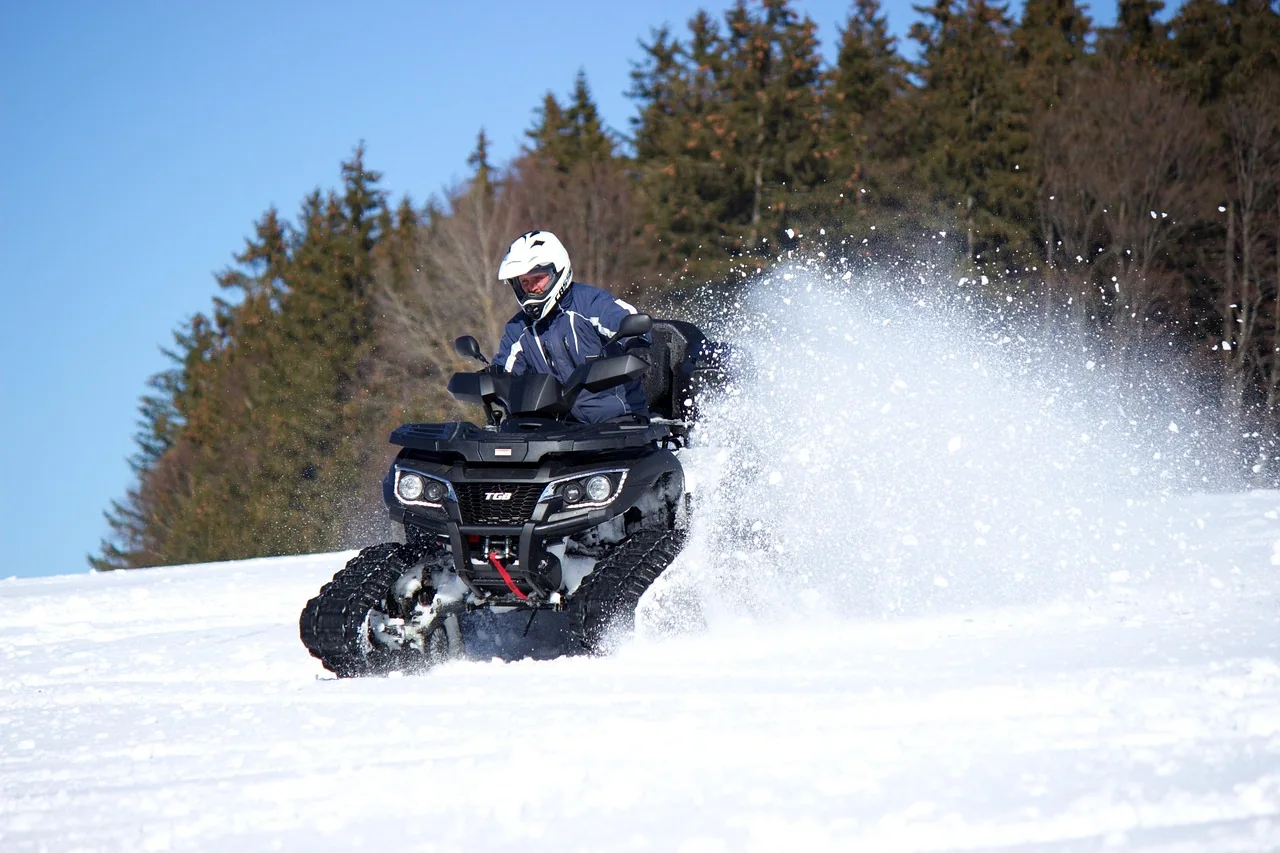
The 570 uses a sealed 12 V, 18 Ah maintenance-free battery. A battery that cranks slowly in the cold is the first suspect, and BRP’s schedule has you verify the connections every 1,000 miles or 50 hours.
Never charge the battery while it is installed. Disconnect the black cable first when removing it, and connect the red one first when installing it. Never remove the sealing cap.
Long winching also drains it. BRP says to let the engine run while winching and to raise engine speed to about 3,000 rpm when winching for more than 30 seconds. Our winch size calculator shows the pull rating you need.
For a machine that sits, a battery maintainer keeps the battery topped up between rides.
The engine turns over but will not start
Pull a spark plug. A wet plug means the engine is flooded. A dry plug means it is not getting fuel.
- If the plug is wet, use BRP’s flooded-engine mode: shift to PARK, turn the key on (or install the D.E.S.S. key), press and hold the throttle fully, press START for 20 seconds, release the throttle, then press START again.
- If it still floods, unplug the injector connector, clean around the plug caps and remove the plugs. Crank several times, fit new or dried plugs, and start as above. Check the oil for fuel; if there is any, change it.
- If the plug is dry, check the fuel level, fuse F5 (fuel pump, injectors, coils, oxygen sensor, 10 A) and the fuel pump relay.
- For a spark test, reconnect the plug to the coil, ground it on the engine away from the hole and crank. No spark means a new plug. The 570 takes two NGK DCPR8E plugs; a replacement pair is a cheap fix.
If CHECK ENGINE is on, or it still will not fire, BRP lists a failed fuel pump as a possibility. That is a dealer job.
Why does my Outlander 570 get hot on the left leg?
Owners regularly report heat building up on the left side near the footwell, including on machines that never show an overheating warning. BRP’s guide does not list it as a defect or give a fix. It only warns that exhaust components become hot and should not be touched during or shortly after operation.
The useful question is whether the engine is actually overheating. The display answers that: HI TEMP with the CHECK ENGINE lamp means overheating, and its absence means the heat is radiating from the exhaust side.
| Leg heat only | Engine overheating | |
|---|---|---|
| Display | No HI TEMP message | HI TEMP and CHECK ENGINE lamp |
| What it is | Radiated and trapped heat from exhaust parts near the rider | Coolant system not shedding heat |
| Free check first | Radiator and engine bay clear of mud, all panels fitted | Coolant level when cold, radiator fins, fan fuse F12 |
| If it persists | Ask a dealer about approved shielding | Stop riding; dealer if the fan and coolant are fine |
Aftermarket shields are owner modifications. BRP warns that unapproved accessories can cause overheating or short circuits, so keep any shield clear of wiring, hoses and fuel parts, and ask your dealer what it approves.
What to do when the Outlander 570 overheats
When HI TEMP appears, stop and let the engine cool before opening anything. BRP’s three checks are coolant, radiator fins and the fan.
- Check the coolant level with the engine cold. The 570 holds 3.4 L (0.9 US gal) of XPS Extended Life pre-mixed coolant or one made for aluminum engines.
- Clean the radiator fins. They must be free of mud, dirt and leaves. Remove deposits by hand; the inner fenders come off to make room. Look over the radiator and hoses for leaks or damage.
- If the fan is not running, check the cooling fan fuse (F12, 25 A, resettable) and relay RY1. If both are good, see a dealer.
The schedule has you test coolant strength and verify the cooling system every 4,000 miles or 200 hours, and replace the coolant every 8,000 miles or five years. Severe use halves those intervals.
Why does my Outlander 570 rev but not move?
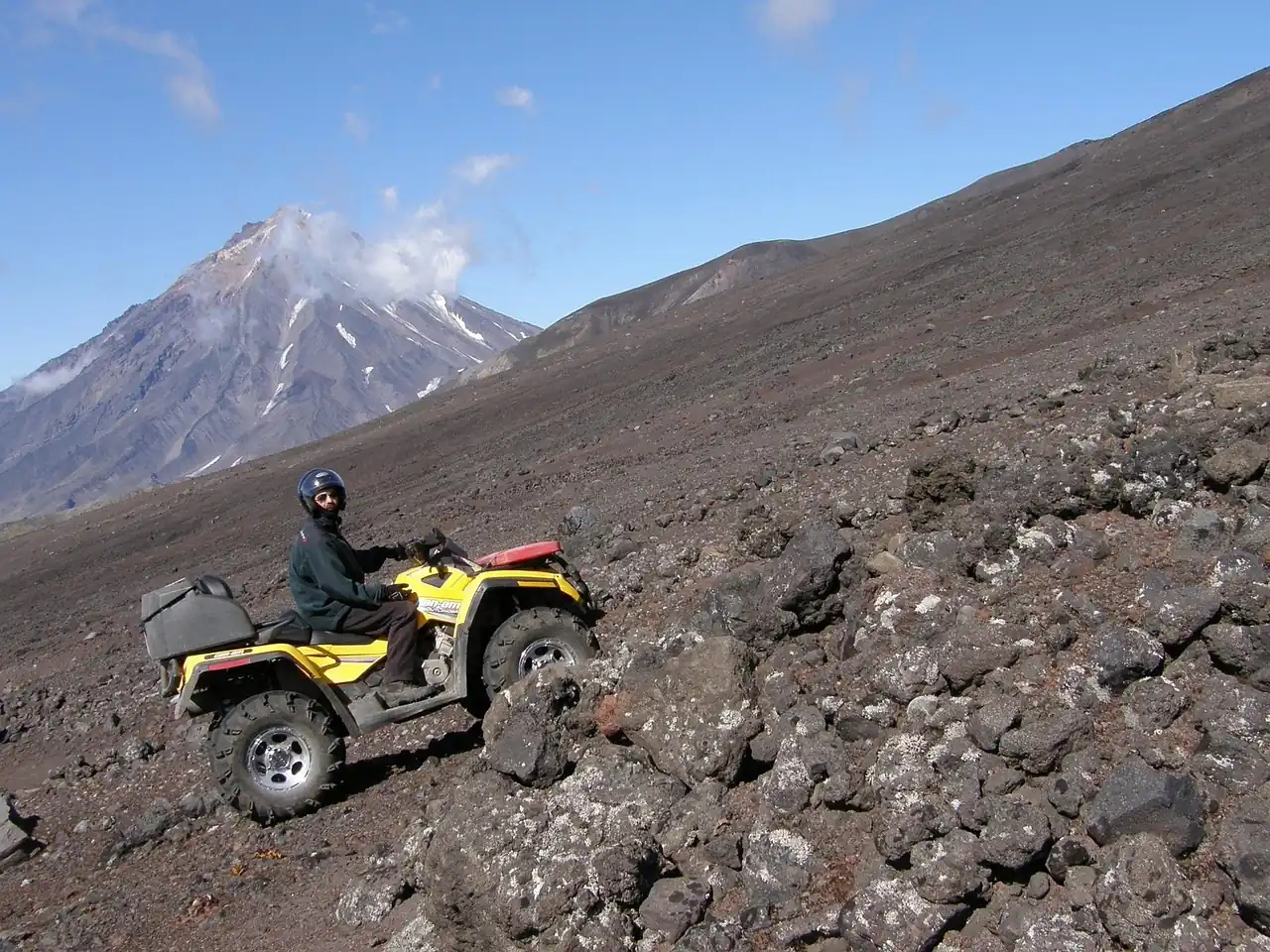
BRP lists three causes: the lever is in PARK or NEUTRAL, the CVT is dirty or worn, or there is water in the CVT housing. Select R, HI or LO first, then look for water.
Belt wear and slipping
A new belt needs a 30-mile (50 km) break-in with no hard acceleration, no heavy pulling and no high-speed cruising. Inspect the belt for cracks, fraying and abnormal wear. The service limit for belt width at the cord is 30 mm (1.181 in).
Install a belt with the printed arrow pointing toward the front of the vehicle. On the 570 the CVT cover screws take 7 ± 0.8 N·m (62 ± 7 lbf-in). After any belt failure, clean and inspect the CVT cover, drain reservoir and air outlet for blockage.
Pulley inspection is dealer work. The schedule has you verify the belt and clean the pulleys every 2,000 miles or 100 hours, or every 1,000 miles or 50 hours in severe dusty or muddy use.
Water in the CVT
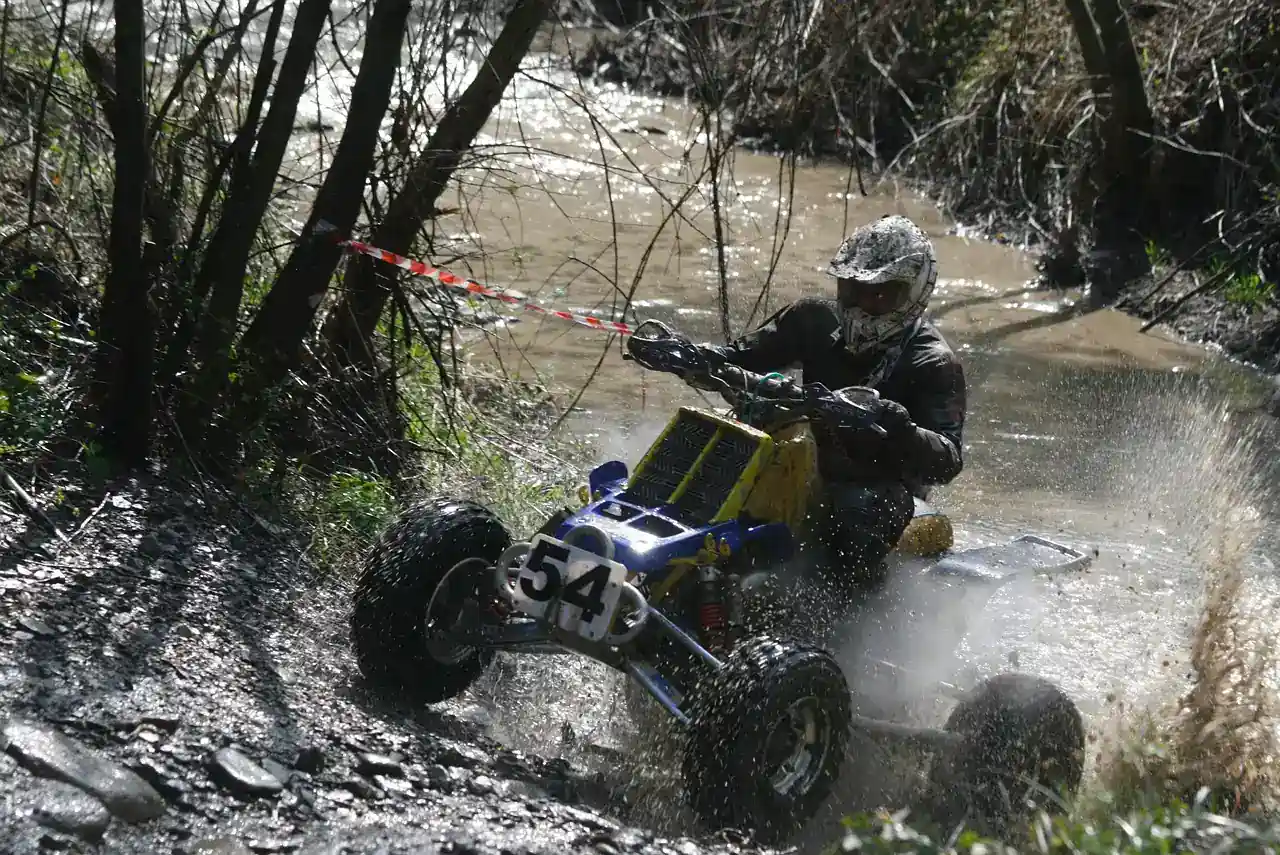
Water in the CVT causes belt slippage: the engine accelerates and the machine stays still. On the 570, inspect the CVT drain reservoir. If there is water, remove the reservoir to drain it and reinstall it with its spring clamp.
BRP then wants the vehicle serviced for the vents, CVT air filter, CVT cleaning and fuel tank breather, plus a lubricant check of the engine, gearbox and rear final drive. Skipping that can damage the engine, gearbox, fuel pump, CVT and differentials.
Check the air filter housing too. Remove the left-hand side panel and inspect the drain reservoir underneath. More than 50 ml (about 5 reservoirs) of water, or any deposits, means a dealer visit. After a full immersion, do not try to start the engine. Our water crossing checker covers when to turn back.
Why is my Outlander 570 leaking oil at the differential?
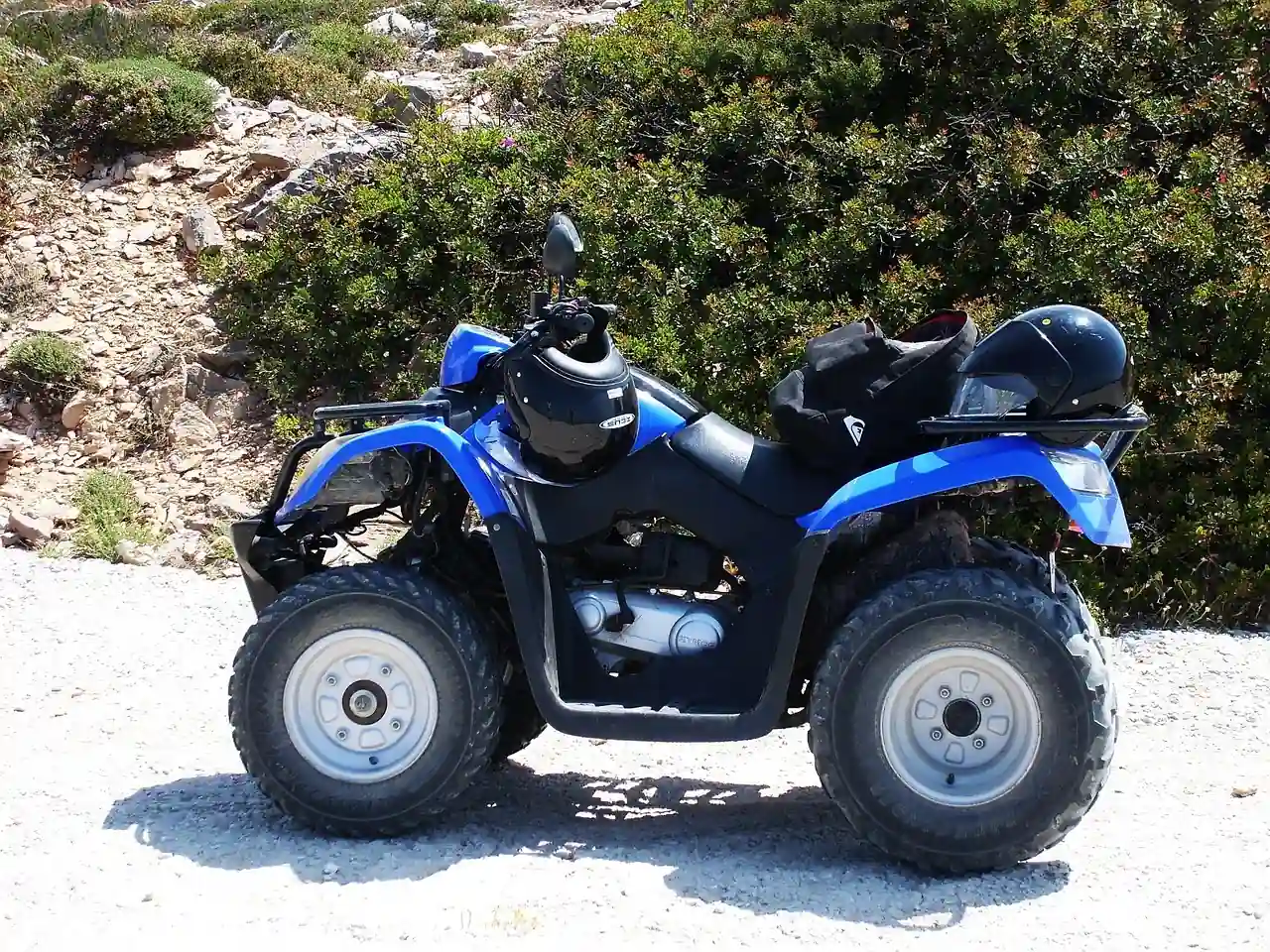
Oil near the front differential, rear final drive or an axle is a frequent owner search, including oil pushed out of a vent. The troubleshooting pages do not cover it, but the schedule does: verify front differential and rear final drive oil level and look for contamination every 2,000 miles or 100 hours.
The front differential holds 500 ml (17 fl oz) of 75W90 synthetic gear oil, and the rear final drive holds 250 ml (8.5 fl oz) of 75W140. Overfilling is the first thing to rule out when a vent weeps, because it is the one cause you can check against those numbers.
BRP calls for XPS gear oil or a synthetic API GL-5 equivalent. A 75W90 GL-5 gear oil that meets that spec is easy to find.
Seals are a dealer job: the schedule lists input and output shaft seal inspection for the gearbox, differential and final drive. Also check the drive shaft bellows for cracks, tears and grease leaking out, and replace damaged ones.
Outlander 570 power steering problems
BRP says DPS assist can drop under sustained severe steering and returns once the load eases. That is protection, not a fault.
If CHECK DPS shows with the CHECK ENGINE lamp on, the system is not working properly and needs a dealer. Also check the recall table: the 2017 shaft recall and the 2022 half-bushing notice both involve DPS, and the schedule has the steering column half bushings cleaned and lubricated every 4,000 miles or 200 hours.
Outlander 570 gauge messages and what to do
| Message | What BRP says it means | What to do |
|---|---|---|
| BAD KEY | Wrong key, or a bad contact | Use the right key; remove and clean it |
| DESS KEY NOT RECOGNIZED | Possible bad contact | Remove and clean the key |
| PARK BRAKE | Parking brake applied for more than 15 seconds while riding | Release it fully |
| LO BATT | Low battery voltage | Check battery voltage and charging system |
| HI BATT | High battery voltage | Check battery voltage and charging system |
| LOW OIL | Low engine oil pressure | Stop the engine now; if it stays on after starting, check the oil level; do not ride until repaired |
| HI TEMP | Engine overheating | Follow the overheating steps above |
| LIMP HOME | Serious engine fault; CHECK ENGINE lamp blinks | Dealer |
| CHECK ENGINE | Engine fault; lamp is on | Dealer |
| NO ECM COMMUNICATION | Communication error between speedometer and ECM | Dealer |
| CHECK DPS | Power steering not working properly | Dealer |
| TPS FAULT, PRESS OVERRIDE BUTTON TO LIMP HOME | Throttle position sensor not working properly | Dealer |
| MAINTENANCE REQUIRED | Vehicle is due for service | Service it, then reset the message in settings |
The display lists the fault, but the guide gives no codes or sensor-level fixes. A dealer’s scan tool reads those, and BRP’s schedule lists “check fault codes” at every service.
If a message comes and goes, write down the date, the weather and whether you had just crossed water. A dealer can use that, and the water question matters for the CVT and electrical checks above.
Outlander 570 specs and service numbers by model year
| Item | 2017 guide | 2020 guide | 2022 guide |
|---|---|---|---|
| Engine oil, with filter | 2.0 L (2.1 US qt) | 2.0 L (2.1 US qt) | 2.0 L (2.1 US qt) |
| Oil grade | XPS 4-stroke synthetic blend (summer) or synthetic all-climate (winter); 5W40 if neither is available | 4T 10W50 synthetic or 5W40 synthetic blend | XPS 4T 10W50, 5W40 blend or 0W40; alternate 5W40 or 10W50 meeting API SJ–SN |
| Spark plugs | Two NGK DCPR8E | Two NGK DCPR8E | Two NGK DCPR8E |
| Plug gap | 0.7–0.8 mm (.028–.031 in) | 0.7–0.8 mm (.028–.031 in) | 0.8–0.9 mm (.031–.035 in) |
| Coolant capacity | 3.4 L (0.9 US gal) | 3.4 L (0.9 US gal) | 3.4 L (0.9 US gal) |
| Gearbox oil | 450 ml (15.2 fl oz), 75W140 | 450 ml (15.2 fl oz), 75W140 | 450 ml (15.2 fl oz), 75W140 |
| Front differential / rear final drive oil | 500 ml / 250 ml | 500 ml / 250 ml | 500 ml / 250 ml |
| Battery | — | 12 V, 18 Ah | 12 V, 18 Ah |
| Wheel lug nut torque | — | 80 ± 5 N·m (59 ± 4 lbf-ft) | 80 ± 5 N·m (59 ± 4 lbf-ft) |
The plug gap changed in the 2022 guide. Use the number from your own edition.
The same guide lists a 1,800 rpm (± 100) CVT engagement speed and valve clearances of 0.06–0.14 mm intake and 0.11–0.19 mm exhaust. Valve adjustment sits on the 2,000-mile schedule and is dealer work for most owners.
Outlander 570 maintenance schedule that prevents most of this
| Interval (trail use / severe or heavy load) | What BRP lists |
|---|---|
| 1,000 mi or 50 h / 500 mi or 25 h | Verify and clean the engine air filter; verify battery connections; inspect tie rod ends, ball joints, drive shaft bellows, brake pads and wheel bearings; lubricate front suspension and stabilizer bar bushings; inspect and clean the CVT air filter if equipped |
| 2,000 mi or 100 h / 1,000 mi or 50 h | Check fault codes; adjust valve clearance; clean the spark arrester; clean the throttle body; replace the fuel vent breather filter; verify the CVT belt and clean the pulleys; verify differential, final drive and gearbox oil level and look for contamination. Engine oil and filter at least once a year |
| 4,000 mi or 200 h / 2,000 mi or 100 h | Replace spark plugs, front differential oil, rear final drive oil and gearbox oil; test coolant strength; verify fuel pump pressure; inspect shaft seals; clean the vehicle speed sensor; clean and lubricate the steering column half bushings. Brake fluid every 2 years |
| 8,000 mi or 5 years / 4,000 mi or 5 years | Replace the engine coolant |
Air filter service needs to be more frequent in dry sand, dry dirt, dry gravel and snow, and when riding in a group in those conditions.
That is the whole list. Most Outlander 570 problems on this page trace back to something on it, a loose battery lead, a dirty radiator, a wet CVT or an overdue gear oil change.
FAQs
BRP’s guide lists a free first check for every common fault and a clear maintenance schedule. Six recalls from 2017 to 2022 touch 570 models, so check your VIN.
Owners report radiated heat from the exhaust side. BRP gives no fix and warns that exhaust parts get hot. If HI TEMP is not showing, the engine is not overheating.
Yes. CPSC lists 18-735 for 2017, 18-750 for 2018, 21-715 and 21-753 for 2021 and 22-721 for 2022, and BRP issued a June 2022 steering bushing notice. Only certain VINs are covered.
2.0 L (2.1 US quarts) with a filter change, per the 2017, 2020 and 2022 operator’s guides.
Two NGK DCPR8E plugs. The 2017 and 2020 guides give a 0.7–0.8 mm gap and the 2022 guide gives 0.8–0.9 mm.
Enter your VIN on BRP’s safety recall page or call a Can-Am dealer. Repairs for open recalls are free.
Related guides
- 8 Common Can-Am Maverick Sport Problems and How to Fix Them Yourself
- Can-Am Defender Problems: 8 Common Issues and How to Fix Them
- ATV and UTV Troubleshooting: Bogging, No-Start, Heat and Belts

I'm Suryashankar Dasgupta, the founder of Off-Road Handbook. I've been off-roading for years in the USA, including California and Texas, and have ridden mountain and desert terrain abroad. I've also driven a Jeep Compass for more than seven years, so I know the day-to-day side of Jeep ownership first-hand, from the Uconnect screen to the warning lights. Every guide here is researched from manufacturer owner's manuals, NHTSA recall and service-bulletin records and other trusted sources, checked against them before it is published, and corrected when we find a mistake. You can read how we work in our editorial policy: https://offroadhandbook.com/editorial-policy/
Like our off-road guides? Add Off-Road Handbook as a Google Preferred Source so our latest Jeep, ATV, UTV, trail, recovery, and off-road troubleshooting articles can appear more often in your Google Search experience.
Add us as a Preferred Source