Oreion Reeper Problems: 8 Common Issues, Fixes and Parts Tips
Last updated on October 17th, 2026 at 09:33 pm
This post contains Amazon affiliate links. As an Amazon Associate I earn from qualifying purchases, at no extra cost to you.
The most common Oreion Reeper problems are a weak battery or loose cables that stop it cranking, overheating from a mud-packed radiator or a dead fan, a slipping clutch, and parts that are hard to source. Start with the free checks: battery posts, cables, fuses and radiator fins. Only 2011–2013 Reeper low-speed vehicles fall under a federal recall (NHTSA 13V398), so check your VIN before you spend money.
This guide follows Oreion’s own Oreion Sandreeper & Reeper Operator’s Guide, its official spec sheets and federal records. The guide covers the 812cc Reeper, and the 1100cc Sport and Reeper4 may differ. Where Oreion gives no number, the text says so and points you to a dealer instead of guessing.
Oreion Reeper problems at a glance
| What you see | Check first (free) | Next step | Who fixes it |
|---|---|---|---|
| Starter will not turn, or only clicks | Neutral, engine stop switch on RUN, battery posts and cables | Charge the battery out of the vehicle, then check the circuit | Dealer if battery and cables are good |
| Cranks but will not fire, or idles badly | Air box drain tube for water, fuses, spark plug | Plug carbon and gap, intake connections | Dealer for coil, fuel pump, sensors |
| Overheating | Radiator fins, coolant level when cold, oil level | Fan and 20A fan fuse | Dealer for thermostat, water pump, pressure test |
| Red oil or charging light stays on | Stop the engine, check the dipstick, check battery cables | Leave it parked if the level is good | Dealer |
| Clutch slips or chatters | Shifting technique, cable lubrication | Oil on the friction disc or a worn disc | Dealer |
| 4WD alarm, or no 4WD | Operate the switch the opposite way, check the diff lock lever | Switch motor and drive shaft spline | Dealer |
| Wobble or vague handling | Cold tire pressure, wheel nut torque, bearing play | Shock preload, A-arms, tie rods | Dealer for bearings and alignment |
| Cannot find a part | VIN, build and model year | Selling dealer, then Oreion | Dealer or Oreion |
The table is ordered the way a mechanic works: look, tighten and clean first, then replace cheap parts, then hand the rest to a dealer. Oreion publishes no labor times or repair prices, so no dollar figures appear here.
Each problem below expands one row. Anything the guide calls a dealer job stays a dealer job, since the guide gives no owner procedure and no torque or clearance values for those repairs.
Check in this order
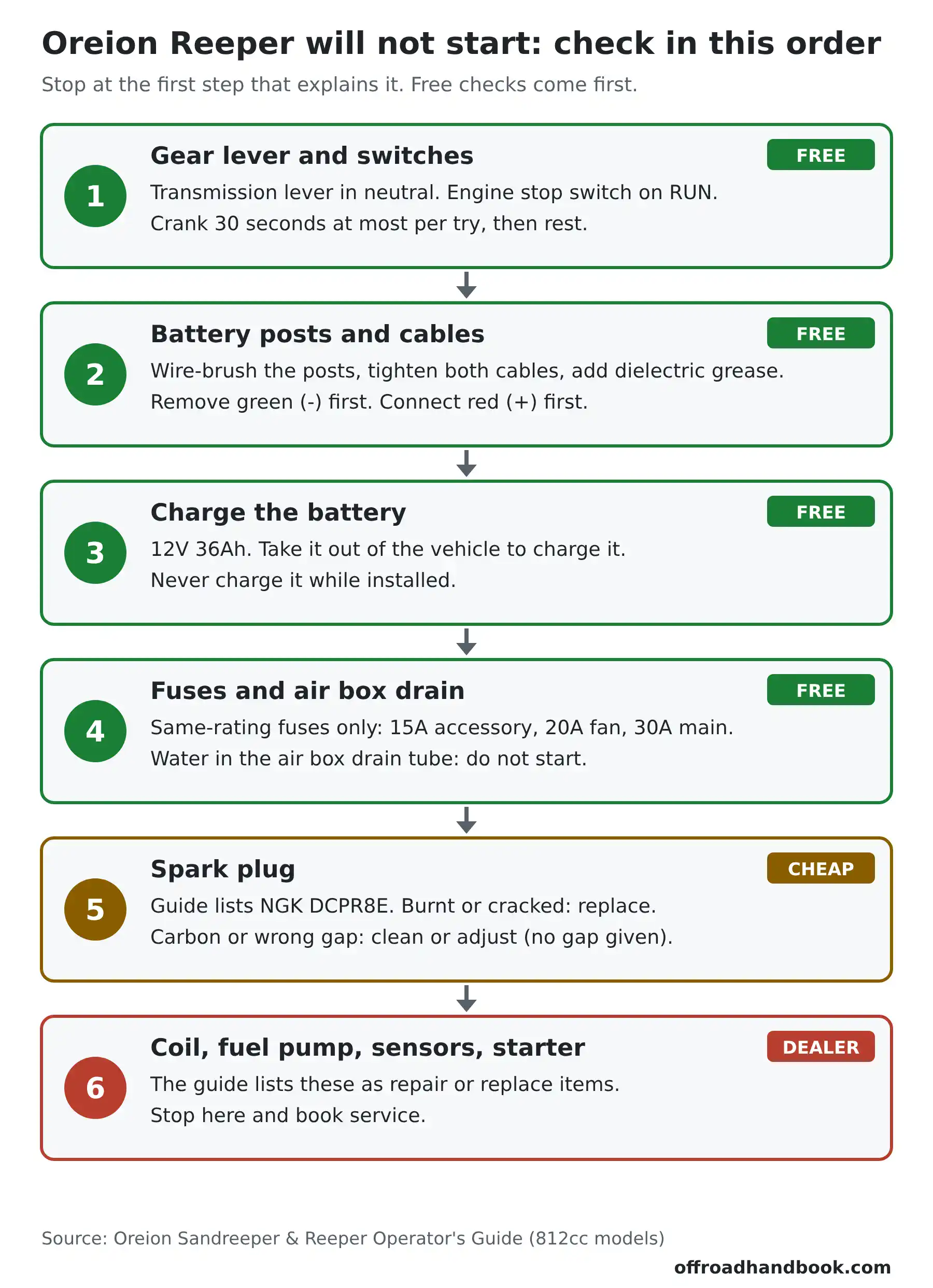
Work from the top and stop at the first step that explains the problem. Steps 1 to 4 cost nothing, and step 5 costs one spark plug.
The guide says the engine will only start in neutral and recommends cranking no longer than 30 seconds at a time. A rest between tries lets the starter cool and keeps the battery from draining.
What is your Reeper doing?
The checker only repeats steps from the Oreion guide, the table above and the federal recall record. It cannot read codes or inspect the vehicle, so treat it as an ordered checklist.
The eight problems, one at a time
Safety first: let the engine and radiator cool before opening any cap, never charge the battery while it is in the vehicle, and use low water pressure only. The guide warns that a pressure washer can cause electrical or mechanical damage.
1. Dead battery or no crank
The guide’s troubleshooting table puts a weak battery or loose connections first when the starter does nothing. Fix: charge it or tighten the connections. If the circuit is open or the starting motor is defective, the guide says repair or replace, which is dealer work.
The battery is a 12V 36Ah unit. Clean the posts with a wire brush and put dielectric grease on them; a tube of dielectric grease is cheap.
- Disconnect the green (-) cable first, then the red (+) cable.
- Unscrew the battery hold-down board and lift the battery out.
- Charge it outside the vehicle.
- Reinstall it and connect red (+) first, then green (-).
2. Cranks but will not start, or idles badly
Look at the air box drain tube first. The guide says not to start the engine if water is in it, and to inspect, dry or replace the filter instead. Never remove or modify parts inside the air box, because the engine is calibrated to run with them.
Check fuses next and replace only with the same rating: 15A for accessories, 20A for the fan, 30A main. The spark plug is an NGK DCPR8E; a burnt or cracked plug gets replaced, and carbon or a wrong gap gets cleaned or adjusted. The guide gives no gap number, so ask a dealer.
The guide lists the ignition coil, coil wire, fuel pump, plugged fuel filter, throttle and intake pressure sensors and the idle stepper motor as repair or replace items. Idle is specified at 900 ± 50 rpm. A blocked vent hole in the fuel cap can also make the engine misfire, so keep the cap clear.
3. Overheating
The Reeper is liquid cooled with a front-mounted radiator and thermostatic fan. The guide lists a bad water pump, bad fan, low coolant or a plugged hose, a stuck thermostat, too much or too little oil, and a slipping clutch as overheating causes.
Free checks: rinse the radiator fins with a garden hose at low pressure once cool, and keep tools away from the thin fins. Check coolant with the engine cold; the level should sit between MIN and MAX on the reservoir, and the radiator should be checked too. Coolant is a 50/50 mix of ethylene glycol and water made for aluminum engines.
A cooling system that keeps needing coolant has a leak or an engine problem, per the guide. The thermostat, water pump and pressure test are dealer jobs. For heat checks on other machines, see our ATV and UTV troubleshooting guide.
4. Oil pressure or charging light stays on
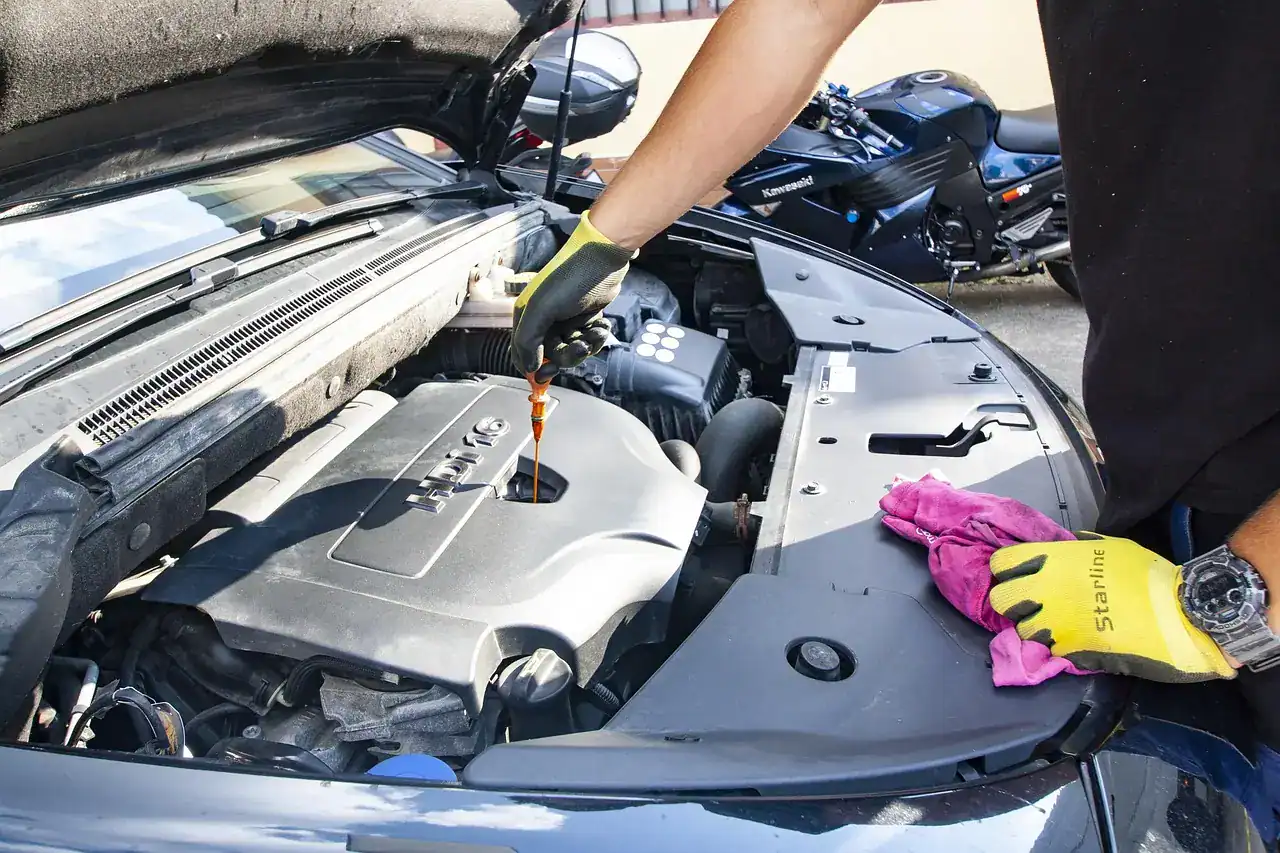
If the red oil light stays on after the engine starts, the guide says to stop the engine and check the oil level. Add oil if it is low, and if the level is good, see a dealer and do not use the vehicle until it is repaired.
Check on level ground with the engine cold. The dipstick should read near the upper mark, and overfilling is as bad as running low. The guide calls for SAE 10W-30 four-stroke oil meeting API SG, SH or SJ.
A red charging light that stays on after start means the engine is not charging. Check the battery cables first. The guide lists the rotor and stator, rectifier and wiring as causes, which are repair or replace items for a dealer.
5. Clutch slipping or chattering
Technique counts on a manual gearbox. The guide says to press the clutch pedal fully while shifting, take your right foot off the throttle, and never force the lever. Stop completely before selecting reverse.
Lubricate the throttle, clutch and transmission cables with cable lubricant only, since other lubricants can cause poor lever action. The guide gives no free-play figure for the clutch cable, so adjustment is a dealer job if shifting stays rough.
For slip, the guide lists oil on the friction disc or a badly worn disc, and says to clean the oil off or replace the disc. A shaking, noisy clutch points to the release bearing, first bearing, spline hub, springs or plate.
6. 4WD switch alarm and differential locks
On 4WD models the 2WD/4WD switch drives an impulse motor. If the motor cycles more than 24 times in a minute without the drive shaft spline seating, an alarm sounds. The guide says to operate the switch the opposite way so the motor does not overheat.
The green 4WD light shows 4WD, and only the two lower wheel icons lit means 2WD. The differential lock lever is forward for unlocked and back for locked, left for front and right for rear. The guide says not to lock the front differential when turning.
If the switch will not complete a change after trying both directions, that is a dealer visit. The guide offers no owner repair for the switch motor.
7. Wobble and handling
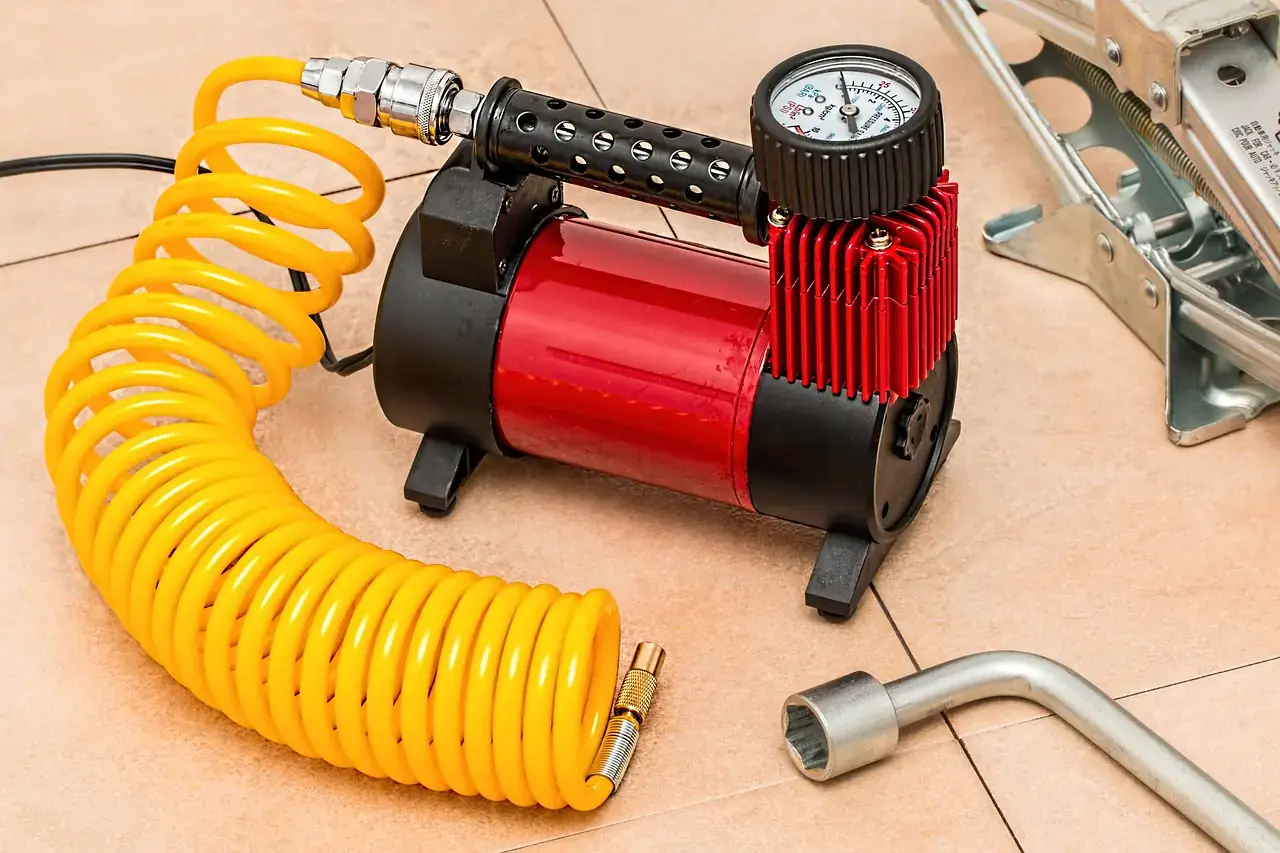
Start with cold tire pressure, because the guide warns that low pressure can let a tire rotate on the wheel and high pressure can burst it. Figures from the guide, with psi added:
- Street tires, recommended: 200 kPa front (29 psi) and 225 kPa rear (33 psi). Minimum: 180 kPa (26 psi) front and 200 kPa (29 psi) rear.
- Off-road tires, recommended: 45 kPa front (6.5 psi) and 50 kPa rear (7.3 psi). Minimum: 40 kPa (5.8 psi) front and 45 kPa (6.5 psi) rear.
Those off-road numbers are far below what a normal car gauge reads accurately, so a low-pressure tire gauge helps. The guide says to use a manual pump. For terrain-by-terrain adjustments on other vehicles, try our off-road tire pressure calculator.
Wheel nuts take a final torque of 70 N·m (52 lb-ft), tightened in a crisscross pattern. The tires are directional, so do not rotate them. Grab each wheel at the top and push and pull; any play means a dealer should look at the bearing.
Shock preload cams must sit in the same position on both sides, and the guide warns that uneven settings cause poor handling and loss of stability. Front A-arms have two grease fittings each and take synthetic grease. Check A-arms for cracks or bends.
8. Hard-to-find parts and support
Oreion’s warranty and FAQ page says to confirm the model, build and exact component before ordering parts, and to start with the selling dealer. Parts are ordered through Oreion’s parts portal. Call 505-916-1206 on weekdays.
Oreion publishes no part-number list, interchange list or prices. The spec sheet names the engine as an 812cc Chery unit and the guide gives engine code SQR372, but treat any cross-reference as unconfirmed until a dealer confirms the fit. Specs vary by model year and VIN, so keep your VIN handy. Import-brand owners hit the same wall on other machines, as in our Massimo UTV problems guide.
| Item | Spec |
|---|---|
| Engine | 812cc Chery, code SQR372, three-cylinder, 12-valve DOHC, fuel injected, manual gearbox |
| Engine oil | SAE 10W-30 four-stroke mineral oil (API SG, SH or SJ), 2.0 L (2.1 US qt) |
| Transmission oil | GL-4 75W-90, 2.0 L (2.1 US qt) |
| Front and rear differential (4WD) | GL-4 75W-90, 450 mL each (about 15 fl oz) |
| Coolant | 50/50 ethylene glycol and water, for aluminum engines |
| Brake fluid | DOT 4 only, from a sealed container |
| Battery | 12V 36Ah |
| Spark plug | NGK DCPR8E |
| Fuses | 15A accessories, 20A fan, 30A main |
| Idle speed | 900 ± 50 rpm |
| Wheel nut torque | 70 N·m (52 lb-ft) |
| Fuel tank | 23 L (6.1 US gal) |
Recalls and the 25 mph limit
NHTSA campaign 13V398 covers about 526 model year 2011–2013 Reeper low-speed vehicles. They could exceed the 25 mph maximum, lacked red rear reflectors, and had the wrong GVWR on the certification label (NHTSA recall acknowledgment). The remedy is free: Oreion mails reflectors and new labels, and dealers install a revised speed limiter.
Separately, about 526 2011–2013 Reeper LSVs had seat belts missing the year-of-manufacture marking. NHTSA granted Oreion’s petition in 2015, so no recall followed (Federal Register notice). It was a labeling noncompliance, not belts failing.
Under federal rules a low-speed vehicle has four wheels, tops out above 20 mph and no more than 25 mph, and weighs under 3,000 lb GVWR (49 CFR 571.3). It must also carry headlamps, turn signals, stop lamps, mirrors, a parking brake, a windshield and seat belts (49 CFR 571.500).
Oreion states that its vehicles are not street legal in every jurisdiction, and that registration depends on your state. Enter your VIN at nhtsa.gov/recalls to see open campaigns, and confirm road rules with your state DMV.
Before you buy a used Reeper
- Run the VIN through NHTSA’s recall lookup, especially on a 2011–2013 low-speed vehicle.
- Check engine oil and coolant levels, and look for oil leaks around the engine and transmission.
- Start it cold in neutral and watch the red oil and charging lights go out.
- Push and pull each wheel for bearing play, and check the battery area for corrosion.
- On a 4WD model, work the 2WD/4WD switch and both differential lock levers.
Those checks come from the guide’s pre-operation list. For a quick tire-size or gearing question on a swap, try the free off-road calculators.
FAQ
Oreion’s spec sheet lists an 812cc Chery water-cooled four-stroke. The operator’s guide gives engine code SQR372, three cylinders, 12 valves and fuel injection, with a manual gearbox.
The operator’s guide specifies SAE 10W-30 four-stroke oil (API SG, SH or SJ), 2.0 L in the engine. Transmission and differentials take GL-4 75W-90.
Yes. NHTSA campaign 13V398 covers about 526 2011–2013 Reeper low-speed vehicles for speed limiter, reflector and GVWR label issues. Check your VIN at nhtsa.gov/recalls.
Oreion says its vehicles are not street legal in every jurisdiction. Low-speed vehicle versions are limited to 25 mph, and registration rules vary by state.
Oreion’s site offers spec sheets, not a manual download. The operator’s guide says a shop manual is available, so ask your dealer or Oreion at 505-916-1206.

I'm Suryashankar Dasgupta, the founder of Off-Road Handbook. I've been off-roading for years in the USA, including California and Texas, and have ridden mountain and desert terrain abroad. I've also driven a Jeep Compass for more than seven years, so I know the day-to-day side of Jeep ownership first-hand, from the Uconnect screen to the warning lights. Every guide here is researched from manufacturer owner's manuals, NHTSA recall and service-bulletin records and other trusted sources, checked against them before it is published, and corrected when we find a mistake. You can read how we work in our editorial policy: https://offroadhandbook.com/editorial-policy/
Like our off-road guides? Add Off-Road Handbook as a Google Preferred Source so our latest Jeep, ATV, UTV, trail, recovery, and off-road troubleshooting articles can appear more often in your Google Search experience.
Add us as a Preferred Source