7 Common Kawasaki Bayou 300 Problems and How to Fix Them
Last updated on October 19th, 2026 at 12:34 am
The Kawasaki Bayou 300 problems you will most likely meet are age problems: a gummed-up carburetor, backfiring from an air leak or tight valves, a spark that quits when the engine warms up, and a corroded charging system or key switch. Most can be sorted in the driveway, free checks first.
Kawasaki built the Bayou 300 from 1986 through 2006, so every one is now at least 20 years old. Find your symptom in the table below, follow the check order, and use the symptom checker if you are not sure where to start. Settings and torque values come from Kawasaki’s factory service manual where it is publicly readable, and anything that is only owner-reported is labeled that way.
Bayou 300 problems at a glance
| Symptom | Check first (free) | Likely cause | Section |
|---|---|---|---|
| Hard to start cold, needs choke to keep running, idle hunts | Fuel tap on, fresh fuel, air filter, drain the carburetor bowl | Varnish or water in the carburetor | 1 |
| Pops or backfires, especially coming off the throttle | Intake boot and clamps, spark plug, valve clearance (cold) | Air leak, tight valves, lean or rich carburetor | 2 |
| Cranks but no spark, or starts and dies when warm | Plug cap, kill switch, battery, connectors, then spark at the moment it quits | Weak battery or grounds, then pickup coil, CDI, ignition coil or stator | 3 |
| Battery dead after a ride, dim lights | Battery voltage at rest and running | Regulator/rectifier, stator or connector | 4 |
| Key on, nothing happens | Battery, terminals, kill switch, key switch connector | Corroded key switch or connector | 5 |
| Hard to shift, reverse sticks, no neutral | Oil level, clutch adjustment, reverse cable | Cable binding, then worn shift parts | 6 |
| Oil leak, loud exhaust, worn tires, loose wheel | Find the leak source, look at the exhaust joints, tire age, torque | Plug or seal leak, rusted muffler, aged tires, loose axle nut | 7 |
Work down the “check first” column before you buy anything. A new carburetor or stator is the expensive answer, and most of these quads turn out to need a cleaning, a clamp, a connector or a fresh plug instead.
One caution about the manual: the factory settings quoted here come from the 1986 to 1987 KLF300-A pages that are publicly readable. Later 2WD and 4x4 models may differ, so confirm any number in the manual for your model year before you adjust.
Which Bayou 300 do you have?
The Bayou 300 came as a 2WD quad (KLF300-A, then KLF300-B) and, from 1989, a 4x4 (KLF300-C). The letter and number on the model plate tell you the year, and they change the tank, oil and tire numbers you will look up.
| Version | Model codes and years | Fuel tank | Engine oil | Tires front / rear |
|---|---|---|---|---|
| 2WD, early | KLF300-A1 (1986), A2 (1987) | 8.2 L (2.2 gal) | 1.7 L | 22x9-10 / 24x11-10 |
| 2WD, later | KLF300-B1 to B18 (1988 to 2005) | 9 L (2.4 gal), 1998 model | 1.7 L, 1998 model | 22x9-10 / 24x11-10, 1998 model |
| 4x4 | KLF300-C1 to C17 (1989 to 2005) and C6F (2006) | 11 L (2.9 gal), 1994 model | 2.3 L, 1994 model | 24x8-11 / 24x10-11, 1994 model |
Older guides often quote one tank size and one oil capacity for every Bayou 300. The 4x4 holds 0.6 L more oil than the 2WD and carries a bigger tank, so look up your version before you fill anything.
If you are unsure which one you own, look at the wheels: the 4x4 runs 11-inch wheels and the 2WD runs 10-inch wheels, per the sizes in the table.
Will not start or will not stay running: check order
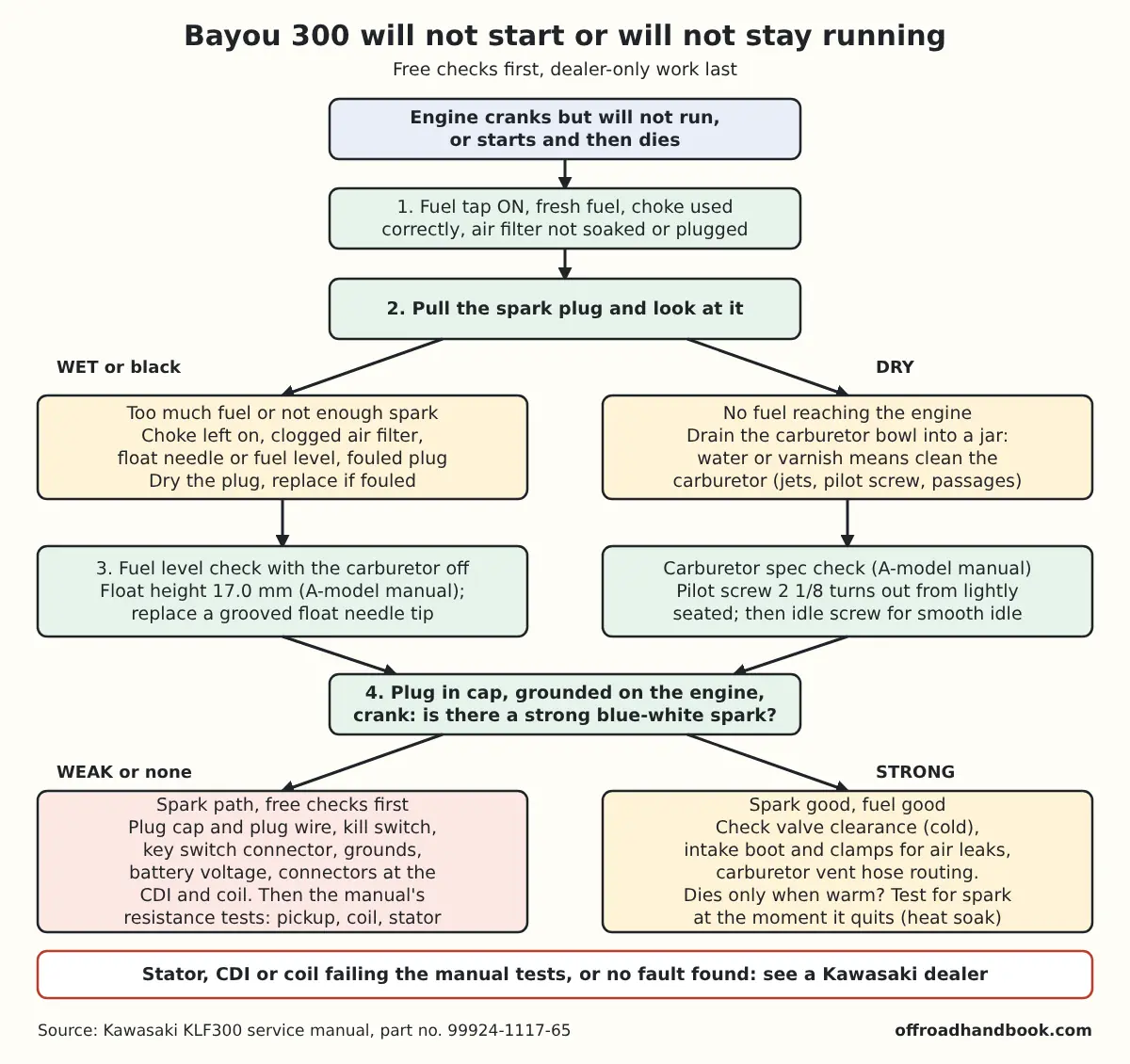
Start at the top and stop at the first step that finds something. Fix it, then retest before you move on.
The plug tells you which half of the problem you have. A wet, black plug means too much fuel or too little spark, and a dry plug means fuel is not arriving.
What is your Bayou 300 doing?
It builds a check list from the sections below: the manual’s carburetor and torque steps, the periodic maintenance chart and the recall record. It is a checklist, not a diagnosis, and your owner’s manual overrides it.
Free checks come first and dealer-only work comes last.
1. Hard starting, rough idle and stalling (carburetor)
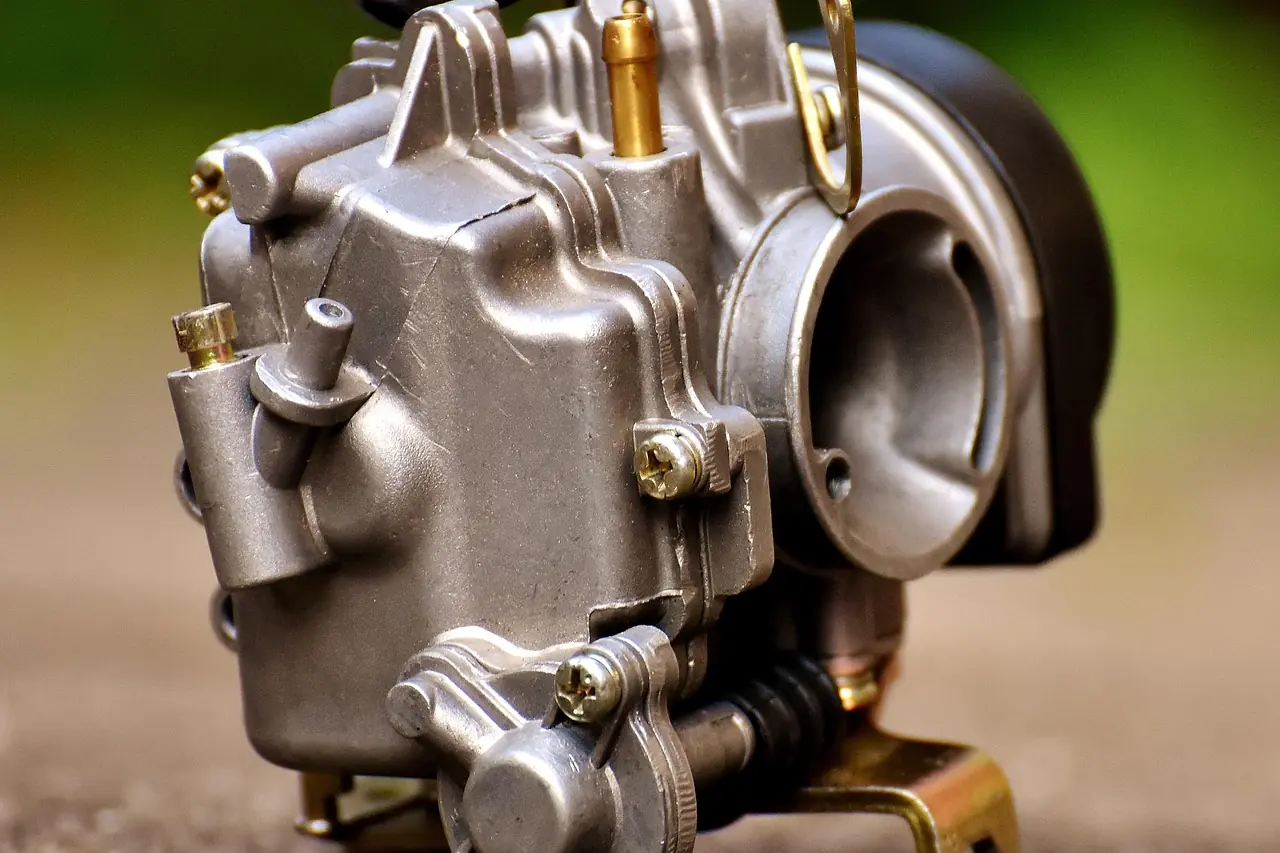
The Bayou 300 uses a Keihin CVK32 carburetor, per the factory specifications. Fuel that sits for a season leaves varnish in the small pilot passages, and the usual result is a bike that starts only on choke, idles badly and dies at a stop.
- Confirm the fuel tap is on, the fuel is fresh and the air filter is not plugged or dripping with oil.
- Run the carburetor overflow tube into a jar and open the carburetor drain plug a few turns. Kawasaki’s fuel-system cleanliness check says that if water or dirt comes out, the carburetor and the fuel tank and tap need cleaning.
- Take the carburetor off and disassemble it, being careful with the diaphragm and never using a sharp edge on it. Soak the metal parts in carburetor cleaning solution, rinse in water and blow out every passage. The manual warns against gasoline or low-flash-point solvents (fire) and against compressed air on an assembled carburetor.
- Inspect while it is apart. The float needle tip should be smooth with no grooves, and its rod should spring back when pushed. The pilot screw taper should be unworn, and the vacuum piston should slide freely.
- Reassemble, seat the pilot screw lightly (do not overtighten or the carburetor body is damaged) and back it out 2 ⅛ turns for the A model. Warm the engine and set the idle screw to the slowest smooth idle.
- Route the carburetor vent hose as shown in the manual when you reinstall it.
If the fuel level looks wrong, two numbers matter. The A-model manual lists a float height of 17.0 mm (plus or minus 2 mm) and a service fuel level of 0.5 mm below to 1.5 mm above the bottom edge of the carburetor body, measured with Kawasaki gauge 57001-1017.
Stock jets in the same manual are a #130 main and #38 pilot.
Replace the pilot screw if the taper is worn, since the manual says that prevents smooth idle. If the vacuum piston is loose in the bore, the manual calls for replacing the piston and the carburetor body together, which is the point where a dealer quote or a used carburetor makes sense.
2. Backfiring and popping (air leaks and valve clearance)

Popping through the carburetor or the exhaust on deceleration usually comes from one of three things: air getting in somewhere it should not, a carburetor running lean or rich, or valves that have tightened up.
- Look at the rubber boot between the carburetor and the engine, and the clamps on both ends. A cracked boot or loose clamp lets in air, which leans out the mixture.
- Check the exhaust joint at the head for a leak that sucks in air.
- Pull the plug. Black soot means rich, and a white, dry plug means lean. The US A-model manual lists an NGK B8ES, and the AtvManual pages for later years list a DR8EA with a gap of 0.6 to 0.7 mm, so confirm for your year.
- Check valve clearance with the engine cold. Kawasaki’s periodic maintenance chart has it checked at the first service and every regular service.
- Adjust with a feeler gauge, tighten the adjusting screw locknut to 12 N·m (104 in-lb) and recheck.
Owner threads and parts databases give 0.10 to 0.15 mm for the intake and 0.15 to 0.20 mm for the exhaust, cold. No manual page I could open a manual page that prints those numbers, and at least one popular guide lists a different 0.20 to 0.25 mm range, so treat them as owner-reported and use the figure in your manual or on the machine’s label.
Set the piston at top dead center on the compression stroke before measuring, or you will read a valve that is partly open. If both valves read tight, tight valves are a likely backfire cause. If clearances are fine, go back to the air-leak and carburetor checks.
3. No spark, or it starts and dies when warm
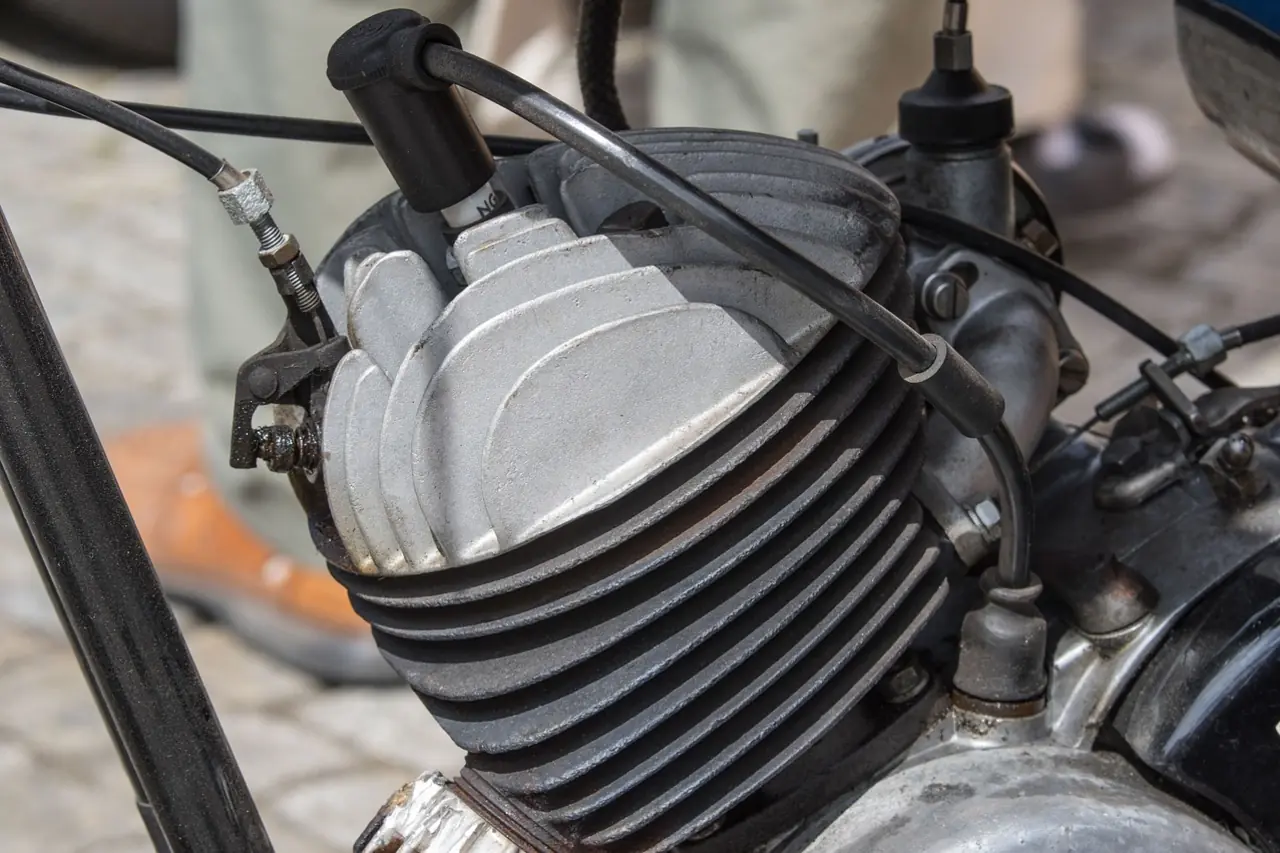
This is the problem Bayou owners search for most: no fire at the plug, or an engine that runs a few minutes and quits. Kawasaki lists the ignition as battery and coil, transistorized, with electronic timing advance from 10 degrees BTDC at 1,300 rpm to 40 degrees at 4,000 rpm.
That means a weak battery, a bad key switch or a poor ground can look exactly like a failed CDI.
- Replace or clean the plug and look at the plug cap and wire for cracks or water.
- Check that the engine kill switch is in the run position and the key is on.
- Measure the battery. About 12.6 V is a full charge at rest, and under 12.4 V needs charging before you test anything else.
- Unplug and inspect the connectors at the CDI box and ignition coil. Clean green corrosion, reconnect and add dielectric grease.
- Ground the plug on the cylinder and crank it. A strong blue-white spark rules out the whole ignition chain for now.
- If it dies only when warm, repeat the spark test the moment it quits. Spark gone means heat is getting to the pickup coil, CDI or coil (owner-reported pattern). Spark still there means fuel, and you go back to the carburetor.
- Test the pickup coil, ignition coil and stator with a meter using the resistance tables in the manual for your year.
Owner-posted readings vary: about 390 to 590 ohms for the pickup coil, and roughly 1 to 1.6 ohms between stator leads, with each lead reading open to ground. These are not Kawasaki specs, and meters differ at low resistance, so do not condemn a part on a forum number alone.
Parts that fail the manual’s tests, or an ignition that tests good but still loses spark when hot, are dealer work or a careful swap of one suspect at a time. Checking ignition timing needs a timing light and the specs for your model.
4. Dead battery and dim lights (charging system)
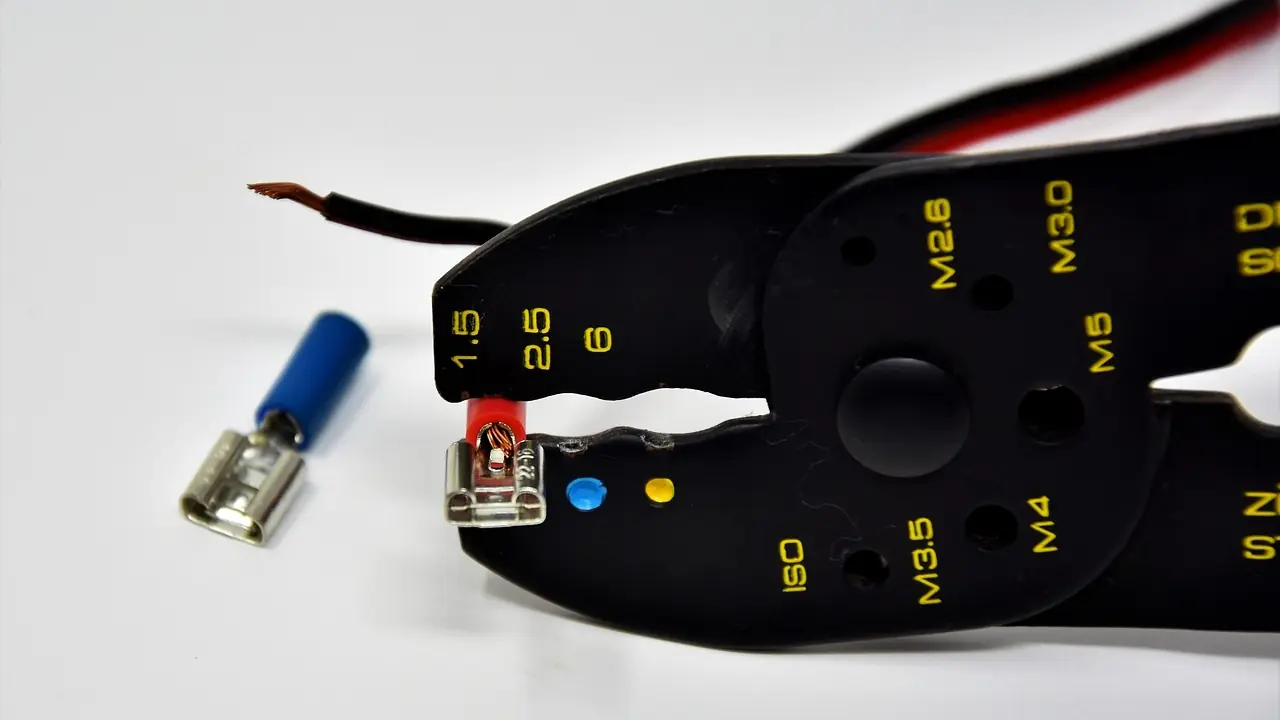
Kawasaki lists a three-phase AC alternator rated 23.5 A at 9,000 rpm and a 14 V short-circuit-type regulator on the A model, with a 12 V 19 Ah battery.
A battery that is dead after a ride, lights that dim as you slow down, or a bike that quits when you turn on the lights points at that system.
- Charge the battery fully and let it rest. Measure at the terminals.
- Start the engine, rev it to a steady few thousand rpm and measure again. The regulator is a 14 V design, so a reading that never rises above the resting voltage means it is not charging.
- A reading that keeps climbing well past 14 V points to the regulator/rectifier.
- Look at the stator connector near the engine and the regulator plug. Melted or green connectors are common after water and heat, and a new terminal and a crimp fixes it.
- Check the battery terminals and the ground strap to the frame and engine.
- Test stator AC output and the regulator/rectifier using the manual’s procedure for your year.
A failed regulator can overcharge and cook the battery and bulbs, so replace a bulging battery too. Stator or regulator replacement is a parts job with no verified published price, so get a quote by model year.
5. Key on, nothing happens (ignition switch)
The key switch lives in mud and water. Moisture gets into the contacts, and the connector behind it corrodes.
- Check the battery first, then the kill switch.
- Unplug the switch connector and look for green or white corrosion on the pins.
- Clean with contact cleaner, let it dry and pack the connector with dielectric grease.
- Check for continuity through the switch in each key position using the wiring diagram in the manual for your year.
- Replace the switch if it fails the continuity check or the contacts are burned.
A jumper at the connector is a legitimate diagnostic test, and a working jumper tells you the switch is bad. Do not leave it that way: the quad will have no key off, and exposed splices will corrode fast.
6. Hard shifting, sticking reverse and no neutral
The transmission is a 5-speed with reverse, constant mesh, return shift. Kawasaki lists a single wet-sump oil system for the engine, and a separate 0.3 L final gear case with API GL-5 gear oil, SAE 90 above 41 degrees F or SAE 80 below.
- Check engine oil level and condition. Capacity is 1.7 L on the 2WD and 2.3 L on the 4x4 (AtvManual listings), and the A-model manual allows SAE 10W-30, 10W-40, 10W-50, 20W-40 and 20W-50.
- Check clutch adjustment. It is on the first-service and regular-service list.
- Disconnect the reverse cable at the lever. If shifting improves, reroute, lubricate or replace the cable (owner-reported cause, and the most common free fix).
- Check the shift linkage for bent parts and loose bolts. The shift shaft return spring pin goes back with locking agent at 17 N·m.
- A machine that pops out of gear or jumps into reverse usually has worn parts inside the case, which is a dealer or a manual-in-hand job.
Change the final gear case oil on the schedule in the manual chart. The drain plug torque is 20 N·m (14.5 ft-lb).
7. Oil leaks, worn tires, rusted exhaust and loose wheels
Find where the oil really comes from before assuming a gasket. Wipe the engine down, run it and look for the fresh wet spot.
The usual cheap culprits are the engine oil drain plug (29 N·m, 22 ft-lb in the A-model manual), the final gear case drain plug (20 N·m, 14.5 ft-lb) and filler cap (29 N·m), and the oil pipe banjo bolts (20 N·m).
Milky oil on a Bayou does not mean a coolant leak, because this engine is air cooled. It means water got into the crankcase, usually from deep water. Change the oil right away and again after a short run, and if it comes back milky, take it to a dealer.
A head gasket or cylinder base leak is the dealer end of this list. Cylinder head bolts are tightened in sequence to 29 N·m on the 8 mm bolts and 12 N·m on the 6 mm.
Tires: stock sizes are 22x9-10 front and 24x11-10 rear on 2WD, and 24x8-11 and 24x10-11 on the 4x4. Replace tires in axle pairs, and check old rubber for sidewall cracks.
How to read ATV tire sizes explains the numbers, and the tire size calculator shows what a different size does to your overall diameter.
Exhaust: a louder machine usually has a rusted muffler or a loose joint. The periodic maintenance chart also lists spark arrester cleaning as a regular service item.
Wheel and axle nuts: the A-model manual lists wheel nuts at 34 N·m (25 ft-lb) and rear axle nuts at 145 N·m (110 ft-lb). Check the cotter pin is there after any wheel work.
Recall: axle nuts on 2002 Bayous
On December 31, 2001, Kawasaki and the CPSC announced a repair recall of about 360 model-year 2002 Bayou ATVs, model numbers KLF220A-15, KLF300-B15 and KLF300-C14 (recall 02-515). On a limited number, the axle nut was not tightened to the proper torque before the cotter pin was installed, which could let the hub come off the axle. No injuries were reported.
The fix was a dealer visit to torque the axle nut. Read the CPSC notice and run your VIN through Kawasaki’s recall lookup. Only the 2002 B15 and C14 300s are covered, not every Bayou 300.
What popular Bayou 300 guides get wrong
- Fuel pump timing. The factory fuel-system chapter lists a fuel tap, carburetor, air cleaner and tank, and no fuel pump, so advice about timing the fuel pump does not apply.
- Voltage regulator knock. A failed regulator causes charging trouble. It does not cause a mechanical knock.
- Milky oil as a head gasket problem. The engine is air cooled, so it is water in the oil.
- The recall as every Bayou 300. It covered about 360 model-year 2002 units.
- One tank size for all. 2WD and 4x4 differ, as the table above shows.
FAQ
The 1986 to 1987 2WD holds 8.2 L (2.2 gallons) per Kawasaki’s manual. AtvManual lists 9 L (2.4 gallons) for a 1998 2WD and 11 L (2.9 gallons) for a 1994 4x4.
The US A-model manual lists an NGK B8ES, and AtvManual lists DR8EA for later years, with a gap of 0.6 to 0.7 mm. Check your year.
Start with the fuel-bowl drain check, then clean the carburetor, check the pilot screw (2 ⅛ turns out on the A model) and look for an air leak at the intake boot.
Yes, about 360 model-year 2002 KLF300-B15 and KLF300-C14 units, plus the KLF220A-15, for an axle nut torque problem in 2001.
Sources
- Kawasaki KLF300 Bayou 300 service manual excerpt, part no. 99924-1117-65 (specifications, torque table, maintenance chart, carburetor procedures)
- AtvManual KLF300-B11 (1998) specifications and KLF300-C6 (1994) specifications
- CPSC: Kawasaki Motor Corporation announces recall of ATVs (02-515)
- Kawasaki USA owner center, safety recalls
Related guides
- ATV and UTV Troubleshooting: Bogging, No-Start, Heat and Belts
- 8 Common Kawasaki Prairie 360 Problems and How to Fix Them
- Kawasaki Brute Force 750 Problems: Symptoms, Causes and Fixes
- Free off-road calculators

I'm Suryashankar Dasgupta, the founder of Off-Road Handbook. I've been off-roading for years in the USA, including California and Texas, and have ridden mountain and desert terrain abroad. I've also driven a Jeep Compass for more than seven years, so I know the day-to-day side of Jeep ownership first-hand, from the Uconnect screen to the warning lights. Every guide here is researched from manufacturer owner's manuals, NHTSA recall and service-bulletin records and other trusted sources, checked against them before it is published, and corrected when we find a mistake. You can read how we work in our editorial policy: https://offroadhandbook.com/editorial-policy/
Like our off-road guides? Add Off-Road Handbook as a Google Preferred Source so our latest Jeep, ATV, UTV, trail, recovery, and off-road troubleshooting articles can appear more often in your Google Search experience.
Add us as a Preferred Source