Polaris RZR 800 Problems: 7 Common Issues and How to Fix Them
Last updated on October 25th, 2026 at 10:50 am
This post contains Amazon affiliate links. As an Amazon Associate I earn from qualifying purchases, at no extra cost to you.
The most common Polaris RZR 800 problems are a burned PVT belt, overheating, a failing rear gearcase, hard shifting or popping out of gear, AWD that will not engage, charging trouble, and stalling or misfires. Check the rear gearcase first, because a clunk there means stop riding; everything else starts with free checks.
The RZR 800, RZR S 800 and four-seat RZR 4 800 share a 760 cc fuel-injected twin, an automatic belt-driven PVT with High and Low range, and demand-drive AWD, according to Polaris’s owner’s manual. Only two federal recalls name the RZR 800, and neither is one of the later RZR fire recalls; the recall table below has the details.
Polaris RZR 800 problems at a glance
| Symptom | Check first (free) | Likely cause | Fix and rough cost |
|---|---|---|---|
| Burning smell, belt slipping, weak pull from a stop | Which range you were in; drain the clutch cover; look at the belt | Glazed or burned belt from slow riding in High, water in the PVT, no warm-up | Replace the belt, clear the duct and clutches. One retailer lists an aftermarket standard-model belt near $85 (section 1) |
| Overheat lamp on, power drops | Radiator screen and fins; overflow bottle level when cool | Mud-packed radiator, low coolant, trapped air, fan not running | Clean, top off, bleed the system. A leak goes to a dealer (section 2) |
| Clunk, rattle or grinding from the rear; rear wheels drag or lock | Stop riding. Check rear gearcase fluid level | Rear gearcase damage, including the pinion nut backing off (owner-reported) | Service manual: replace the gearcase as a unit. Owners quote $800-$1,200 labor plus $1,700-$2,500 for a new differential (section 3) |
| Pops out of gear, hard to shift, "--" in the gear display | Idle speed, linkage, rod ends, selector bolts | Linkage out of adjustment, worn rod ends, worn internal gear dogs | Adjust linkage, isolate at the bellcrank; internal work is shop labor (section 4) |
| AWD will not engage | 10 A AWD fuse, switch, engine RPM under 3,100 | Wiring fault, coil out of range, worn armature plate or rollers | Meter the coil (21.6-26.4 ohms); cover plate or roll cage replacement per manual (section 5) |
| Battery dies, low-voltage warning, EPS light stays on | Battery 12.4 V at rest, terminals, 30 A power-steering fuse | Weak battery, poor connection, failing stator or regulator | Charging test 13.0-14.6 V; stator about 0.19 ohm per leg (section 6) |
| Stalls, misfires, cuts out | Fuel, plugs, fuel vent line, air filter, stored codes | Fouled plugs, kinked vent line, bad fuel, loose connections | Plug RC7YC, gap 0.035 in; read the check engine codes (section 7) |
Start with the free column. Most of these show up in the owner’s manual troubleshooting charts as simple checks before any parts are bought.
The factory warranty in that manual was six months, so on a 2008 to 2014 machine the repair bill is almost always yours. That is why the order of checks matters.
RZR 800 symptom checker
Based on the Polaris RZR 800 owner’s manual troubleshooting charts and the RZR service manual diagnosis pages. Costs are owner-reported. It is a checklist, not a diagnosis.
What can you check for free before spending money?
Charge the battery to 12.8 V first. The manual lists low battery voltage as a cause for no-crank, no-start, stalling and power loss, and the gauge flags an under or over voltage warning when the engine is turning too slowly to keep the battery charged.
Read the codes if the CHECK ENGINE lamp is on. Press and hold MODE until “Ck ENG” shows, then write down the three numbers in the gear, clock and odometer windows. The code screen is lost when the key is turned off, so record it first and hand it to the dealer.
Then check fuses. The box sits above the power steering unit, and the manual lists these ratings:
- 10 A: Drive (AWD)
- 10 A: fuel pump
- 20 A: electronic engine control and starting
- 20 A: lights; 20 A: accessories
- Power fuses: 20 A engine control, 30 A lights/drive/accessories, 30 A power steering
For general no-start, bogging and heat issues across ATVs and UTVs, see our ATV and UTV troubleshooting guide.
In what order should you diagnose a Polaris RZR 800?
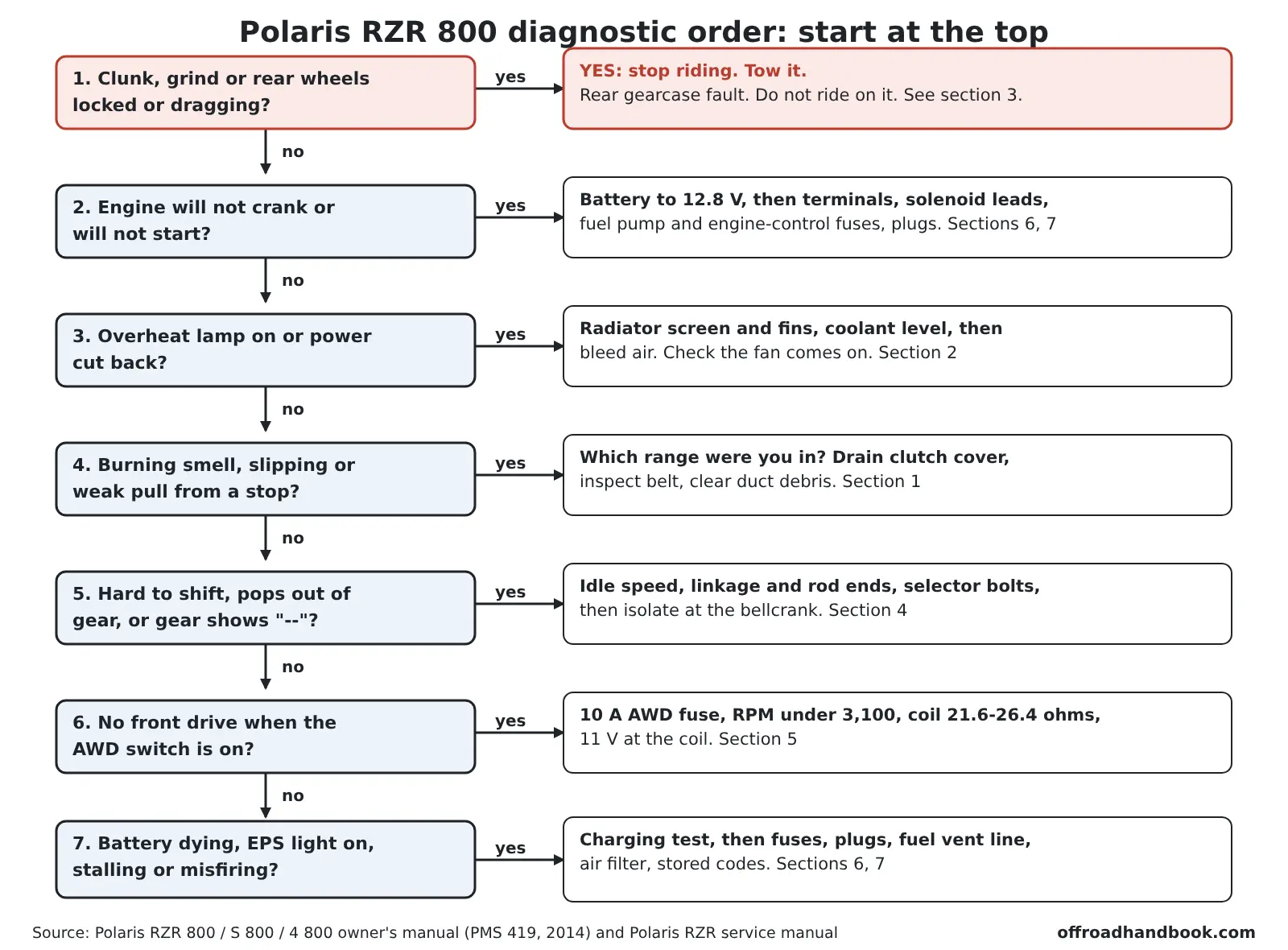
Read the chart from the top. Rear gearcase noise comes first because it is the one symptom that can wreck a machine if you keep riding.
Each box points to a section below with the checks in the order a shop would run them: free and fast first, parts last.
A card with every test value used in this guide sits in section 6, so you can save it for the garage.
1. Why does my RZR 800 burn or slip the drive belt?
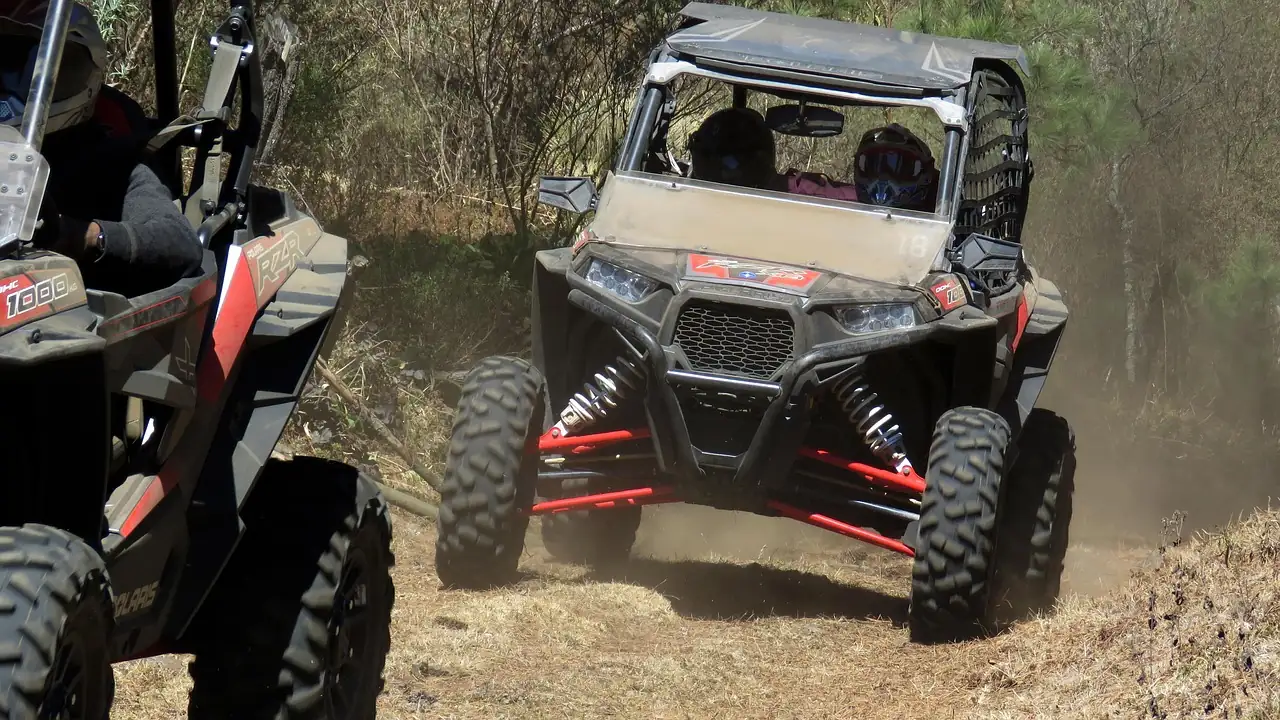
Symptoms. A hot-rubber smell, slipping, weak acceleration from a stop, or a belt that comes out glazed or in pieces.
Why it happens. Polaris says belt slip creates the heat that destroys belts and wears the clutches, and the service manual lists the causes: loading onto a trailer in High, starting up a steep incline, driving at low RPM or 3-7 mph, too little warm-up in the cold, slow clutch engagement, towing or plowing, water ingestion and clutch malfunction.
Diagnose in this order:
- Ask which range you were in. Use Low under about 7 mph, for heavy loads, towing, mud and rough terrain.
- Look for water. The manual gives a dry-out routine: loosen the lower clutch cover screws and let the water drain, tighten them, park the machine with the brakes on, apply varying throttle for 10-15 seconds, and never hold it wide open more than 10 seconds. Shift to the lowest range and test for slip.
- Open the clutch cover (remove the seat and under-seat box, then the cover screws). Inspect the belt and clear every piece of debris from the cover, clutches and the whole air duct. The manual warns that missing debris can cause vehicle damage and loss of control.
- Confirm it is the correct belt. The manual lists “wrong or missing belt” as a cause, and the retailer listing below says its belt fits only the standard model, so match the part to your VIN.
- Warm the belt up. In cold weather, warm the engine at least five minutes and give short ⅛-throttle bursts in neutral. Then ride below 30 mph for one mile (five miles or more below freezing).
Fix and cost. A belt swap is the usual cure. Polaris wants the belt inspected every 100 hours or 12 months.
One retailer lists a Gates aftermarket belt for the standard RZR 800 near $85, and the listing says it does not fit the S or 4 (retailer listing); that is one shop’s price, not a Polaris figure. Carry a spare belt on long rides (search for RZR 800 belts).
Oversize tires. Larger tires put more load on the PVT, so check your real tire diameter with the tire size calculator before blaming the belt.
See a dealer when the belt keeps slipping with a good belt, clutch seals leak repeatedly, or you find damaged seals after a belt failure. The manual says to see the dealer promptly in those cases. Do not modify the PVT; Polaris warns that doing so can cause a failure at speed.
2. Why does my RZR 800 overheat or lose power?
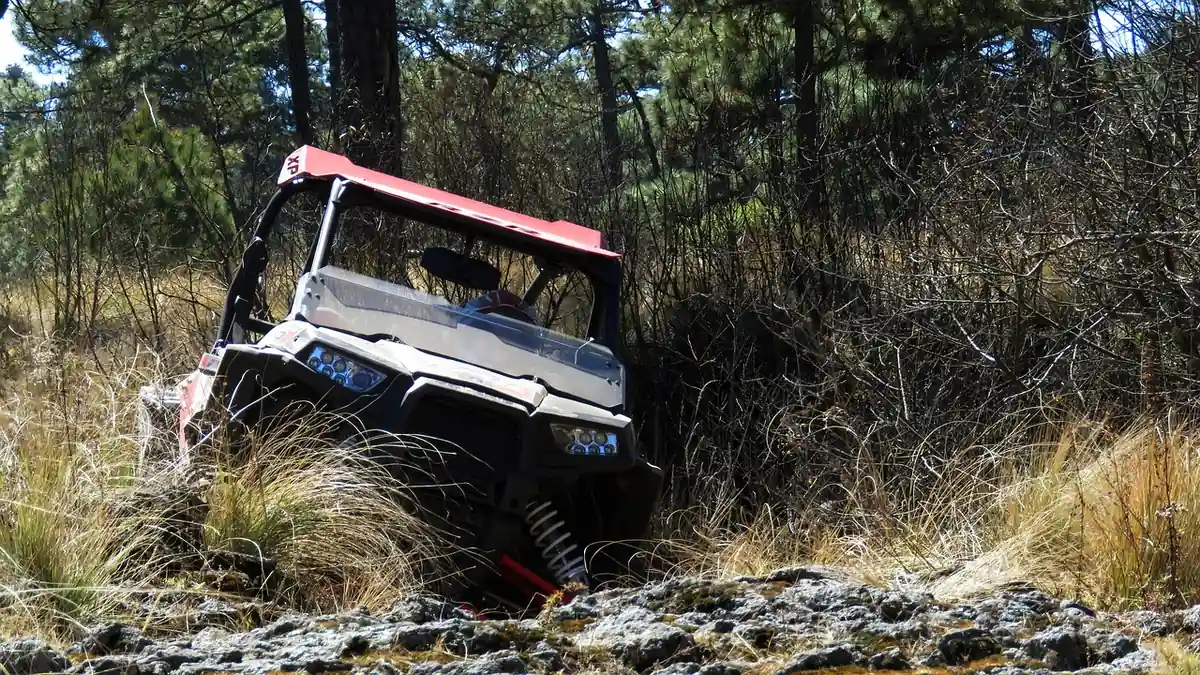
Symptoms. The over-temperature lamp lights. If it flashes, the manual says the overheating condition remains and the system automatically reduces engine power.
Diagnose in this order:
- With the engine cool, check the radiator screen and fins and clean out mud and grass. The manual says not to block airflow in front of the radiator or behind the fan, and not to use a high-pressure hose, which can damage the fins.
- Check the overflow bottle between the min and max marks on a level machine, cold. Never remove the pressure cap on a warm engine; escaping steam burns.
- Confirm the fan comes on as the engine heats up. The fan circuit test is in the electrical chapter of the service manual.
- Bleed trapped air if coolant was drained or the machine overheats with no leak. See the steps below.
- Coolant that needs frequent topping off, or a bottle that runs completely dry, means a leak. The manual says to have the system inspected by the dealer.
Bleeding steps from the service manual:
- Park on a slight incline, in Park, and block the rear wheels.
- With the engine cool, remove the pressure cap and top off, then fill the recovery bottle to the full line.
- Leave the radiator cap off and idle 5-10 minutes until the thermostat opens.
- Squeeze the hoses to purge air.
- Slightly loosen the bleed screw on the top left of the cylinder head near the spark plug until coolant flows steadily.
- Tighten the bleed screw to 70 +/- 10 in-lb and refit the pressure cap.
Coolant. Capacity is 4.8 qt. Polaris recommends its 60/40 premix or a 50/50 mix of aluminum-compatible antifreeze and distilled water, drained and replaced every two years.
Cost. Cleaning and bleeding cost little beyond coolant. No verified price is published for fan, water pump or head gasket work, so ask a dealer. Heat in the cab at low speed and high load is also normal to a degree, and the manual suggests varying speed for airflow.
3. Why is my RZR 800 rear end clunking or locking up?
Safety note. A clunk or grind from the rear with any loss of drive means stop riding. A locked rear axle at speed can throw the machine out of control.
What owners report. A widely repeated RZR 800 complaint is the rear differential pinion nut backing off. One UTV Board post says mid-2008 to 2014 machines are affected, that it can happen with little warning, and that the pinion then destroys the differential and locks the rear axle. Off-Road Official blames a nylon-insert nut and recommends thread locker or a steel nut.
These are owner reports, not a Polaris statement, and no federal recall covers it.
What the service manual says. In the rear gearcase disassembly pages, Polaris says the pinion and ring gear are factory-matched, not serviced separately and need OEM tooling to shim. If the gears or housing are damaged, the entire assembly must be replaced.
Those pages list no pinion nut torque. Forum owners quote about 250 ft-lb, but do not torque it by a forum number; ask a dealer for the current spec.
Diagnose in this order:
- Note when it happens: on throttle, off throttle, or only in turns. A new rattle from the rear is a warning sign.
- Check the fluid level at the rear fill plug (26 oz angle drive fluid, level at the bottom thread). Polaris specifies 40-50 ft-lb for the fill plug and 30-45 in-lb for the level plug (owner’s manual). Look for metal in the drained fluid.
- General shop practice, not from the manual: with the rear wheels off the ground, turn each wheel by hand. Roughness or a lock points at the gearcase or axles; a drag that frees when the pedal is released points at the brakes.
- Do not ride to test it. If the gearcase is damaged, it comes out as an assembly.
Cost. Owner-reported figures are about $800-$1,200 labor and $1,700-$2,500 for a new OEM differential (UTV Board) or $1,000-$2,000 in total (Off-Road Official). They are rough, dated estimates from owners, not quotes.
See a dealer for any rear gearcase repair. The pinion cannot be shimmed without OEM tooling.
4. Why does my RZR 800 pop out of gear or shift hard?
Symptoms. Jumps out of High, Low or Reverse, grinds on shifting, or the gear display shows “--”. The owner’s manual says that dash means a gear-signal error or a shifter sitting between gears.
What the service manual checks. Its shifting-difficulty list runs from idle speed to PVT alignment, transmission oil, belt deflection, loose rod-end and selector-box fasteners, worn rod ends, clevis pins and bushings, linkage adjustment, selector rail travel, and worn or damaged internal parts.
Diagnose in this order:
- Confirm you shift only when stopped and at idle. The manual warns against shifting while moving or above idle.
- Check idle speed and the shift linkage. Polaris schedules a shift linkage inspect, lubricate and adjust every 50 hours or 6 months.
- Tighten rod-end and selector-box fasteners and replace worn rod ends, clevis pins and pivot bushings.
- Isolate it: disconnect the shifter from the transmission bellcrank, confirm RPM is at spec, then select each range by hand at the bellcrank and test ride. If it shifts properly, the fault is outside the transmission.
- Still failing: the transmission needs inspection for rounded gear dogs and worn bearings, circlips, thrust washers and shafts.
Fix and cost. The service manual gives the shift cable nut as 130-155 in-lb. Transmission oil is 24 oz of AGL, checked after the first 25 hours and every 100 hours. No verified shop price for internal repair is published.
Speed or gear sensor trouble. The ground speed sensor and gear position sensor are both listed in the transmission chapter torque table. If “--” stays on while the lever is fully in a gear, check the linkage first, then have a dealer test the gear position sensor circuit.
5. Why will my RZR 800 AWD not engage?
How it works. The AWD switch arms the system. Per the owner’s manual, the demand drive unit then engages automatically when the rear wheels lose traction and releases when they regain it. The electronics will not enable AWD until engine RPM is below 3,100.
Diagnose in this order:
- Release the throttle below 3,100 rpm, then flip the switch. The 4X4 lamp should light.
- Check the 10 A AWD fuse and the switch.
- Meter the front gearcase coil between the gray and brown/white wires. The service manual spec is 21.6-26.4 ohms.
- With ignition and AWD on and the selector in High or Low, the coil wires should show at least 11 V.
- Electrical good: remove the gearcase. Inspect the armature plate wear pattern (two distinct bands is healthy), the coil seating in the U-shaped insert, the rollers and the roll cage.
Fix and cost. A coil sitting above the insert raises the pole gap, and the manual says to replace the cover plate assembly. Damaged rollers or roll cage get replaced. Front gearcase oil is 6.75 oz of Demand Drive Fluid. No verified part prices are published.
Do not switch to AWD while the rear wheels are spinning. Polaris warns it can cause severe drive shaft and gearcase damage.
6. Why does my RZR 800 battery die or the power steering quit?
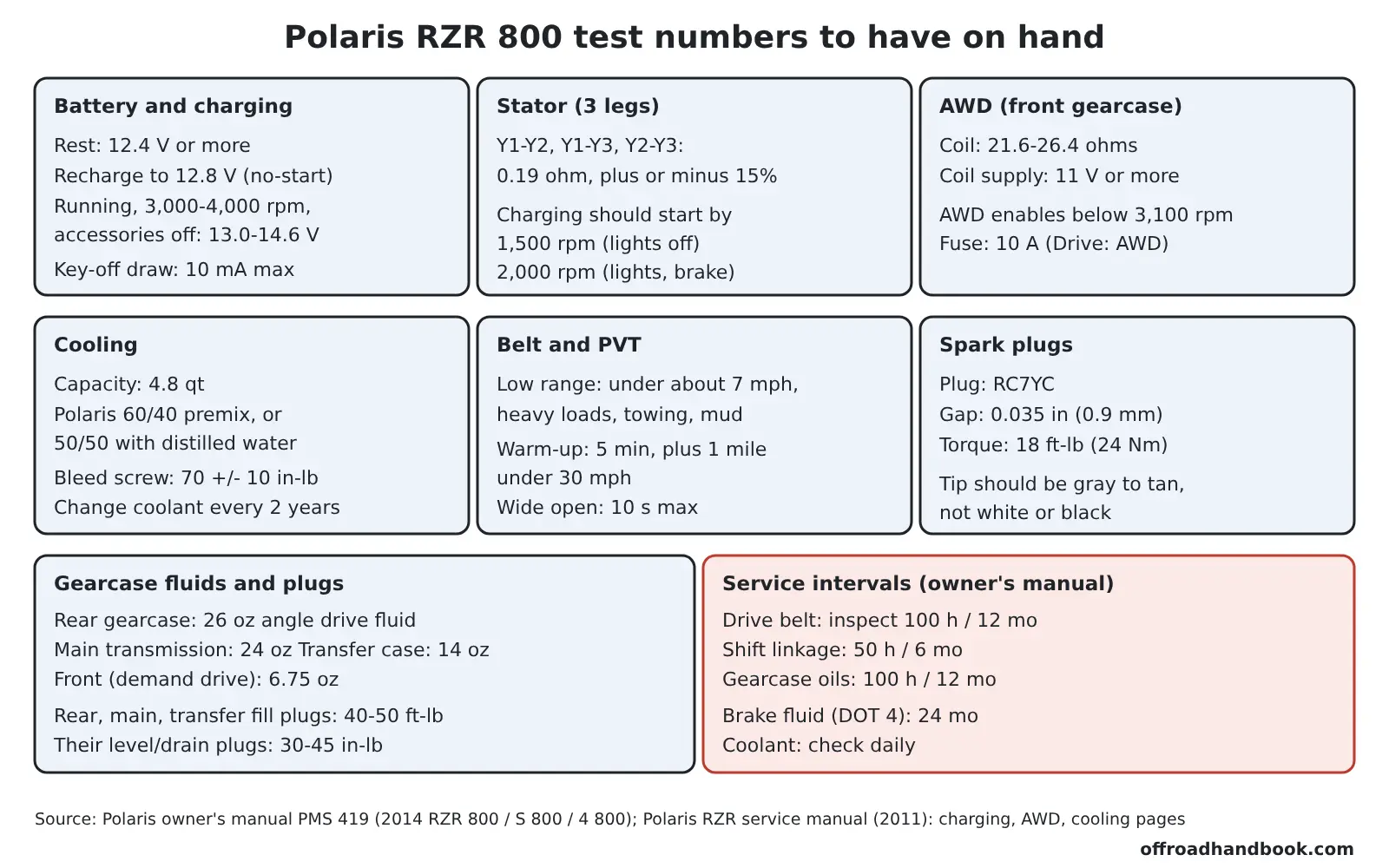
Symptoms. Slow cranking, a dead battery after sitting, an under or over voltage warning, or the EPS lamp staying on. The owner’s manual says the EPS shuts down five minutes after the engine stops with the key on, and if the lamp stays on after starting the system is inoperative.
Diagnose in this order (from the service manual charging flow chart):
- Inspect wiring and terminals. The manual calls for dielectric grease on connectors exposed to water and mud.
- Battery open-circuit voltage should be 12.4 V or more. If not, charge or test it.
- Charging voltage test: transmission in Park, accessories disconnected, engine at about 3,000-4,000 rpm. Battery voltage should rise to about 13.0-14.6 V.
- No rise: ohm the stator. Each pair of the three stator legs (Y1, Y2, Y3) should read 0.19 ohm plus or minus 15% (test data). Replace a bad stator.
- Stator good: run the alternator output test, then replace the voltage regulator if the harness side checks out.
- Check key-off drag (10 mA max) and the break-even RPM: charging should start by 1,500 rpm with lights off, 2,000 rpm with lights and brake on.
Tools. A basic multimeter handles all of this (search for multimeters).
Cost. The tests cost nothing but time. No verified stator or regulator prices are published.
See a dealer if the EPS lamp stays on after the battery and the 30 A power steering fuse check out.
7. Why does my RZR 800 stall, misfire or cut out?
Symptoms. Intermittent power loss, stalling at idle or low speed, misfire, or a power cut that clears up.
Diagnose in this order (the owner’s manual lists these as causes of an engine that runs irregularly, stalls or loses power):
- Battery to 12.8 V and tight ignition connections.
- Fuel: old or non-recommended fuel, water in fuel, and a kinked or plugged fuel tank vent line.
- Spark plugs: RC7YC, gap 0.035 in, torque 18 ft-lb. A normal tip is gray, tan or light brown; white means overheating, black and wet means fouling.
- Air filter and the throttle body intake ducts. Polaris schedules an inspection for proper sealing and air leaks every 50 hours or 6 months.
- Overheated engine: clean the radiator screen and core (see section 2).
- CHECK ENGINE lamp on: read the codes. The manual says not to operate the vehicle with the lamp on.
Cost. Plugs and fresh fuel are cheap. A clogged fuel filter is a dealer item per the manual. No verified price is published for other repairs.
See a dealer for water or fuel in the crankcase, mechanical failure, or any problem with the check engine lamp on.
Is there a recall on the Polaris RZR 800?
Two federal recalls name the RZR 800. Searching the CPSC recall database for Polaris, RZR and Ranger recalls on October 18, 2026 turned up no other RZR 800 or RZR S 800 notice. The big RZR fire and heat recalls cover other models.
| Recall | Models | Hazard | Remedy |
|---|---|---|---|
| Dec. 6, 2007 (08-521) | 330 model year 2008 Ranger RZR 800 EFI, model numbers R08VH76AD and R08VH76AG, built Aug. 21 to Oct. 3, 2007 | Fuel tank can leak, fire and burn hazard; four leak reports, no injuries | Free tank inspection and, if needed, repair at a Polaris dealer |
| Nov. 25, 2014 (15-037) | Pro Armor accessory doors on model year 2010-2014 RZR 800 and 900 (not a Polaris part) | Latch pin can come out, door can open while moving | Free repair kit from Pro Armor |
| Oct. 6, 2015 | Model year 2015 RZR 900, S 900, 900 XC, 4 900, XP 1000, XP4 1000 (not the 800) | Misrouted fuel tank vent line can pinch, pressurize and leak | Free dealer repair |
| Apr. 19, 2016 | Model year 2013-2016 RZR XP 900, XP 1000, 900, S 900, S 1000 (not the 800) | Can catch fire while driving; one death reported | Free dealer repair; sales suspended until repaired |
| Mar. 2, 2017 | Model year 2016-2017 RZR 900, 1000, Turbo and GENERAL 1000 (not the 800) | Misfire can overheat exhaust and nearby parts until they melt; brake master cylinder drag | Free repair from Polaris |
So the pinion nut complaint, shifting trouble and belt burning have no recall behind them. The 2008 fuel tank recall covered only 330 early machines, and CPSC’s notice says the remedy was a free tank inspection and, if needed, repair.
If you are buying a used 2008, run the VIN before you pay. Early 2008 builds are the only RZR 800s with a fuel-tank recall.
What should you check when buying a used RZR 800?
- Run the VIN on Polaris’s recall lookup and ask for service records.
- Ask when the belt was last replaced and check the clutch cover for water or burned rubber.
- Shift through every range, then listen for rear clunks or rattles on and off throttle.
- Test AWD on a loose surface and confirm the 4X4 lamp lights.
- Check the radiator for packed mud, and ask if the coolant has been changed in the last two years.
- Meter the battery and charging voltage (12.4 V at rest, 13.0-14.6 V running). A multimeter is cheap (search for multimeters), and an inch-pound torque wrench helps with drain and level plugs (search for torque wrenches).
Polaris RZR 800 problems FAQ
Polaris sold the RZR 800, RZR S 800 and four-seat RZR 4 800. CPSC lists model year 2008 units and Polaris published a 2014 owner’s manual for all three.
The owner’s manual lists 4.8 qt. Use Polaris 60/40 premix, or a 50/50 mix of aluminum-compatible antifreeze and distilled water, and change it every two years.
RC7YC, gapped at 0.035 in (0.9 mm) and torqued to 18 ft-lb, per the owner’s manual.
When the CHECK ENGINE lamp is on, press and hold MODE until “Ck ENG” shows, record the three numbers, and take them to a Polaris dealer. The screen clears when the key is turned off.
No. CPSC lists no recall for it. It is an owner-reported failure, and the service manual says the gearcase is replaced as a unit.
Related guides
- 10 Common Polaris RZR Pro XP Problems and How to Fix Them Yourself
- Polaris RZR XP 1000 problems: belt, heat, 15 mph limit, AWD and recalls by year
- Polaris Ranger 700 XP Problems: 7 Common Issues and How to Fix Them
- ATV and UTV Troubleshooting: Bogging, No-Start, Heat and Belts

I'm Suryashankar Dasgupta, the founder of Off-Road Handbook. I've been off-roading for years in the USA, including California and Texas, and have ridden mountain and desert terrain abroad. I've also driven a Jeep Compass for more than seven years, so I know the day-to-day side of Jeep ownership first-hand, from the Uconnect screen to the warning lights. Every guide here is researched from manufacturer owner's manuals, NHTSA recall and service-bulletin records and other trusted sources, checked against them before it is published, and corrected when we find a mistake. You can read how we work in our editorial policy: https://offroadhandbook.com/editorial-policy/
Like our off-road guides? Add Off-Road Handbook as a Google Preferred Source so our latest Jeep, ATV, UTV, trail, recovery, and off-road troubleshooting articles can appear more often in your Google Search experience.
Add us as a Preferred Source