Are Jeep Rubicons Reliable? Common Problems and What to Expect
Last updated on October 29th, 2026 at 07:06 pm
The Jeep Wrangler Rubicon is mechanically tough where it counts off-road, with Dana 44 axles and locking differentials, but it is not a reliability leader. J.D. Power gives the 2025 and 2026 Wrangler a Quality & Reliability score of 85 out of 100 (“Great”), while Consumer Reports rates recent model years below average for reliability. The Rubicon’s axles and transfer case hold up well; most complaints are about electronics, steering and engine details, and they depend heavily on model year.
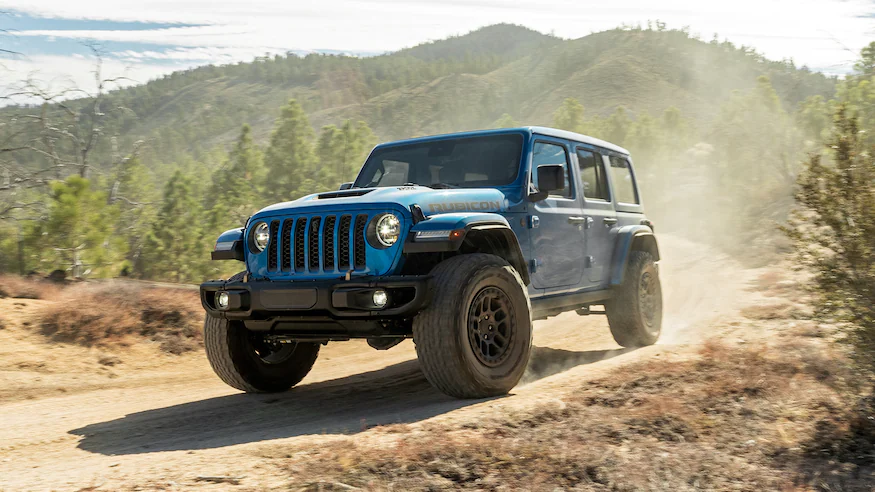
What makes a Rubicon different
Compared with a Sport or Sahara, a current Wrangler Rubicon adds the hardware that actually matters on a hard trail:
- Dana 44 solid front and rear axles with Tru-Lok electronic locking differentials, front and rear.
- A Rock-Trac transfer case with a 4:1 low range.
- An electronic front sway-bar disconnect for more axle articulation.
- 33-inch all-terrain tires on 17-inch wheels, plus off-road-tuned shocks and rock rails.
Engines on the current JL generation are the 3.6L Pentastar V6 (285 hp, 260 lb-ft), the 2.0L turbo four-cylinder (270 hp, 295 lb-ft), plus the 4xe plug-in hybrid and the 392 V8 on the specialty trims. Check the exact specifications for the model year you are shopping, because Jeep changes engines, trims and standard equipment from year to year. The 2.0L turbo has its own documented issues; see our Jeep 2.0 turbo problems guide for the coolant leak fix, recalls and a symptom checker.
Reliability ratings in context
- J.D. Power: 85/100 Quality & Reliability for the 2025 and 2026 Wrangler (all trims).
- Consumer Reports: rates the recent Wrangler below average for reliability compared with other vehicles from the same model year.
- NHTSA recalls: check your VIN at nhtsa.gov/recalls. Recall counts vary by model year, and a recall is not the same as a repeat failure.
These sources use different survey methods and sample sizes, and none of them rates the Rubicon trim on its own. Treat them as a broad picture and read the owner complaints for the specific year.
Common Rubicon and Wrangler problems
- Steering and death wobble. A worn or loose track bar or steering component can cause a violent front-end shake after a bump. It is usually a wear item that gets worse with big tires or lifts. See our guide on problems after a lift kit or bigger tires.
- Battery, charging and electrical faults. Wranglers with Engine Stop-Start use a more complex battery setup. Our guide on why Wranglers have two batteries explains it. Owners also report warning chimes and sensor faults; see why a Wrangler keeps beeping.
- HVAC and rattles. Consumer reviews on Edmunds and similar sites mention air conditioning that cuts in and out and interior rattles.
- Engine wear at higher mileage. Some owners report cam phaser or lifter problems on the 3.6L. Regular oil changes with the specified oil help.
- Off-road damage. Rock strikes to the skid plates, axle seals, driveshafts and U-joints are more likely to end a trip than any factory defect. See our post-trail check.
Is the Rubicon worth the extra money?
For hard trail use, yes. Factory lockers, a 4:1 transfer case and a sway-bar disconnect would cost thousands to add to a Sahara or Sport, and they come with a factory warranty. A new four-door Rubicon lists at roughly $50,000 or more depending on the model year and options. If you mostly drive on pavement and gravel roads, a Sport or Sahara is the better value. For how the Rubicon compares with a truck rival, see Gladiator Rubicon vs Mojave.
Tips for a reliable Rubicon
- Change the engine and axle fluids on schedule, and sooner if you do deep water crossings.
- Pay attention to recall notices and have the dealer perform them.
- Wash the underbody after mud and salt. See our guide to cleaning your Jeep after off-roading.
- Re-torque suspension bolts after any lift or heavy trail use.
- Buy used with a pre-purchase inspection and a record of service. A Rubicon that has been modified heavily or run hard is a bigger gamble than any model-year problem.
Rubicon reliability FAQ
How long does a Jeep Wrangler Rubicon last?
There is no official lifespan figure. With regular maintenance, many Wranglers pass 150,000 miles, and the axles and transfer case are built to last. Longevity depends more on maintenance and how hard it was driven than on the badge.
Is the Rubicon more reliable than a Sahara?
Not inherently. They share engines and most electronics. The Rubicon has extra off-road hardware (lockers, sway-bar disconnect), which adds complexity, though not a track record of frequent failures.
What is the main downside of a Rubicon?
Fuel economy and ride quality on pavement. The big tires and weight cost fuel mileage, and the front end can wander on the highway.
Sources: J.D. Power 2025 and 2026 Wrangler reliability ratings; Consumer Reports Wrangler reliability; Jeep Wrangler specifications; NHTSA recalls database.
Related guides
- 10 Unique Personalized (Vanity) License Plate Ideas for Jeep
- 7 Reasons Jeep Wrangler Cruise Control Stops Working (Fixed)
- Jeep Wrangler Automatic Transmission Shifting Problems (Fix)

I'm Suryashankar Dasgupta, the founder of Off-Road Handbook. I've been off-roading for years in the USA, including California and Texas, and have ridden mountain and desert terrain abroad. I've also driven a Jeep Compass for more than seven years, so I know the day-to-day side of Jeep ownership first-hand, from the Uconnect screen to the warning lights. Every guide here is researched from manufacturer owner's manuals, NHTSA recall and service-bulletin records and other trusted sources, checked against them before it is published, and corrected when we find a mistake. You can read how we work in our editorial policy: https://offroadhandbook.com/editorial-policy/
Like our off-road guides? Add Off-Road Handbook as a Google Preferred Source so our latest Jeep, ATV, UTV, trail, recovery, and off-road troubleshooting articles can appear more often in your Google Search experience.
Add us as a Preferred Source