What Is Off-Roading? Definition, Types and Why People Love It
Last updated on October 26th, 2026 at 08:14 pm
Off-roading is driving or riding a vehicle on unpaved terrain such as dirt trails, rocks, sand, mud, snow or gravel roads, usually for recreation. The useful test is not whether the road is paved but whether the ground starts to decide how you drive. In the US, where you do it legally matters as much as what you drive, because most public land limits vehicles to designated routes.

What counts as off-roading?
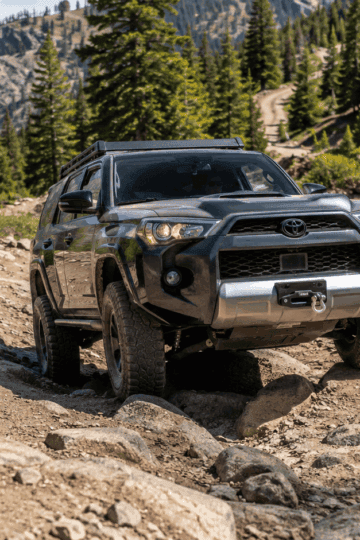
The common thread is leaving maintained pavement. That can mean a gravel county road, a designated trail in a national forest, a dune area or a private ranch. Vehicles range from a stock crossover on a dirt road to a purpose-built rock crawler.
Most people start with an unmodified 4x4 on easy trails and add tires, recovery gear and skill over time.
Main types of off-roading
| Type | Terrain | Typical vehicles | Typical gear |
|---|---|---|---|
| Trail driving or riding | Dirt, gravel and forest roads | 4x4 trucks and SUVs, UTVs, ATVs, dirt bikes | All-terrain tires, recovery strap, navigation, spare |
| Rock crawling | Boulders and ledges at walking speed | Modified Jeeps, trucks, purpose-built crawlers | Lockers, skid plates, rock sliders, winch |
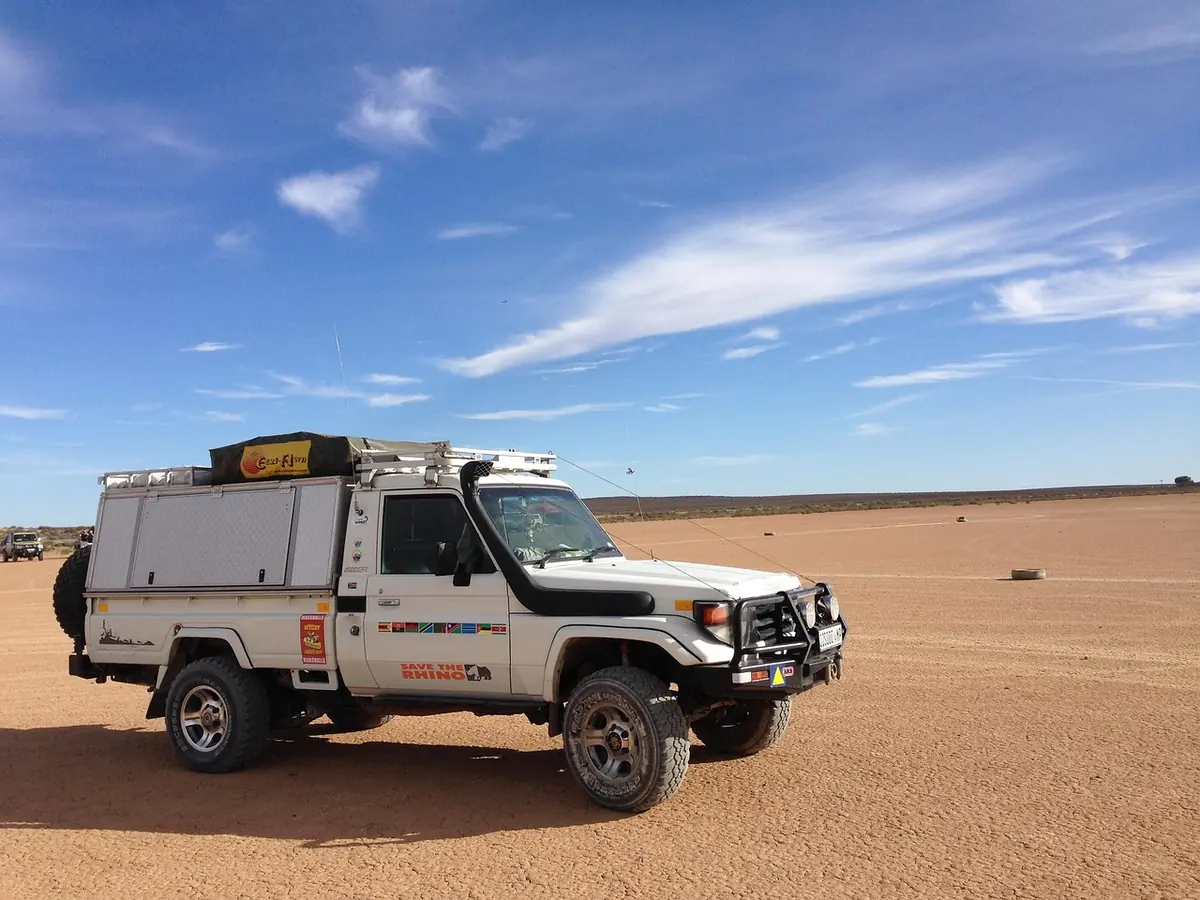
| Overlanding | Long backcountry routes with camping | 4x4 trucks and SUVs with camping setups | Recovery gear, water, food, communications |
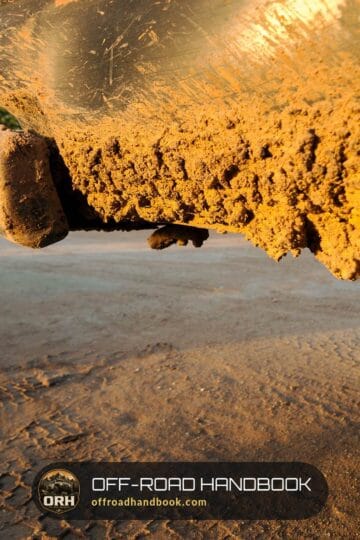
| Mudding | Mud and wet clay | Lifted trucks, UTVs | Mud-terrain tires, winch, recovery points |
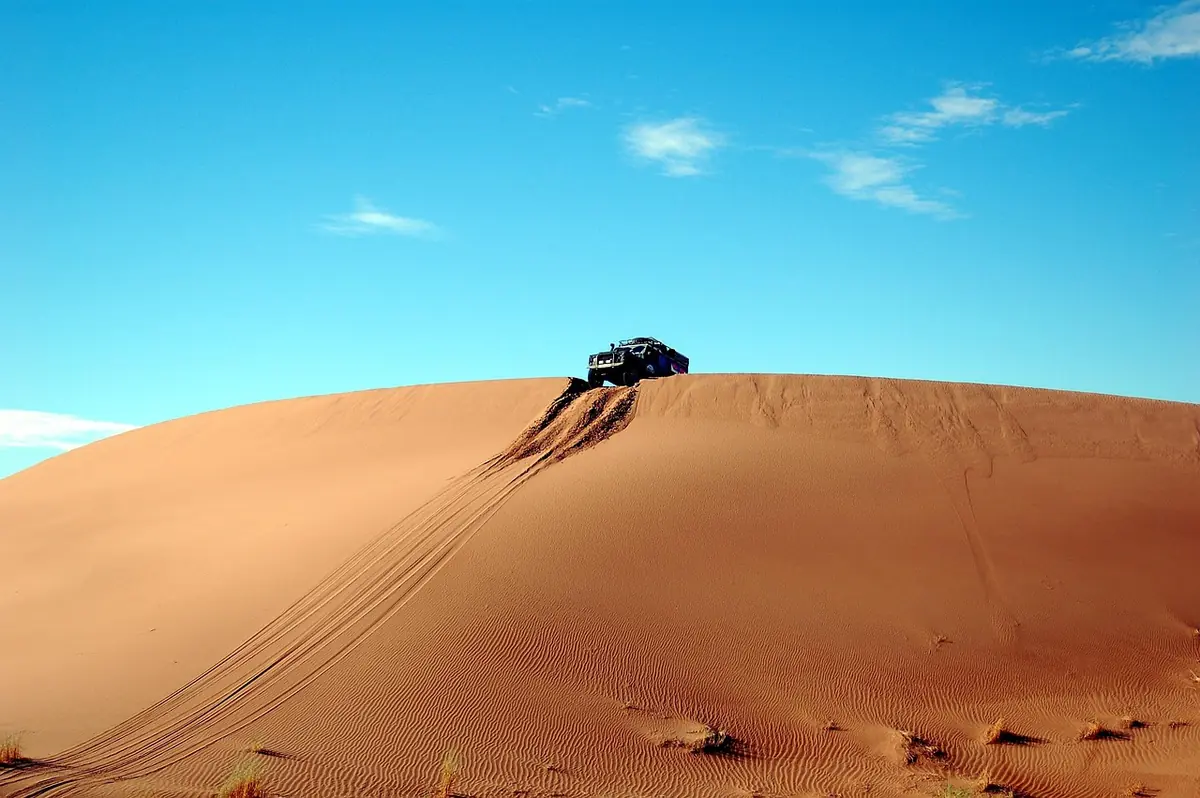
| Sand and dunes | Dunes and beaches | Dune buggies, UTVs, ATVs, 4x4s | Lower tire pressure, sand flag, recovery boards |
| Snow wheeling | Snow-covered trails | 4x4s on all-terrain or winter tires | Recovery boards, shovel, chains where allowed |
| Off-road racing | Closed courses and desert races | Trophy trucks, buggies, race-prepped 4x4s | Roll cage, harnesses, race safety gear |
Is off-roading legal?
Only where the land manager allows it. The rule that matters most is who owns or manages the land.
| Land | Default rule | Where to check |
|---|---|---|
| National forest or grassland | Motor vehicles go only on roads, trails and areas designated on the forest’s Motor Vehicle Use Map (MVUM). The map lists allowed vehicle classes and seasonal limits. | The MVUM for that forest, free to download on the Forest Service site |
| BLM land | Each area is open, limited or closed to off-road vehicles. Open means all vehicle types anywhere in the area; limited restricts by place, time, vehicle type or to designated routes; closed prohibits use. | BLM field office travel management map for the area |
| State parks and OHV areas | Set by the state. Some require registration or a permit for ATVs, UTVs and dirt bikes. | The state parks or OHV agency |
| Private land | Owner’s permission only. | Ask the owner |
Designation is not a promise of safety. The Forest Service notes that weather and events can make designated routes impassable, and that many receive little maintenance. Roads shown on the map for information only are not designated for motor vehicle use. Rules also change with fire and seasonal closures, so check the current map before every trip.

Can I drive here? A land and vehicle checker
Based on the land-manager table above. It points you to the right map or agency; it cannot tell you whether a specific route is open today. The nonprofit Tread Lightly! promotes responsible motorized recreation.
What vehicle do you need?
Any vehicle can drive a graded dirt road. Harder terrain rewards ground clearance, traction and protection, and many off-roaders prefer 4WD with a low-range transfer case for torque at crawling speeds. Check yours with the guide to ground clearance and the approach angle calculator.

Tires are the first and most effective upgrade. Lower the pressure for sand or rocks and raise it again for the highway, using the off-road tire pressure calculator. For later upgrades see off-road suspension.
- 4x4 trucks and SUVs: street-legal and the most flexible.
- UTVs (side-by-sides): seat two or more; common on trails and dunes.
- ATVs: ride-on quads, usually limited to routes open to them.
- Dirt bikes and adventure bikes: go where wider vehicles cannot.
Is off-roading dangerous?
It carries real risks: rollovers, getting stuck far from help and vehicle damage. Wear seat belts, stay on routes that match your skill, avoid going alone, tell someone your plan and carry recovery gear, water, a first-aid kit and a way to communicate when cell service is gone.
Plan with an off-road navigation app, and learn the basics from our trail etiquette guide. Costs vary too widely to quote: a stock 4x4 on easy trails needs little beyond recovery gear and good tires, and most people upgrade gradually.

FAQ
No. Many off-road vehicles are 4WD, but 2WD trucks, AWD crossovers and motorcycles can drive easier unpaved roads. 4WD with low range is a big advantage on difficult terrain.
No. National forests limit motor vehicles to designated routes on the Motor Vehicle Use Map, and BLM land is open, limited or closed. Check the managing agency’s current map first.
A Motor Vehicle Use Map shows the roads, trails and areas a national forest has designated for motor vehicles, which vehicle classes may use them and any seasonal limits.
For the driving challenge, remote scenery, camping and time outdoors with friends and family.

I'm Suryashankar Dasgupta, the founder of Off-Road Handbook. I've been off-roading for years in the USA, including California and Texas, and have ridden mountain and desert terrain abroad. I've also driven a Jeep Compass for more than seven years, so I know the day-to-day side of Jeep ownership first-hand, from the Uconnect screen to the warning lights. Every guide here is researched from manufacturer owner's manuals, NHTSA recall and service-bulletin records and other trusted sources, checked against them before it is published, and corrected when we find a mistake. You can read how we work in our editorial policy: https://offroadhandbook.com/editorial-policy/
Like our off-road guides? Add Off-Road Handbook as a Google Preferred Source so our latest Jeep, ATV, UTV, trail, recovery, and off-road troubleshooting articles can appear more often in your Google Search experience.
Add us as a Preferred Source