Off-Road Suspension Upgrades: Types and How to Choose
Last updated on October 19th, 2026 at 06:38 am
For most 4x4 trucks and SUVs, the best first suspension upgrade is a matched set of quality shocks, with springs sized for your real weight, rather than the tallest lift you can buy. Move to a 2 to 3 inch lift only if you need tire clearance. Whatever you pick, budget for the work after the install: alignment, brake hose slack, headlight aim and re-torquing.
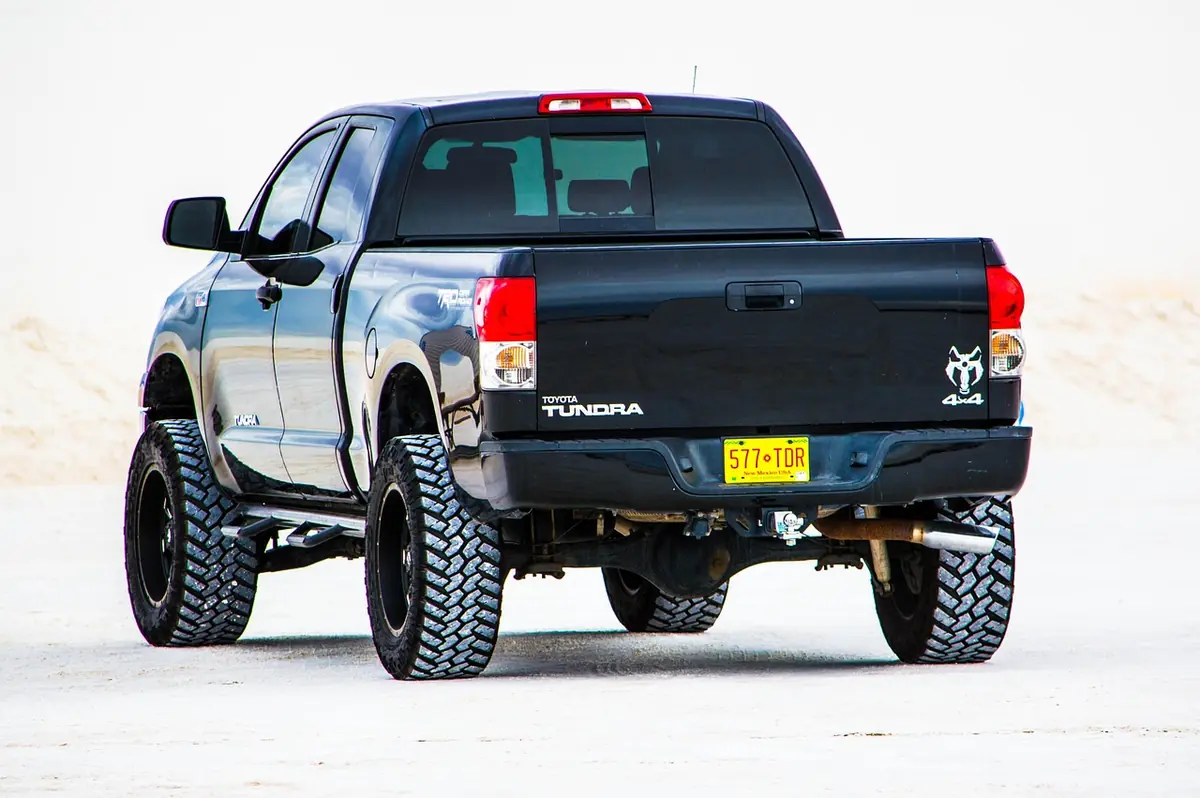
Types of off-road suspension
| Type | How it works | Strengths | Trade-offs | Found on |
|---|---|---|---|---|
| Solid (live) axle | One beam connects both wheels | Durable, simple, strong articulation, easier to lift | Heavier, firmer on pavement; one wheel hit affects the other | Jeep Wrangler and Gladiator, many heavy-duty pickups |
| Independent front (IFS) | Each wheel moves on its own control arms | Better on-road ride and handling; good at speed | Less articulation; CV axles and arms limit lift height | Most half-ton pickups and SUVs |
| Coil springs | Spring coil compresses and rebounds | More travel, better ride, tunable | Live axles need locating links | Wrangler, Land Cruiser, many IFS trucks |
| Leaf springs | Stacked steel leaves | Simple, strong under heavy loads | Stiffer ride, less articulation | Rear of most pickups |
| Torsion bar | Twisting bar replaces the front coil | Adjustable ride height | Changing height alters alignment and CV angles | Some Toyota and GM trucks |
Pick your first upgrade
Built from the tables and instruction sheets cited below. It orders the steps; it does not pick brands or know your exact vehicle.
What a suspension upgrade can change
- Shocks only: better damping and heat resistance at the same height. Often the best first move on a stock-height truck.
- Leveling kit: raises the front to match the rear, mainly to fit larger tires.
- Lift kit: springs, shocks and sometimes control arms for clearance. Quality kits include matched parts and brake line hardware.
- Long-travel kits: replace arms and axles for desert or competition use. Expensive and best for dedicated rigs.
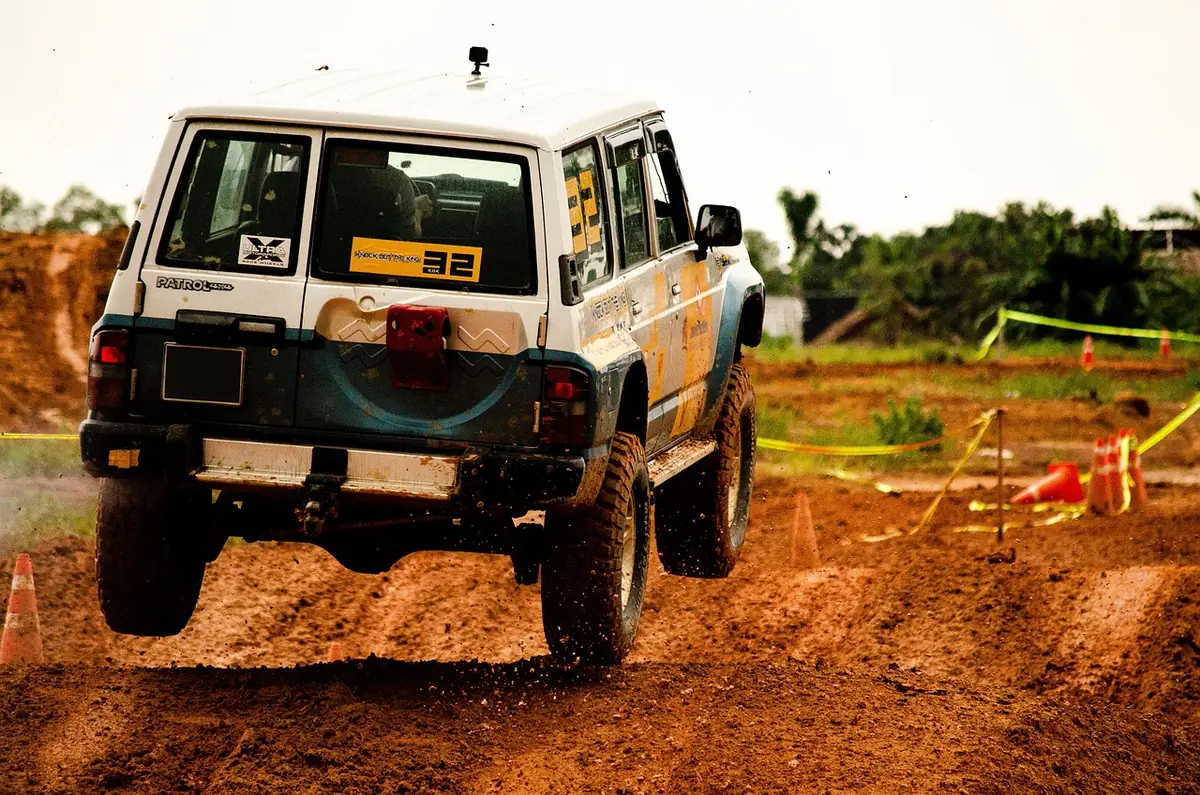
What lift-kit instructions say to do afterward
The four instruction sheets we read agree on the follow-up work, which most buying guides skip. Check the sheet for your own kit; these are examples for 2.5-inch Wrangler kits.
| Instruction sheet | After-install requirement |
|---|---|
| Skyjacker, JL 2.5 in | A qualified alignment facility must align the vehicle to OEM specs. Tires 10% larger than stock need speedometer recalibration. |
| Teraflex, JL | Changes highway handling, so use caution. Have an alignment done by a shop experienced with lifted 4x4s. Re-torque suspension after 300 miles, then every 3,000 miles. |
| Body Armor 4x4, JL 2.5 in | Have the alignment checked whenever new suspension is installed, and adjust the headlights when ride height changes. |
| Superlift, JK 2.5 in | Precise alignment with a centered steering wheel is required for stability control. Cycle steering lock to lock to check brake hose slack. Retighten lug nuts at 500 miles after any wheel change. |
Four sheets are a sample, not a rule for every kit. They do show that a lift is a package: alignment, headlights, brake lines and torque checks all belong in the budget.
How to choose
- Start with how you use the vehicle: daily driver, trail rig, overland camper or tow rig. Heavy loads need springs rated for the weight.
- Plan the whole package: alignment, brake lines, driveline angles, steering and tires.
- Taller tires add weight and cut fuel economy. See do mud tires affect gas mileage, how to read mud tire sizes and the tire size calculator.
- Lift, bumper and headlight rules vary by state. We did not compile state limits, so check yours.
- Vehicles with driver-assist cameras or radar may need recalibration after a lift. Ask a shop.
On warranty, FTC staff statement on warranties and aftermarket parts says it is illegal to condition coverage on using specified parts, but a maker can still deny a claim for damage the part actually caused. Keep receipts and installer records.
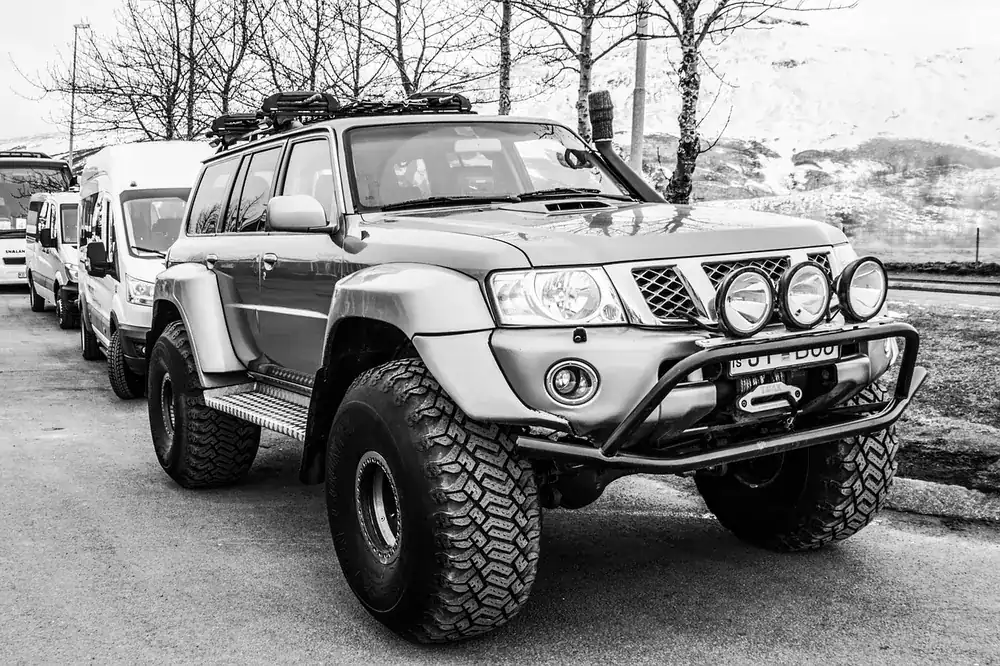
Springs and shocks, briefly
- Springs hold the vehicle up. Coil springs offer more travel; leaf springs carry loads well.
- Shocks control the spring. Bilstein says heat is a major cause of shock fade and that its monotube design sheds heat better than twin-tube, per its own Bilstein monotube document. That is maker marketing, not an independent test.
- Replace shocks as a matched pair per axle; mixing worn and new makes handling unpredictable.
If the lift came with a wobble, see Jeep problems after a lift kit, and for a Jeep shock comparison best shocks for Wrangler JL.
FAQ
For articulation and durability, a solid axle with coil springs. For mixed road and trail driving, a well-tuned independent front suspension with quality shocks.
For ride and travel, usually. Leaf springs are tougher under heavy loads and simpler, which is why most pickups still use them in the rear.
Yes. Skyjacker, Teraflex, Body Armor and Superlift instruction sheets all call for an alignment or alignment check after installation.
Not by itself. FTC staff say it is illegal to condition warranty coverage on specified parts, but a maker can deny a claim for damage the part actually caused.

I'm Suryashankar Dasgupta, the founder of Off-Road Handbook. I've been off-roading for years in the USA, including California and Texas, and have ridden mountain and desert terrain abroad. I've also driven a Jeep Compass for more than seven years, so I know the day-to-day side of Jeep ownership first-hand, from the Uconnect screen to the warning lights. Every guide here is researched from manufacturer owner's manuals, NHTSA recall and service-bulletin records and other trusted sources, checked against them before it is published, and corrected when we find a mistake. You can read how we work in our editorial policy: https://offroadhandbook.com/editorial-policy/
Like our off-road guides? Add Off-Road Handbook as a Google Preferred Source so our latest Jeep, ATV, UTV, trail, recovery, and off-road troubleshooting articles can appear more often in your Google Search experience.
Add us as a Preferred Source