Honda 300EX Top Speed, Specs, Features, Pros and Cons
Last updated on October 17th, 2026 at 12:21 pm
Honda never published a top speed for the 300EX. Dirt Wheels magazine tested a 1998 model and reported about 60 mph in stock condition, with the top end held back by a rev limiter that cut in early. Real-world speed depends on tires, gearing, rider weight and how healthy the engine is.
The TRX300EX is a two-wheel-drive sport quad with a 282cc air-cooled engine, a five-speed manual transmission with reverse and an electric starter. Honda's own spec sheets are below, with the changes from year to year.
Honda 300EX specs by model year
| Spec | 1998 (Dirt Wheels) | 2004–2006 (Honda) | 2007 (ATV.com) | 2009 TRX300X (ATV.com) |
|---|---|---|---|---|
| Engine | 282cc air-cooled SOHC single | 282cc, 74 x 65.5 mm | 282cc, 74 x 65.5 mm | 282cc, 74 x 65.5 mm |
| Carburetor | 32 mm | 32 mm piston-valve, accelerator pump | 32 mm | 32 mm |
| Front / rear travel | 6.7 in / 7.9 in | 6.7 in / 7.9 in | 7.1 in / 7.9 in | 7.1 in / 7.9 in |
| Tires | 22x7-10 / 20x10-9 | 22x7-10 / 22x10-9 | 22x7-10 / 22x10-9 | 22x7-10 / 22x10-9 |
| Wheelbase | 45.3 in | 45.3 in | 45.1 in | 45 in |
| Ground clearance | 4.9 in | 4.9 in | 4.6 in | 4.6 in |
| Seat height | 30.3 in | 30.3 in | 30.5 in | 30.5 in |
| Dry weight | 377 lb | 377 lb | 372.5 lb | 372.5 lb (390 lb wet) |
| Fuel tank | 2.2 gal | 2.2 gal incl. 0.5 gal reserve | 2.2 gal incl. 0.5 gal reserve | 2.2 gal incl. 0.5 gal reserve |
| MSRP | $4,799 | $4,749 (2005) | $4,899 | $5,049 |
The engine, carburetor and gearbox stayed the same across all of them. The changes are small: front travel grew from 6.7 to 7.1 inches by 2007, ground clearance dropped from 4.9 to 4.6 inches, and dry weight fell from 377 to 372.5 pounds.
Notice the rear tire. The 1998 test machine rolled on 20x10-9 rears, but Honda's 2004 and later sheets list 22x10-9. Tire diameter changes road speed at a given rpm, so know which year you have before comparing numbers.

How fast is the Honda 300EX?
The one measured figure we could verify is the Dirt Wheels test: around 60 mph in stock condition, with a rev limiter that kicks in too early for the testers' taste. It is a 1998 number from a magazine rider, not a GPS log, so treat it as a ceiling for a healthy machine.
Honda lists no horsepower or torque either. Anyone quoting a precise hp figure for the 300EX is repeating a guess unless they show a dyno sheet.
| Variable | Raises top speed when | Lowers top speed when |
|---|---|---|
| Final gearing | Fewer rear sprocket teeth | More rear sprocket teeth |
| Tires | Stock-size, lighter tires | Heavy or oversize tires |
| Engine health | Carb, filter, valves and plug are right | Dirty carb, wrong jetting, worn rings |
| Clutch | Plates hold power cleanly | Clutch slips under load |
| Terrain | Flat, firm, open ground | Sand, mud, grass or hills |
| Rider load | Lighter rider, less gear | Heavier rider and cargo |
On a trail, you rarely see top speed. A 300EX on tight single-track spends its time in second and third, where power delivery and suspension matter more than a mph figure.
Engine, carburetor and ignition
Honda lists a 282cc air-cooled, single-cylinder, four-stroke SOHC engine with a 74 mm bore and 65.5 mm stroke. Fuel comes from a 32 mm piston-valve carburetor with an accelerator pump, and ignition is a CD system with electronic advance.
There is no fuel injection and no liquid cooling. Starting is electric, but Dirt Wheels noted there is no backup kick or recoil starter, so a dead battery means a push or tow start. Their test machine used a 12-volt, 8 Ah battery.
Transmission, drive and reverse
The 300EX is a 4x2 with a five-speed manual gearbox and reverse, driven through an O-ring-sealed chain to a solid rear axle. Dirt Wheels listed a DID 520 O-ring chain on the 1998 machine.
Reverse takes a procedure. In the 1998 test, you push a button on the clutch lever, pull up a lever on the left side of the engine and then let out the clutch. Check the owner's manual for your year before you try it.
Suspension, brakes and tires
Up front, an independent double-wishbone layout uses dual hydraulic shocks with five-position preload. The rear is a swingarm with a single five-position preload shock and 7.9 inches of travel.
Honda lists dual hydraulic discs in front and a single hydraulic disc at the rear. Honda's public sheets do not list disc diameters, so ignore posts that quote specific millimeters.
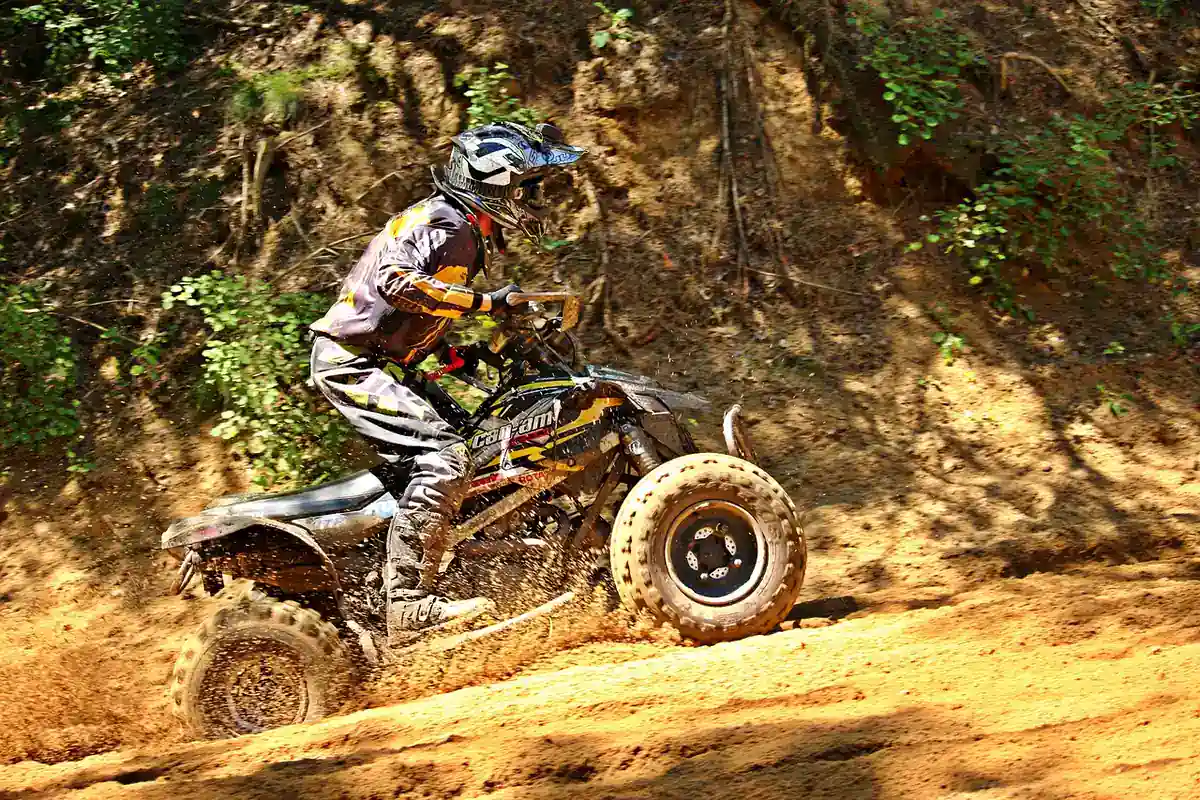
Dirt Wheels said the front suspension performance was one of the highlights, and that the quad could two-wheel in corners when the tires hook up on good dirt. That points to a light, responsive front end, and it means a new rider should respect the throttle.
If your 300EX feels slow
A weak machine usually has a simple problem. Work through the list in this order, and only buy performance parts after the basics check out.
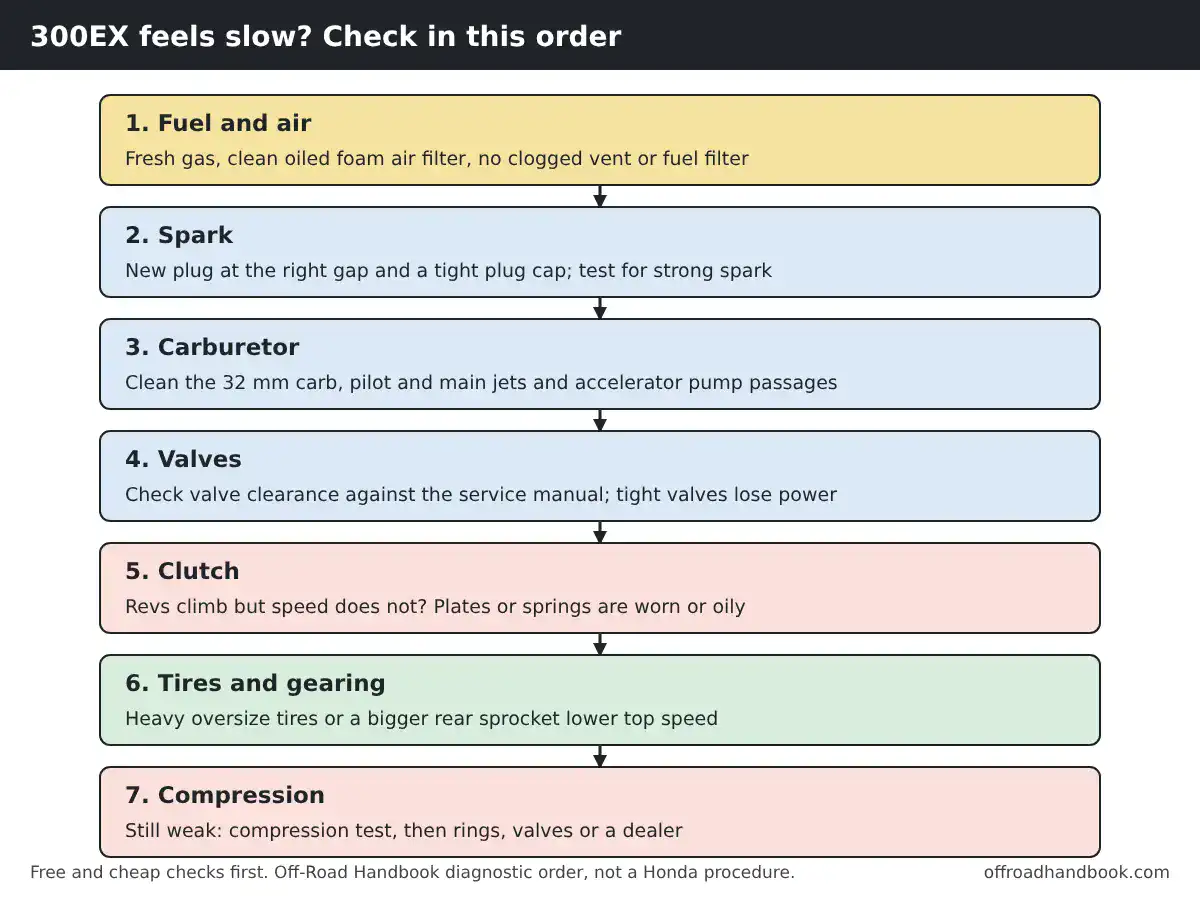
Use the valve clearance and plug gap in your service manual. The official Honda service manual, or Haynes's manual for the 1993–2006 TRX300EX, lists those specifications.
Not sure where to start? Pick the symptom below and the checker lists the same checks in the right order.
Why is my 300EX slow?
This checker follows the cheap-checks-first order in the diagram above and the specs in the table earlier in this guide. It is general mechanical practice, not a Honda procedure; use your service manual for clearances and gaps.
Check the model year before you compare any numbers, because the rear tire changed from 20 to 22 inches between the 1998 test machine and the later Honda sheets.
Safety, age and recalls
Honda's spec sheets say the 300EX is for highly experienced riders 16 and older. A manual-clutch sport quad with this much power can flip or get out from under a new rider, so wear a helmet, eye protection, gloves, boots and a chest protector.
We found no CPSC recall for the TRX300EX in the sources we could open. Honda has recalled other ATVs, so check any used machine by serial number with Honda before you buy it.
Pros and cons
- Pro: simple, air-cooled engine with a carburetor, so there is no radiator, no fuel injection and little to go wrong electronically.
- Pro: good suspension and handling, according to Dirt Wheels.
- Pro: five speeds, a manual clutch and reverse.
- Con: Honda lists it for highly experienced riders only, and it can two-wheel in corners.
- Con: no backup starter if the battery dies.
- Con: parts and condition vary widely on a machine that is nearly two decades old. Inspect before you buy.
Honda 300EX FAQ
What is the top speed of a Honda 300EX?
Honda does not publish one. Dirt Wheels reported about 60 mph for a stock 1998 model. A worn engine, a slipping clutch or oversize tires will lower it.
How much horsepower does the Honda 300EX make?
Honda does not list a figure, and we found no verified dyno sheet.
Is the 300EX two-wheel drive?
Yes. It is a 4x2 with a solid rear axle and chain drive.
Is the TRX300X the same as the 300EX?
The 2009 TRX300X spec page on ATV.com lists the same engine, bore and stroke, 32 mm carburetor, tires and travel as the 2007 300EX, so most parts and know-how should carry over. Confirm part numbers for your year.
How much fuel does a 300EX hold?
Honda lists 2.2 gallons, including a 0.5-gallon reserve.
Related guides
- Honda CRF250R top speed, specs and gearing calculator
- Honda FourTrax 300 4x4: top speed, specs and buying tips
- Kawasaki KX250 top speed and specs
- ATV and UTV troubleshooting: bogging, no-start, heat and belts
- Free off-road calculators

I'm Suryashankar Dasgupta, the founder of Off-Road Handbook. I've been off-roading for years in the USA, including California and Texas, and have ridden mountain and desert terrain abroad. I've also driven a Jeep Compass for more than seven years, so I know the day-to-day side of Jeep ownership first-hand, from the Uconnect screen to the warning lights. Every guide here is researched from manufacturer owner's manuals, NHTSA recall and service-bulletin records and other trusted sources, checked against them before it is published, and corrected when we find a mistake. You can read how we work in our editorial policy: https://offroadhandbook.com/editorial-policy/
Like our off-road guides? Add Off-Road Handbook as a Google Preferred Source so our latest Jeep, ATV, UTV, trail, recovery, and off-road troubleshooting articles can appear more often in your Google Search experience.
Add us as a Preferred Source