Can-Am Maverick Sport Problems: Limp Mode, CVT and Fixes
Last updated on October 19th, 2026 at 06:02 pm
The most common Can-Am Maverick Sport problems are limp mode, CVT belt slip, overheating and charging trouble from added accessories. BRP's own troubleshooting list puts the free checks first: a buckled seat belt, a cooled-down engine, a drained CVT, a clean air filter and good spark plugs. A LIMP HOME or PPS FAULT message on the gauge means a stored fault that needs a dealer scan.
This guide uses the BRP 2023 Maverick Trail and Sport operator's guide and BRP's spec sheets, and it separates what BRP confirms from what owners only report. It also fixes a mix-up in older articles: the Sport 1000 makes 75 hp and only the 1000R makes 100 hp (BRP 2019 spec sheet).
Maverick Sport problems: symptom, check and fix
| What you see | Check first (free) | Likely cause | Next step |
|---|---|---|---|
| Reduced power, LIMP HOME on the gauge | Engine temperature on the display, seat belt buckled, recent water or mud | Stored fault, or torque limited by high coolant temperature | Let it cool. If LIMP HOME stays, see a Can-Am dealer for a scan |
| Engine revs, machine barely moves | Stop the engine, check the CVT drain | Water in the CVT, dirty or worn CVT, or a failed belt | Drain the CVT, inspect the belt, clean the CVT after a belt failure |
| Weak acceleration | Seat belt, air filter, spark plugs | Plugged filter, fouled plugs, CVT wear, clogged fuel pump pre-filter | Replace plugs and filter, then dealer for CVT or fuel pump |
| Overheating | Coolant level cold, fan, radiator fins | Low coolant, jammed fan or blown fan fuse, mud-packed radiator | Clean fins, refill to MAX when cold, find any leak |
| Burning smell, slipping belt | Which range you were in, water in the CVT | High range under load, water, heat from long wide-open throttle | Use low range for hauling, mud, water and hills |
| Will not turn over | Start procedure, shift lever in PARK, fuses, battery terminals | Weak battery, loose connection, solenoid, DESS key | Check fuses and terminals, then dealer for solenoid |
| Dim lights, low battery | Battery voltage on the display, terminals | Accessory load against a 650 W magneto | Add up accessory watts, fuse every circuit |
Each row maps to a section below, in the same order BRP lists the checks. Free checks come first, then simple tools, then the dealer.
Anything BRP does not document, such as radius rod strength, is labeled as an owner report so you can weigh it yourself.
Limp mode and gauge messages on the Maverick Sport
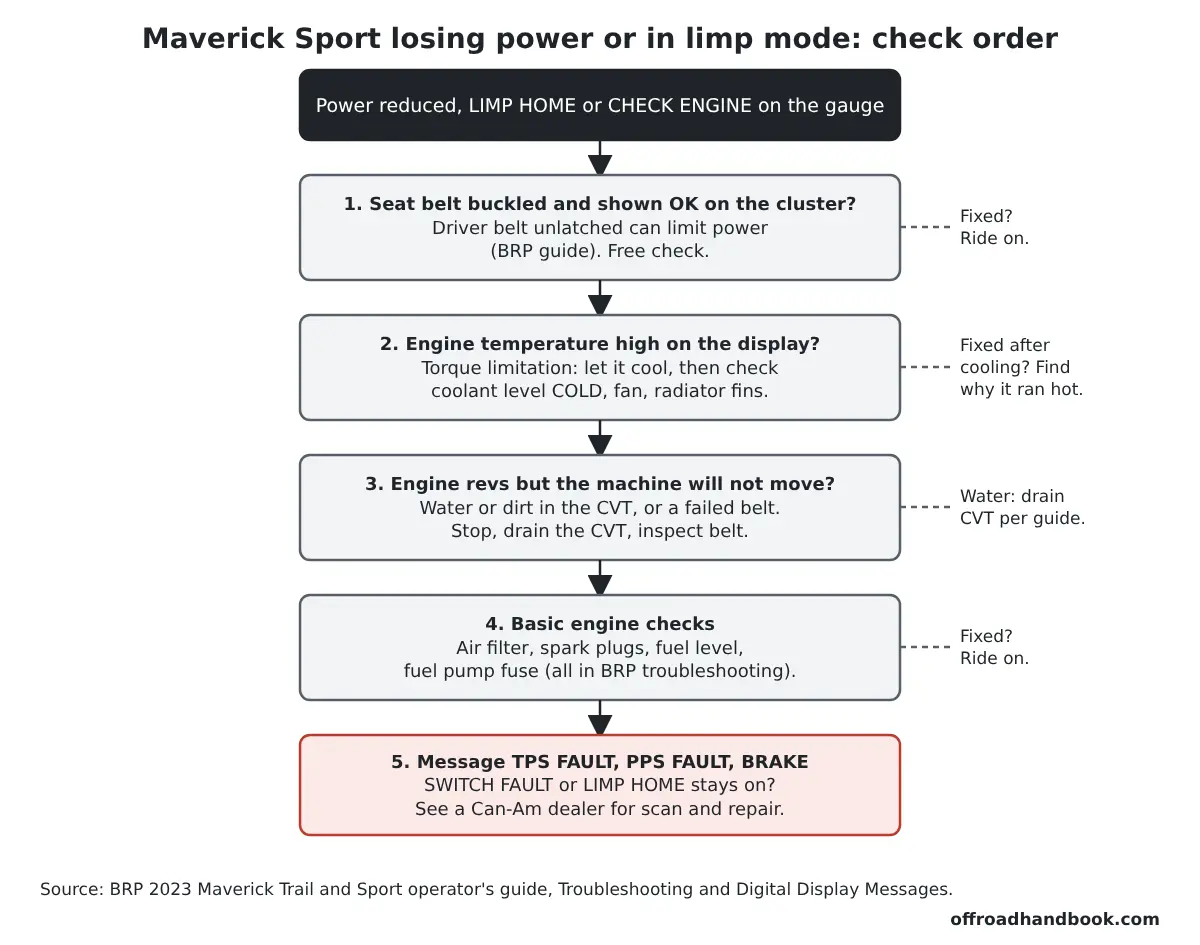
Work the chart from the top. Each step is a free or cheap check that BRP lists before it sends you to a dealer.
BRP separates two states. CHECK ENGINE means a fault is active or was active and nothing is being limited. LIMP HOME means a critical fault, and the engine limit or behavior change is engaged.
| Gauge message | What BRP says it means | What to do |
|---|---|---|
| CHECK ENGINE | Active or previously active faults that need attention; no engine limitation engaged | Note any other message, then book a scan |
| LIMP HOME | Critical fault; engine limitation engaged or behavior modified | Dealer, repair shop or your own choice of repairer |
| TPS FAULT | Throttle body fault, generally followed by LIMP HOME | Dealer scan; inspect harness routing for strain |
| PPS FAULT | Faulty pedal position sensor or sensors (partial or total failure) | Dealer |
| BRAKE SWITCH FAULT | Brake signal fault | Dealer |
| CHECK DPS | Dynamic Power Steering not working properly (DPS models) | Dealer |
| FUEL SENSOR FAULT | Fuel sender resistance out of range | Dealer; refuel by trip meter until fixed |
Owner forums report a throttle body harness that works loose from its clamp, which strains the connector and can set a TPS fault. BRP does not list this, so treat it as a lead: check that the harness is routed without tension and the connector is dry before the dealer visit.
BRP's guide gives no reset procedure for LIMP HOME and says to see a dealer. Disconnecting the battery for 30 minutes is an owner tip, not a BRP step, and it will not fix the fault that set the code.
Maverick Sport symptom checker
Pick what the machine is doing, any gauge message and your recent conditions. The tool lists checks in order: free first, then tools, then the dealer.
Every line comes from the BRP guide linked above. Where a line is owner-reported or shop practice, the tool says so.
It does not replace a scan. If LIMP HOME, PPS FAULT or a flashing warning stays on after the free checks, book a dealer visit.
CVT belt slipping, burning smell or no movement
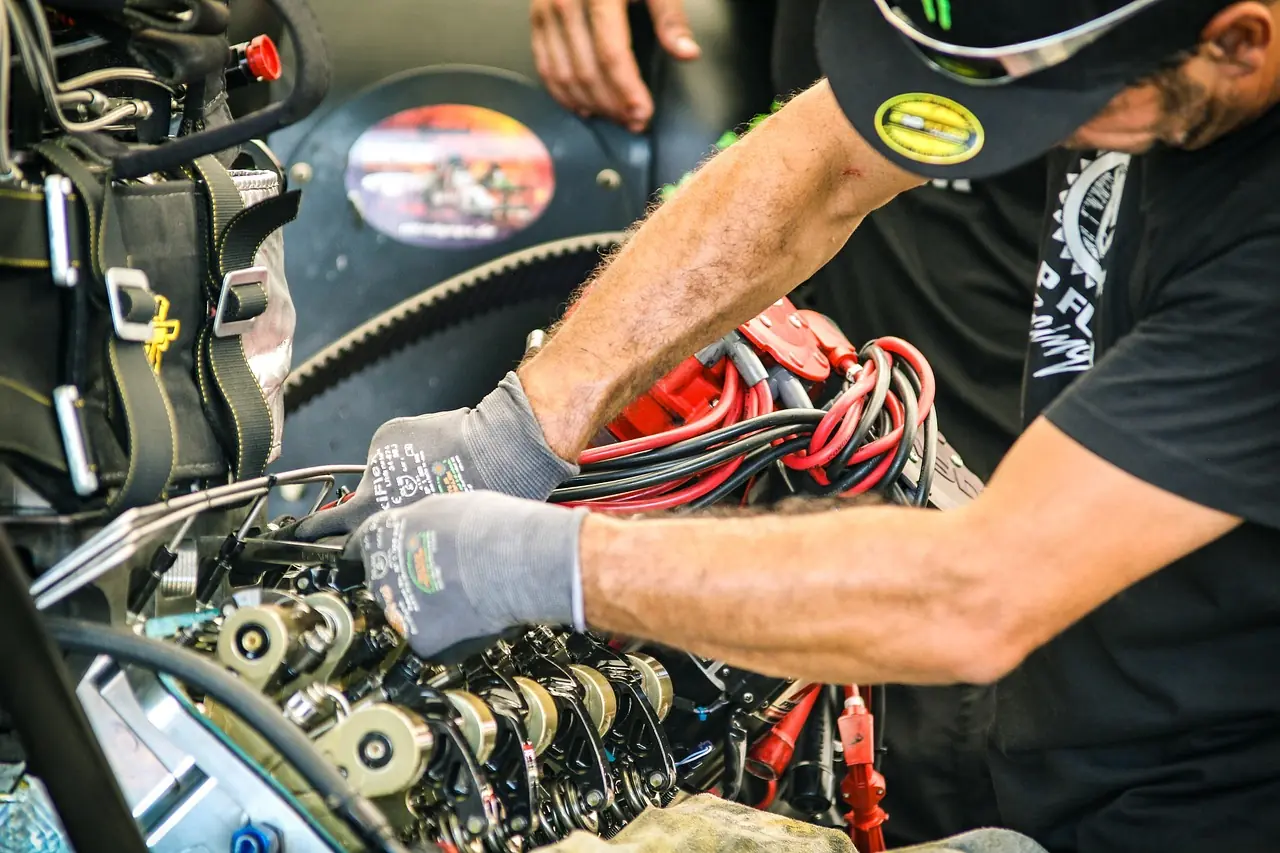
BRP says the main reason a drive belt slips is high range when low range is needed. Use low range for pulling, pushing, hauling a load, 4x4 use, mud, water, obstacles, climbing onto a trailer and hill climbing. BRP also recommends low range for long periods under 15 mph.
Some machines have electronic drive belt protection. When it is active the engine torque limiter engages and the gauge scrolls LOW GEAR. Stop, apply the brakes and shift to low range. BRP says you must shift to low whenever that message shows. Ask a dealer whether it is activated on your machine.
- Stop and shut the engine off if the machine revs but will not move, or if you smell burning rubber.
- If you crossed water or deep mud, drain the CVT using the drain under the left side of the cargo box before restarting (BRP: stop the engine and drain the water to avoid CVT damage).
- Remove the CVT cover (do not use an impact tool) and inspect the belt. Torque the cover screws to 7 ± 0.8 Nm (62 ± 7 lbf-in) in the sequence BRP shows.
- After a belt failure, clean the CVT, the cover and the air outlet. BRP calls this out in a notice.
- Install the new belt with the printed arrow pointing toward the front of the vehicle, viewed from above. BRP says this gives the longest belt life.
- Break the belt in over 30 miles (50 km): avoid strong acceleration and deceleration, pulling a load and high-speed cruising.
In heat above 86°F, with heavy loads or in soft sand, hills and mud, BRP recommends not holding the throttle wide open for more than five minutes. Back off briefly so the CVT can cool.
The same CVT habits show up on the bigger machines, so see Can-Am Defender problems and fixes and our ATV and UTV troubleshooting guide for belt and no-start checks. BRP's service schedule lists CVT components for inspection, cleaning and lubrication every year, 200 hours or 1,900 miles. Shopping for or riding the turbo model? Our Can-Am Maverick X3 problems guide covers its BELT OVERHEAT and LOW GEAR belt-protection messages.
Overheating and torque limitation
BRP's order for an engine that overheats is low coolant, a cooling fan that is jammed or has a blown fuse, and dirty radiator fins. If the engine temperature gets too high, the engine can also limit torque on its own. BRP's fix is to let the engine cool and watch the temperature on the display.
Check the coolant level only with the engine cold, and never open the pressure cap or loosen the drain plug on a hot engine. The 1000 and 1000R hold 6 L (1.59 US gal) of 50/50 ethylene glycol coolant for aluminum engines, and BRP's extended-life pre-mixed XPS coolant is the first choice.
A system that needs frequent top-offs has a leak or an engine problem, according to BRP. After a refill, bleed it: fill to the MAX line, idle with the cap on until the fan cycles on twice, let it cool, then top up again. Replace the coolant every five years or 7,500 miles.
Tire pressure and stock tires
Stock tires are 27x9x12 front and 27x11x12 rear Maxxis Bighorn 2.0 on the 2022 and 2019 Sport. BRP says to replace tires with the same type and size as the originals, and never to set pressure below the minimum, because a tire can come off the rim.
The label inside the cargo box sets the cold pressures. Use the maximum pressure if total load is over 430 lb. For soft terrain, our off-road tire pressure calculator is for general guidance, but the BRP minimum on the label still applies.
| Maverick Sport, 2 occupants | Front | Rear |
|---|---|---|
| Minimum cold pressure | 14 psi (97 kPa) | 15 psi (103 kPa) |
| Maximum cold pressure | 15 psi (103 kPa) | 22 psi (152 kPa) |
| Vehicle load capacity | 730 lb (331 kg) | Rear load 300 lb (136 kg) |
Check pressure cold, because it changes with temperature and altitude. Inspect tires for cuts and wear before each ride.
Carry a gauge, a pump and a repair kit, since BRP notes a flat can still happen on off-road tires.
Charging system, battery and accessories
The Maverick Sport's magneto puts out 650 W at 5,000 rpm and the battery is a 12 V, 20 Ah unit (BRP Technical Specifications). A stereo, light bars and a heated seat all draw from that budget.
Add up your accessory watts and compare them with the 650 W ceiling, which also feeds the machine itself. BRP does not publish the machine's own load, so leave margin. Fuse every added circuit and use the 20 A console outlet only within its rating.
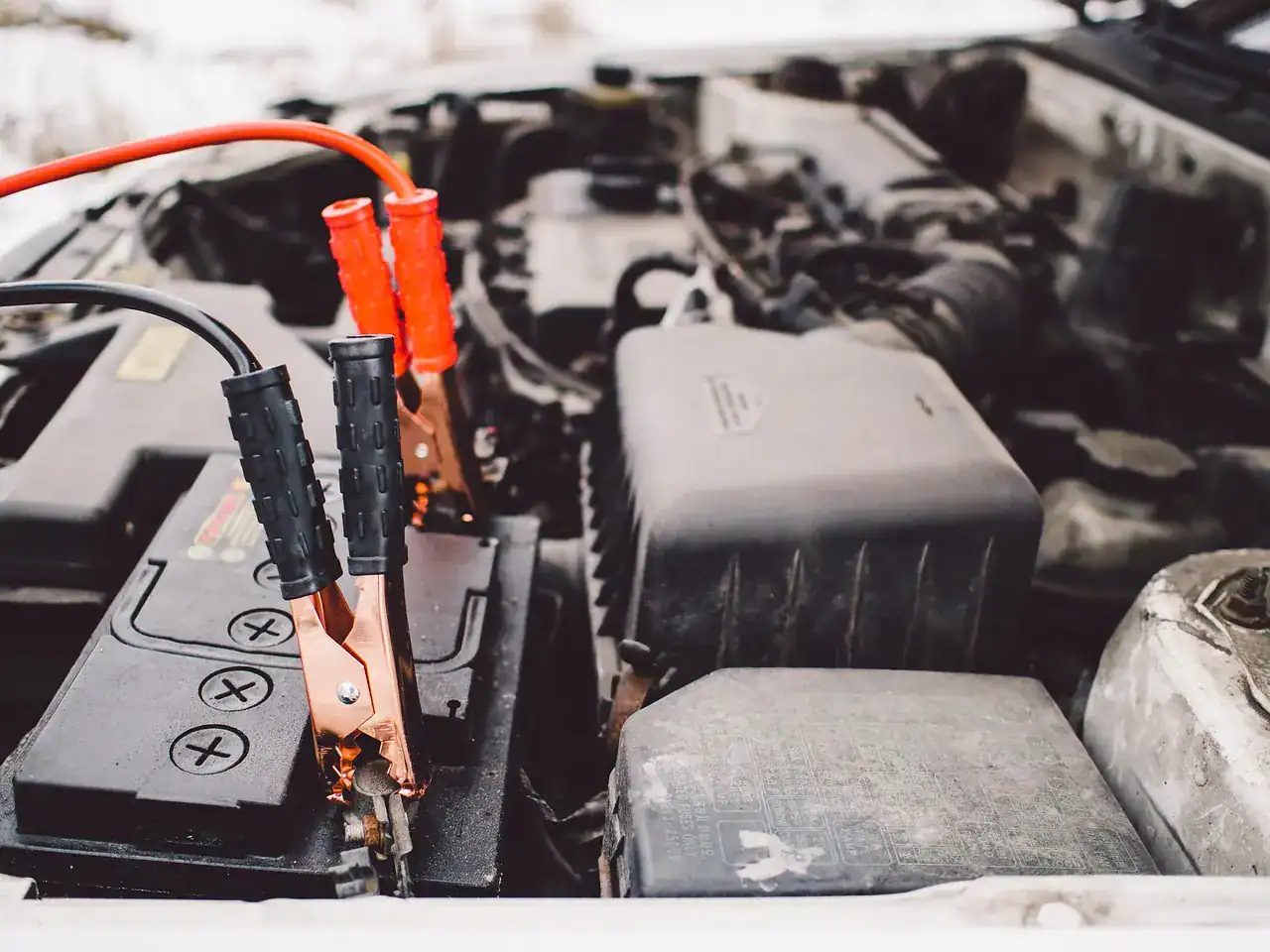
The display can show battery voltage, so you can see a low reading before the lights dim. If the battery is dead, BRP says to jump it with the red cable on the battery positive post and the black cable on the vehicle chassis. Never connect an electrical source to the steering column or anything touching DPS.
Engine will not turn over or will not start
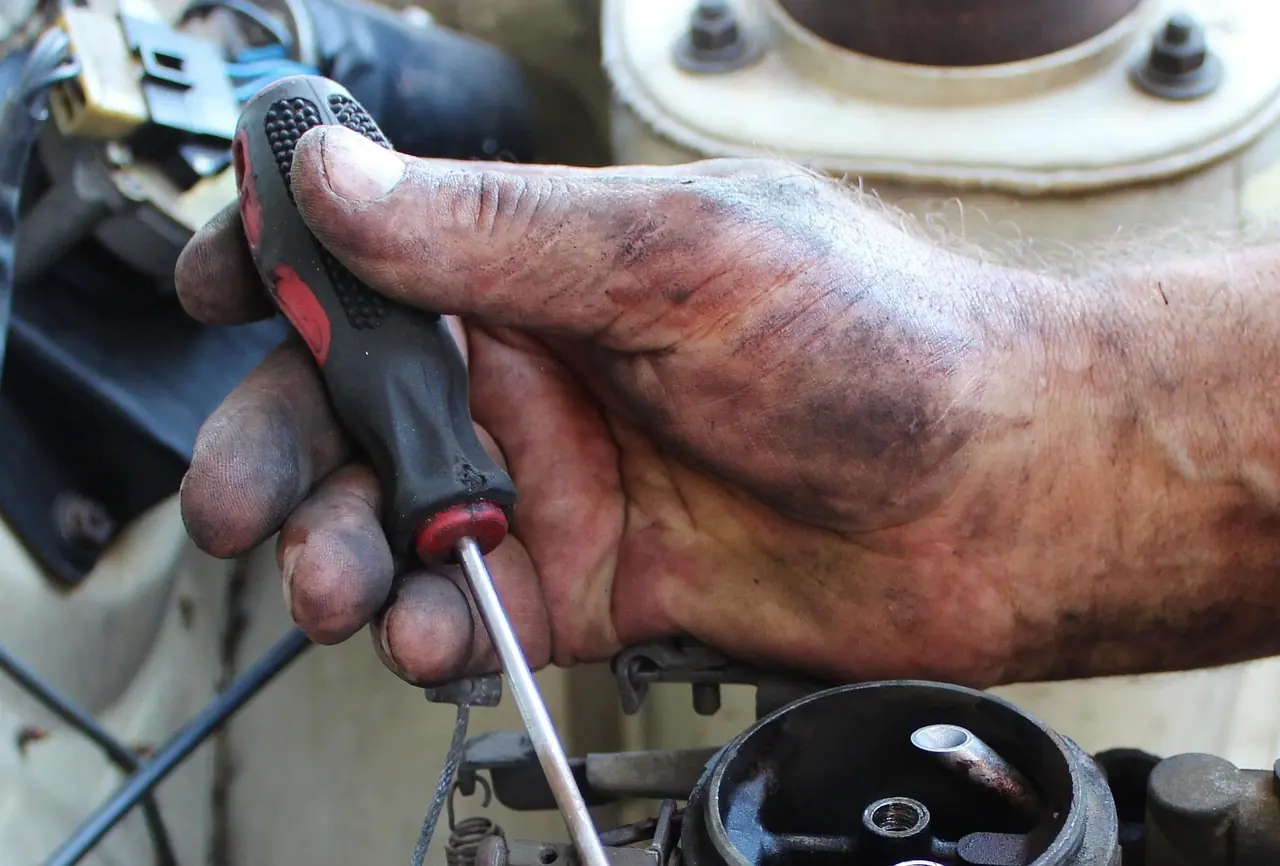
BRP lists the no-crank causes in this order: starting procedure not followed, shift lever not in PARK without the brake pedal pressed, a burnt fuse, a weak battery or loose connection, a bad starter solenoid and a DESS key that is missing or dirty.
If the engine turns over but does not start, check for a flooded engine first. BRP's drowned mode: shift to PARK, key ON, press and hold the accelerator fully, turn the key to START for 10 seconds, release both, then try a normal start. Do not hold START longer than 10 seconds.
Next check the fuel level and the fuel pump fuse, then the ignition fuse. BRP's spark test is to ground a removed spark plug against the engine, away from the plug hole, and crank. No spark means replace the plug. If it still will not start, see a dealer.
If a Maverick has rolled over, BRP says never start the engine and have it transported to a dealer for inspection.
Radius rods, knuckles and suspension
Aftermarket blogs list bent radius rods, a flexing radius rod plate and weak knuckles as the top Maverick Sport complaints. BRP does not publish a defect or recall for these, so they are owner and shop reports only.
The Sport has 11.5 in. of front and 12 in. of rear travel and 12 in. of ground clearance. Hits from rocks and stumps are what bend parts, so check the rods and plate after every rough ride for bends, cracks and loose bolts.
BRP's schedule is concrete here: torque front suspension fasteners every 900 miles, inspect and lubricate the stabilizer bar bushings every 620 miles, and inspect, clean, lubricate and torque suspension components every year. Bent parts need replacement, not straightening.
Door latches and nets
BRP's schedule includes lubricating and torquing door latches, hinges and key barrels every year or 200 hours. The guide also says every occupant must latch doors or nets and wear seat belts. Fix a door that will not latch before you ride.
Maintenance that prevents most of these problems
| Item | Interval (regular duty) | Spec |
|---|---|---|
| Engine oil and filter | Every year, 200 h or 1,900 mi | XPS 5W40 blend; 2 L (2.1 US qt) for 1000 and 1000R |
| CVT components | Inspect, clean, lubricate every year | Do not use an impact tool on cover screws |
| Radiator | Clean every year | Coolant replaced every 5 years or 7,500 mi |
| Gearbox oil | Replace at first 1,900 mi and 3,700 mi | XPS 75W140 gear oil, 2 L (2.1 US qt) |
| Spark plugs | Replace every 2 years or 400 h | NGK DCPR8E (1000), NGK LMAR8C-9 (1000R) |
| Battery connections | Inspect and clean every year | 12 V, 20 Ah |
Severe duty includes commercial use and deep mud or water. If that is how you ride, use the shorter interval.
Valve clearance is also due on the schedule for V-twin engines, so ask a dealer to check it at the same visit.
Maverick Sport specs by year
| Spec | 2019 Sport DPS | 2022 Sport 1000 |
|---|---|---|
| Engine | 976 cc Rotax V-twin: 75 hp (1000) or 100 hp (1000R) | 976 cc Rotax V-twin, 75 hp |
| Shocks | FOX 2.0 PODIUM | SHOWA 2.0 |
| Power steering | Dynamic Power Steering (DPS) | N/A on this model |
| Dry weight | 1,392 lb | 1,390 lb |
| Width / wheelbase / clearance | 60 in. / 90.6 in. / 12 in. | 60 in. / 90.6 in. / 12 in. |
| Fuel tank / towing / cargo box | 10 gal / 1,500 lb / 300 lb | 10 gal / 1,500 lb / 300 lb |
| Magneto | 650 W | 650 W |
This corrects older write-ups that give one 100 hp figure for the whole Sport range. Check your engine code and trim before you buy parts.
The Maverick Sport is a different machine from the turbocharged Maverick X3. Parts and fixes do not always carry over.
Maverick Sport recalls and safety notices
- 2023 fuel hose recall (23-723): About 3,310 model year 2023 Commander, Defender, Maverick Trail and Sport vehicles could have a defective fuel hose that leaks, a fire hazard. BRP replaces the assembly free; stop using the vehicle until it is done (CPSC).
- Harness accessory recall: Certain 4-point harnesses sold as Can-Am accessories, fitting 2019 to 2021 Maverick Sport among others, may be missing stitching. Dealers inspect and replace them (Transport Canada 2020327).
- Not a Sport recall: The December 2023 clutch maintenance recall covers Commander, Defender and Maverick Trail with HD7 or 700 engines, not the Maverick Sport (CPSC).
Check your VIN on BRP's safety recall page. The VIN is on a label under the glove box.
FAQs
A 976 cc Rotax V-twin. The 1000 is rated at 75 hp and the 1000R at 100 hp, according to BRP spec sheets.
LIMP HOME means the engine control found a critical fault and limited the engine. BRP's guide points to a dealer scan. First check the engine temperature, the seat belt and any water in the CVT.
BRP lists water in the CVT, a dirty or worn CVT or a belt failure. Stop the engine and drain the CVT before anything else.
Only DPS models. The 2019 DPS sheet lists Dynamic Power Steering, and the 2022 Sport 1000 sheet lists power steering as N/A.
Yes. Model year 2023 Sport series vehicles were in a February 2023 fuel hose recall, and 2019 to 2021 Sports were covered by a harness accessory recall in Canada.
Related guides
- Can-Am Defender problems: 8 common issues and how to fix them
- Can-Am Outlander 570 problems: recalls, causes and fixes
- Kawasaki KRX 1000 problems: overheating, CVT and fixes
- What is a side-by-side (SxS) and how it differs from an ATV

I'm Suryashankar Dasgupta, the founder of Off-Road Handbook. I've been off-roading for years in the USA, including California and Texas, and have ridden mountain and desert terrain abroad. I've also driven a Jeep Compass for more than seven years, so I know the day-to-day side of Jeep ownership first-hand, from the Uconnect screen to the warning lights. Every guide here is researched from manufacturer owner's manuals, NHTSA recall and service-bulletin records and other trusted sources, checked against them before it is published, and corrected when we find a mistake. You can read how we work in our editorial policy: https://offroadhandbook.com/editorial-policy/
Like our off-road guides? Add Off-Road Handbook as a Google Preferred Source so our latest Jeep, ATV, UTV, trail, recovery, and off-road troubleshooting articles can appear more often in your Google Search experience.
Add us as a Preferred Source