Most Reliable 4x4 ATV: What Recall Records and Specs Show
Last updated on October 18th, 2026 at 03:39 pm
This post contains Amazon affiliate links. As an Amazon Associate I earn from qualifying purchases, at no extra cost to you.
No ATV maker publishes failure rates, so nobody can prove which 4x4 is the most reliable. What can be checked is the recall record. In the U.S. Consumer Product Safety Commission notices found for this guide, Honda’s last utility 4x4 recall was in 2013, while Polaris Sportsman and Can-Am Outlander notices run through 2024 and 2026.
Recalls measure safety defects, not wear, and popular models sell more units. Still, a clean recent record plus a simple drivetrain is the best evidence available. Use the checker below for any used quad you are considering. For a specific older Honda 4x4, see the Honda FourTrax 300 4x4 specs and common problems guide.
Check a used ATV against its recalls
The checker is built from the recall tables below, which come from CPSC notices dated 2008 to 2026. Open recalls are tied to the VIN, so confirm on the maker’s recall page before you buy.
A free recall repair is done at a dealer. If the seller cannot show it was completed, treat the open recall like a repair you will have to schedule.
What makes a 4x4 ATV last
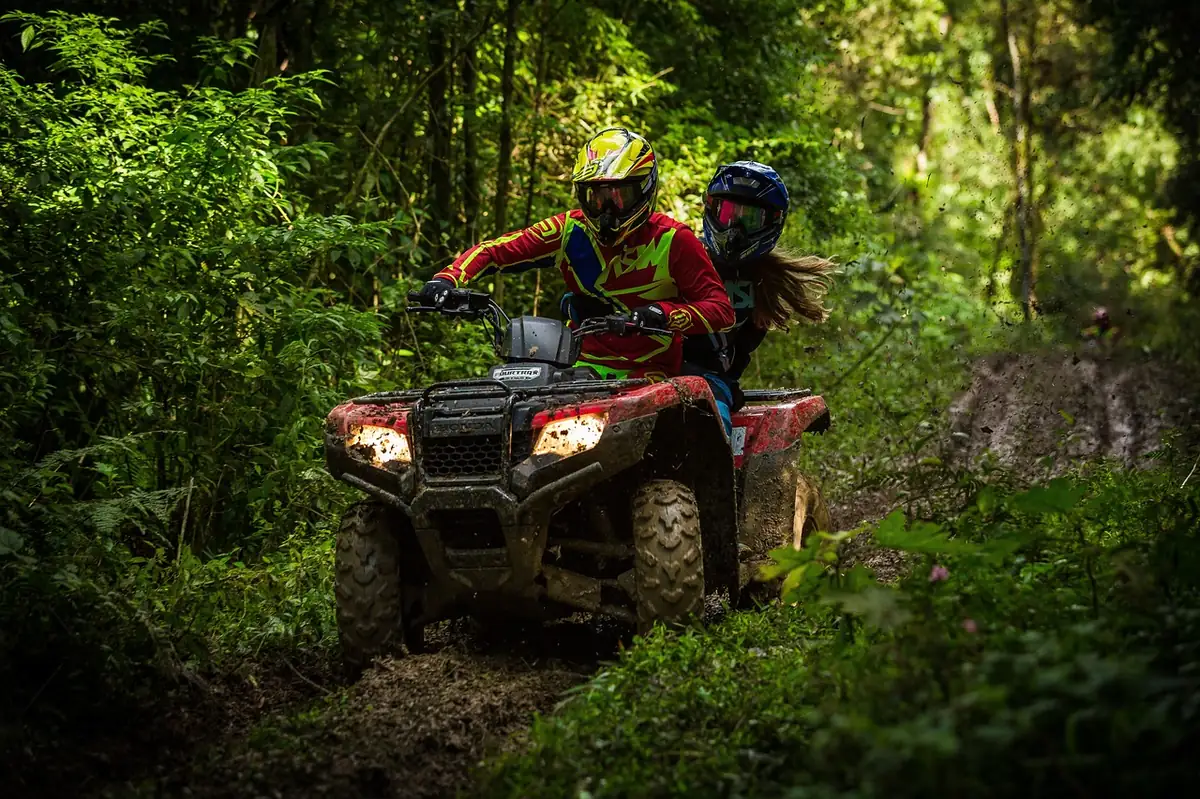
Honda’s manual-shift Foreman Rubicon shows what a simple drivetrain looks like: an automatic clutch, a five-speed manual with reverse and direct front and rear driveshafts, per its preliminary 2026 spec sheet. There is no CVT belt to glaze, slip or burn after a water crossing.
Most other utility ATVs use belt-driven CVTs, which work well when the housing stays dry and the belt is replaced on schedule. Our ATV and UTV troubleshooting guide covers belt, heat and no-start problems on any brand.
Honda’s 2025 release lists the Foreman Rubicon with a 518cc engine and more than 1,300 pounds of towing capability, and the Foreman 4x4 and Rancher at almost 850 pounds (Honda news release). The preliminary spec sheet adds 9.8 inches of ground clearance, a 697-pound curb weight and 1,322 pounds towing for the Rubicon 4x4 EPS.
Recall records: Honda, Yamaha, Suzuki and Kawasaki
| Model | Notice | Model years | Problem |
|---|---|---|---|
| Honda Foreman, Foreman Rubicon | Jan 2008 | 2007 | Throttle position sensor can freeze with water, sticking the throttle |
| Honda Foreman 4x4 EPS | Apr 2008 | 2008 | Power steering shaft can break |
| Honda Foreman 4x4 FE, FM | Oct 2013 | 2012-2013 | Steering shaft can break |
| Honda Rancher 4x4 | Jul 2008 | 2007-2008 | Torn CV boot can bind the joint and cost steering |
| Honda Rancher | Feb 2012 and Dec 2012 | 2012 | Weld on front upper suspension arm can separate |
| Yamaha Grizzly 550, 700 | Apr 2010 | 2008-2010 | Steering column support can crack (non-power-steering) |
| Yamaha Big Bear 400 | Jul 2013 | 2012 | Front shock can break apart |
| Yamaha Grizzly | Jun 2019 | 2019 | Wrong owner’s manual contents |
| Yamaha Kodiak 700 | Jun 2022 | 2021-2022 | Missing towing load limit label |
| Suzuki KingQuad 450, 500, 750 | Mar 2011 | 2008-2011 | Plastic fuel tank can leak |
| Suzuki KingQuad 750 | Dec 2016 | 2016-2017 | Battery can fail and stall the engine |
| Kawasaki Brute Force 750 | Jun 2017 | 2017 | Fuel gauge retainer can collapse and leak |
| Kawasaki Brute Force 750 4x4i EPS | Apr 2021 | 2021 | Fuel pump retainer bolts can loosen |
The Honda notices are the oldest. Foreman and Rancher have had none for those models since 2013 in the records found, but the 2012 Rancher weld and 2013 Foreman steering shaft recalls matter if you are shopping for a used one from those years.
Yamaha’s latest two entries are paperwork and a label rather than a mechanical part. Suzuki’s KingQuad notices involved fuel tanks and a battery, and Kawasaki’s recent two involve fuel leaks. For model-specific wear problems, see our Honda Rancher 420 problems and Kawasaki Brute Force 750 problems guides.
Recall records: Polaris Sportsman and Can-Am Outlander
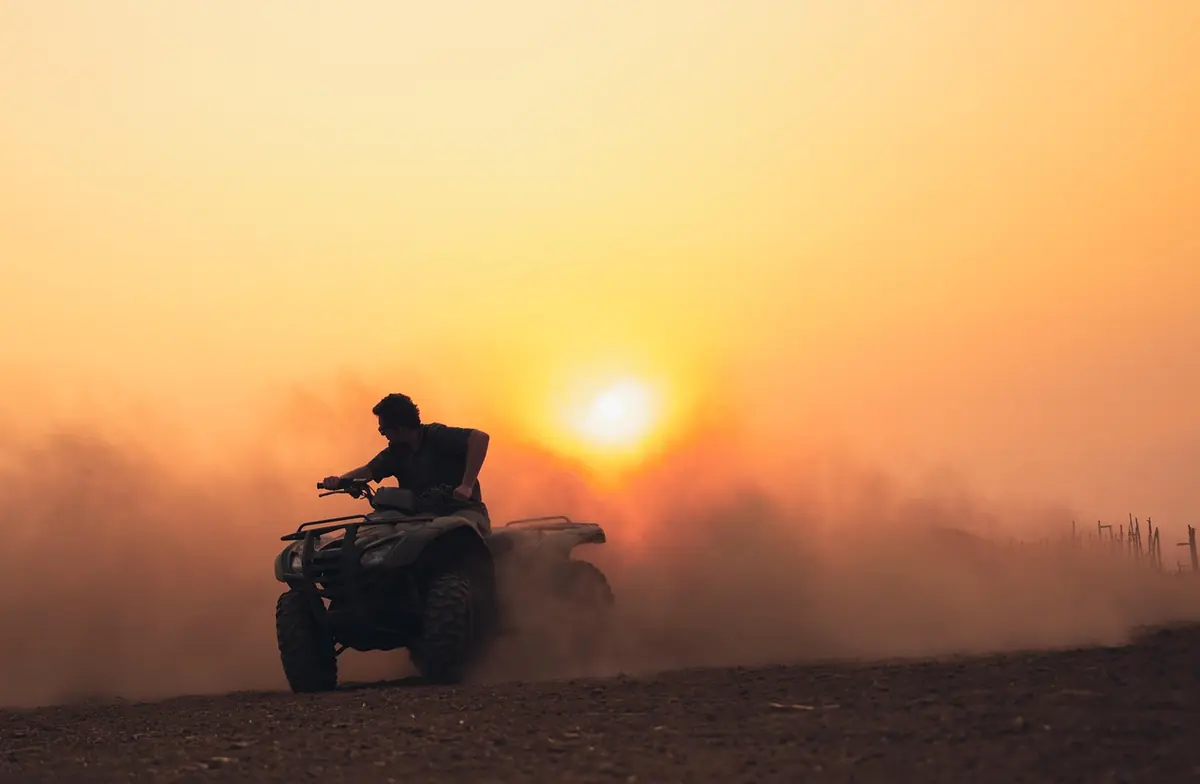
These two sell in high volume, which is part of why they show up more often. Fuel leaks and power steering are the repeat themes.
| Model | Notice | Model years | Problem |
|---|---|---|---|
| Polaris Sportsman 570 Touring, X2, 6x6 | Dec 2016 | 2014-2017 | Air intake duct can touch the fuel rail and leak |
| Polaris Sportsman 850, 1000 | Mar 2017 | 2015-2016 | Side panel heat shield can melt |
| Polaris Sportsman 570 | Jul 2017 | 2014 | Fuel can leak into the headlight pod |
| Polaris Sportsman 450, 570, 850, 1000 | Apr 2017 | 2017 | Electronic power steering can malfunction |
| Polaris Sportsman 1000 S | Jan 2023 | 2020-2023 | Static discharge can ignite fuel while refueling |
| Polaris Sportsman 450, 570 | Mar 2023 | 2021-2023 | Wiring harness can contact brake line or frame |
| Polaris Sportsman 850, XP 1000 | Sep 2024 | 2023-2024 | Fuel leak at pump flange |
| Can-Am Outlander, Renegade | Dec 2009 and Dec 2011 | 2010-2011 | Dynamic power steering can fail or crack |
| Can-Am Outlander with DPS | Apr 2018 | 2017 | DPS shaft can break |
| Can-Am Outlander, Renegade | Jun 2018 | 2018 | Fuel can spray when the cap is opened |
| Can-Am Outlander, Renegade | Dec 2020 and Jun 2021 | 2021 | Rear wheel can separate; steering knuckle can detach |
| Can-Am Outlander 450, 570 | Feb 2022 | 2022 | Speedometer reads half the true speed |
| Can-Am Outlander Pro, Max Pro | May 2026 | 2023-2026 | Speed limiter can malfunction after ECM update |
A Sportsman or Outlander with a clean VIN check can still be a good buy. For the common wear problems on those models, read our Polaris Sportsman 450 problems and Can-Am Outlander 570 problems guides.
How to keep any 4x4 ATV reliable
- Change the engine oil and filter on the schedule in the owner’s manual, and sooner after hard or wet riding.
- Clean or replace the air filter often, especially in dust.
- Wash out the radiator fins after mud rides.
- Check differential and final-drive oil for a milky look after crossings.
- On CVT models, inspect the belt and drain the housing if water gets in.
- Grease the fittings and check CV boots, ball joints and wheel bearings.
- Store it with stabilized fuel and a charged battery.
A low-pressure tire gauge is worth owning: ATV tires run at a few psi, and a regular gauge is not accurate down there. Check the current price on Amazon. Our free off-road calculators cover other setups.
Buying a used 4x4 ATV
- Run the VIN on the maker’s recall page and ask for proof of any recall repair.
- Ask for service records and check the hour meter or odometer.
- Start it cold and listen for knocking or heavy smoke.
- Check the oil and differential fluids for a milky look, which means water got in.
- Test 4WD and every gear, including reverse.
- Look for torn CV boots, play in the wheels, and frame cracks.
- Confirm the VIN and title before paying.
Reliable ATV questions
No maker publishes failure rates. In CPSC recall notices, Honda’s Foreman and Rancher have none since 2013 and Yamaha’s latest are a label and a manual, while Polaris Sportsman and Can-Am Outlander have more recent notices. Maintenance and how the machine was used matter as much as brand.
Honda’s manual-shift Foreman Rubicon uses an automatic clutch with a five-speed manual and direct driveshafts, so it has no CVT belt. Most other utility ATVs use belt CVTs.
Run the VIN with the manufacturer’s recall page, then compare the model and year with CPSC notices. A free dealer repair applies to open recalls.
Not necessarily. A CVT belt is a wear item that can slip or fail when wet or overheated, so keeping the housing dry and replacing the belt on schedule prevents most problems.
Yes, with a clean title, service records, a VIN recall check and a careful inspection. Avoid machines with milky fluids, signs of submersion or frame damage.

I'm Suryashankar Dasgupta, the founder of Off-Road Handbook. I've been off-roading for years in the USA, including California and Texas, and have ridden mountain and desert terrain abroad. I've also driven a Jeep Compass for more than seven years, so I know the day-to-day side of Jeep ownership first-hand, from the Uconnect screen to the warning lights. Every guide here is researched from manufacturer owner's manuals, NHTSA recall and service-bulletin records and other trusted sources, checked against them before it is published, and corrected when we find a mistake. You can read how we work in our editorial policy: https://offroadhandbook.com/editorial-policy/
Like our off-road guides? Add Off-Road Handbook as a Google Preferred Source so our latest Jeep, ATV, UTV, trail, recovery, and off-road troubleshooting articles can appear more often in your Google Search experience.
Add us as a Preferred Source