Yamaha Rhino 660 Problems: Common Issues, Fixes, Buyer Checklist
Last updated on October 18th, 2026 at 11:00 am
This post contains Amazon affiliate links. As an Amazon Associate I earn from qualifying purchases, at no extra cost to you.
Most Yamaha Rhino 660 problems trace to fuel, spark, the battery and wiring, or the V-belt. Yamaha’s own troubleshooting chart checks them in that order: fuel, compression, ignition, battery. Start with the fuses and a battery that reads 12.8 V or more at rest.
One more thing before any wrench work. Every Rhino 450, 660 and 700 was covered by a free repair program that Yamaha announced with the U.S. Consumer Product Safety Commission in March 2009. Ask a Yamaha dealer to confirm yours was done, as explained in the recall section below.
Yamaha Rhino 660 problems by symptom
| Symptom | Likely causes, in order | Free check first | See a dealer when |
|---|---|---|---|
| Clicks, will not crank, or cranks slowly | Fuses, battery under 12.8 V, dirty terminals, then switches, starter relay, starter | Brake on, neutral, battery voltage | Battery and fuses test fine and the starter is still dead |
| Cranks but will not start | Fuel supply, spark plug, air filter, carburetor jets, then compression | Fuel in the tank, wet or fouled plug | No spark from a good plug, or no compression |
| Dies after running, restarts later | Clogged fuel breather hose, fuel filter or hose, pump vacuum hose, plug, ignition parts | Breather hose and fuel filter | Pump fails the vacuum test, or ignition parts are suspected |
| Stalls or idles rough | Idle speed, plug, air leak at the intake, pilot jet and air passage, starter plunger | Idle speed 1,450 to 1,550 rpm | Cleaning the carburetor does not fix it |
| Hesitates or has no power under load | Air filter, fuel quality, plug, oily belt, main jet, valve clearance, rings | Air filter and plug | Compression is under 1,150 kPa or the valves need adjusting |
| Revs up but moves slowly, burning smell | Dragging parking brake, water or dust in the belt case, worn or oily V-belt, sheaves, clutch | Belt width and drain plug | Belt is new and it still slips |
| 4WD will not engage | Switching while moving, 4WD fuse (3 A), battery, main switch, three relays, switches, gear motor | Fuses | Relay or gear motor needs testing |
| Coolant light on, overheating, fan not running | Low coolant, leaks, heavy load, clogged radiator, fan fuse, motor, breaker, thermo switch | Let it cool about 10 minutes, check level | Leaks, or overheating again after a refill |
| Neutral, reverse or other light is out | Main and signaling fuses, battery, main switch, wiring, speed sensor circuit | Fuses | Reverse light blinks while riding, or the circuit needs testing |
| Clunk, whine or gear-oil smell | Torn axle boots, low or leaking gear case oil, worn bearings or gears | Boots and gear case leaks | Any driveline noise that continues |
| Smoke, knock or low power | Low or wrong oil, clogged air filter, low compression | Oil level, then a compression test | Compression below the minimum |
The order of causes follows Yamaha’s own lists, which put the cheap and free checks first. The troubleshooting sections in both manuals are check-by-check charts, with no fault-code table to look up.
Belt, no-start and overheating basics that apply to other quads and side-by-sides are in our ATV and UTV troubleshooting guide. Fuel and battery work carries real risk: Yamaha warns against smoking or working near open flame while checking fuel, and batteries give off explosive gas.
What is your Rhino 660 doing?
Based on the Yamaha Rhino 660 owner’s manual and the 2004 YXR660FAS service manual. Each step names its source page, and the same checks are in the sections below.
The tool lists free checks first, then jobs that need a meter or gauge, then the point where Yamaha sends you to a dealer. It does not replace a hands-on inspection, and it cannot see a worn part.
Run the battery check before anything else. Yamaha’s shop manual repeats the same 12.8 V open-circuit figure in its starting, ignition, charging, fan, 4WD and light checks, so a weak battery sends you down the wrong path in all of them.
Rhino 660 clicks, will not crank, or cranks slowly
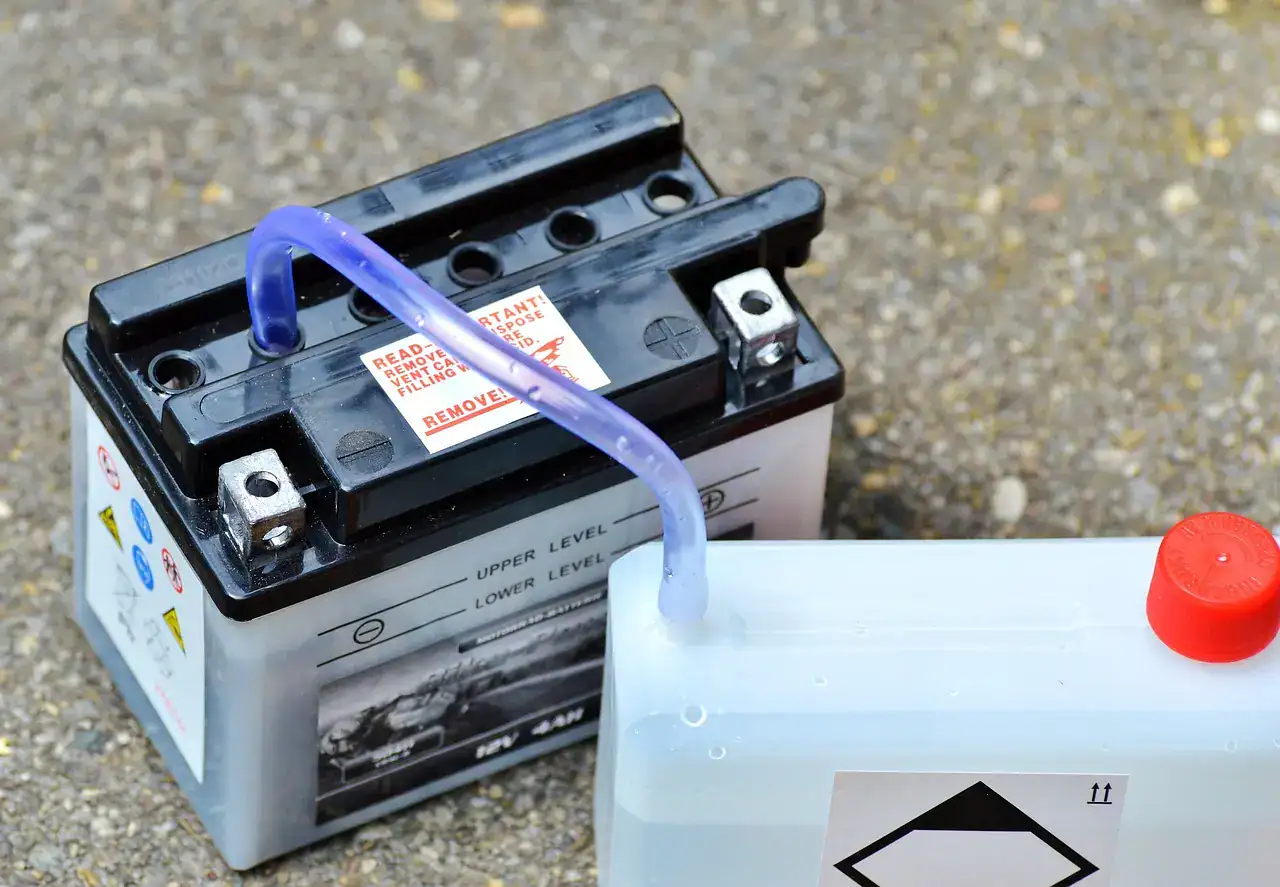
A single click, dim lights or a slow crank usually mean the battery or its connections. The Rhino 660 has a sealed battery, so there is no electrolyte to check, and Yamaha says to see a dealer if it looks discharged.
Yamaha’s starting-system checklist runs in a set order. Work it the same way with a digital multimeter for the voltage and continuity steps.
- Set the brake, put the drive select lever in neutral and leave the accelerator alone. Do not crank for more than 5 seconds, and wait at least 5 seconds between tries.
- Check the main (30 A), ignition (10 A) and signaling (10 A) fuses. The main fuse and fuse box are under the hood, and you lift out the battery compartment cover to reach them. Turn the key OFF first.
- Measure open-circuit battery voltage. Yamaha’s shop manual calls 12.8 V or more at 68°F good. Lower than that, clean the terminals, then recharge or replace the battery.
- Test the main switch, gear position switch, brake light switch and a diode (“diode 1” in the manual) with a continuity tester, then the starting-circuit wiring connections.
- If those pass, the starter relay and starter motor are next. Yamaha lists them without owner-level pass values, so this is where a dealer visit makes sense.
One habit kills batteries: running the headlights with the engine off. Yamaha warns that a long stretch of that can drain the battery enough that the starter will not work. Pull the battery and recharge it.
Rhino 660 cranks but will not start, or dies after running
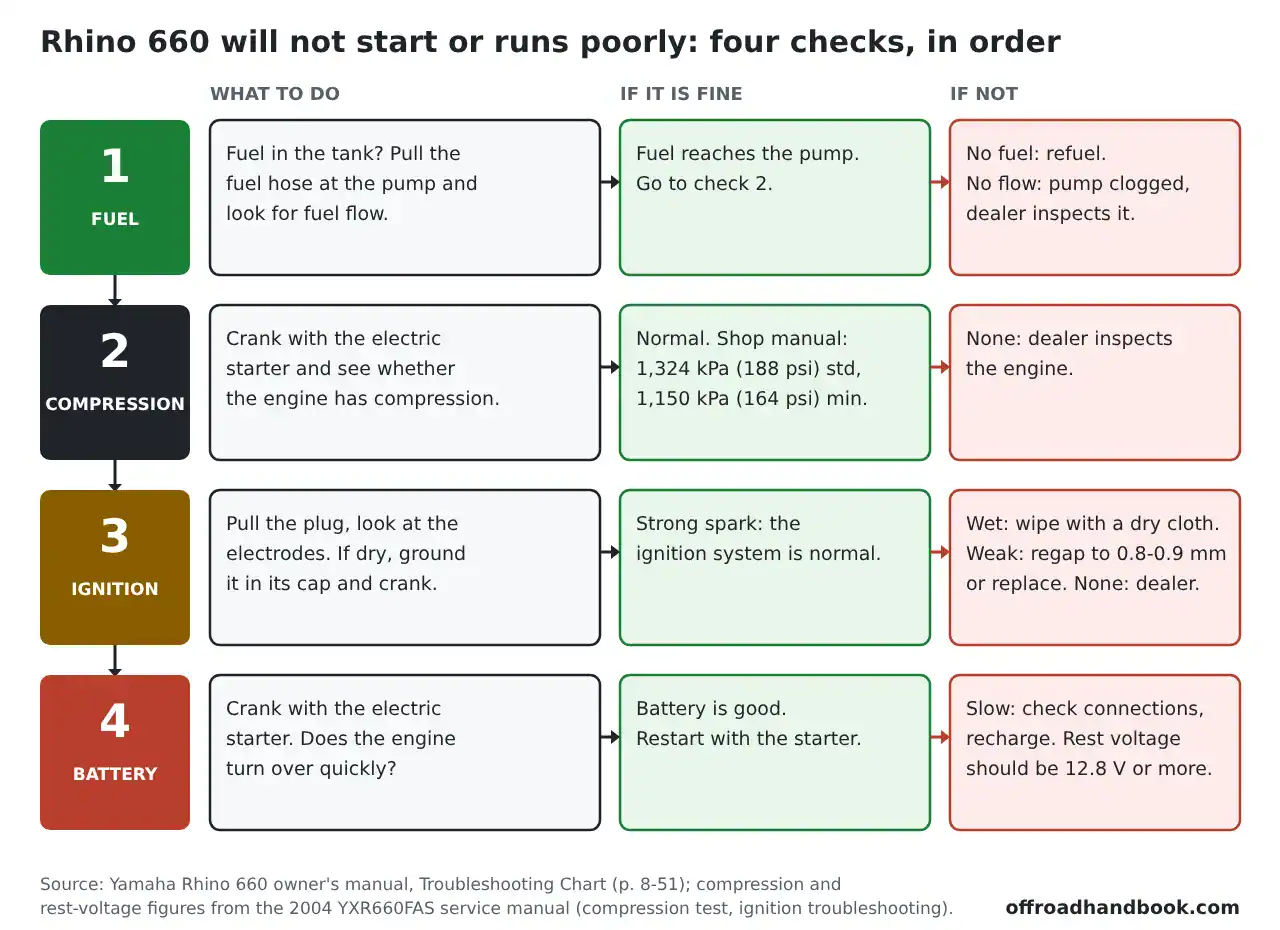
If the engine turns over normally and will not fire, you are missing fuel, spark or compression. Yamaha’s owner chart checks them in that order and ends at the battery.
Owners often describe a Rhino that runs for 30 to 45 minutes, dies, and restarts only after sitting. That pattern is owner-reported, not a Yamaha statement. Yamaha’s cause list for starting trouble does include a clogged fuel breather hose, fuel filter and fuel hose, so start there.
- Look at the fuel level window. Yamaha’s list also names deteriorated or contaminated fuel, so old gas counts as a cause.
- Check the fuel breather hose, the fuel filter and the fuel hose for clogs, and look at the vacuum hose for damage.
- Pull the spark plug. Wet electrodes: wipe with a dry cloth. Dry: put the plug in its cap, ground it on the chassis and crank to look for spark. Weak spark: set the gap to 0.8 to 0.9 mm (0.031 to 0.035 in) or fit a new NGK DPR8EA-9 (NGK DPR8EA-9 spark plugs on Amazon).
- Torque a new plug to 17.5 N·m (12.7 lb-ft). With no torque wrench, the manual says ¼ to ½ turn past finger tight, then torque it as soon as you can.
- Check the air filter element. A clogged element is on Yamaha’s list for hard starting and for weak power.
- Check the pump. Yamaha’s shop test applies vacuum to the pump’s vacuum hose, and fuel should flow from the fuel hose into a container. A hand vacuum pump is safer than your mouth. No flow means a new pump.
- Run a compression test with a compression gauge. Warm the engine, pull the plug, open the throttle fully and crank until the gauge settles with a charged battery.
The shop manual spec at sea level is 1,324 kPa (188 psi) standard, 1,150 kPa (164 psi) minimum and 1,480 kPa (210 psi) maximum. Above maximum, look for carbon on the head, valves and piston crown.
Below minimum, squirt a few drops of oil in the cylinder and test again. A higher reading with oil points to worn pistons. The same reading means a ring, valve, head gasket or piston problem, and that is a rebuild decision for a shop.
Stop and call a dealer when there is no spark from a good plug and cap, no fuel flow from the pump, or no compression. Yamaha’s owner chart says the same for each of those results. Ignition coil, CDI unit and pickup coil faults need resistance testing.
Rhino 660 stalls or idles rough
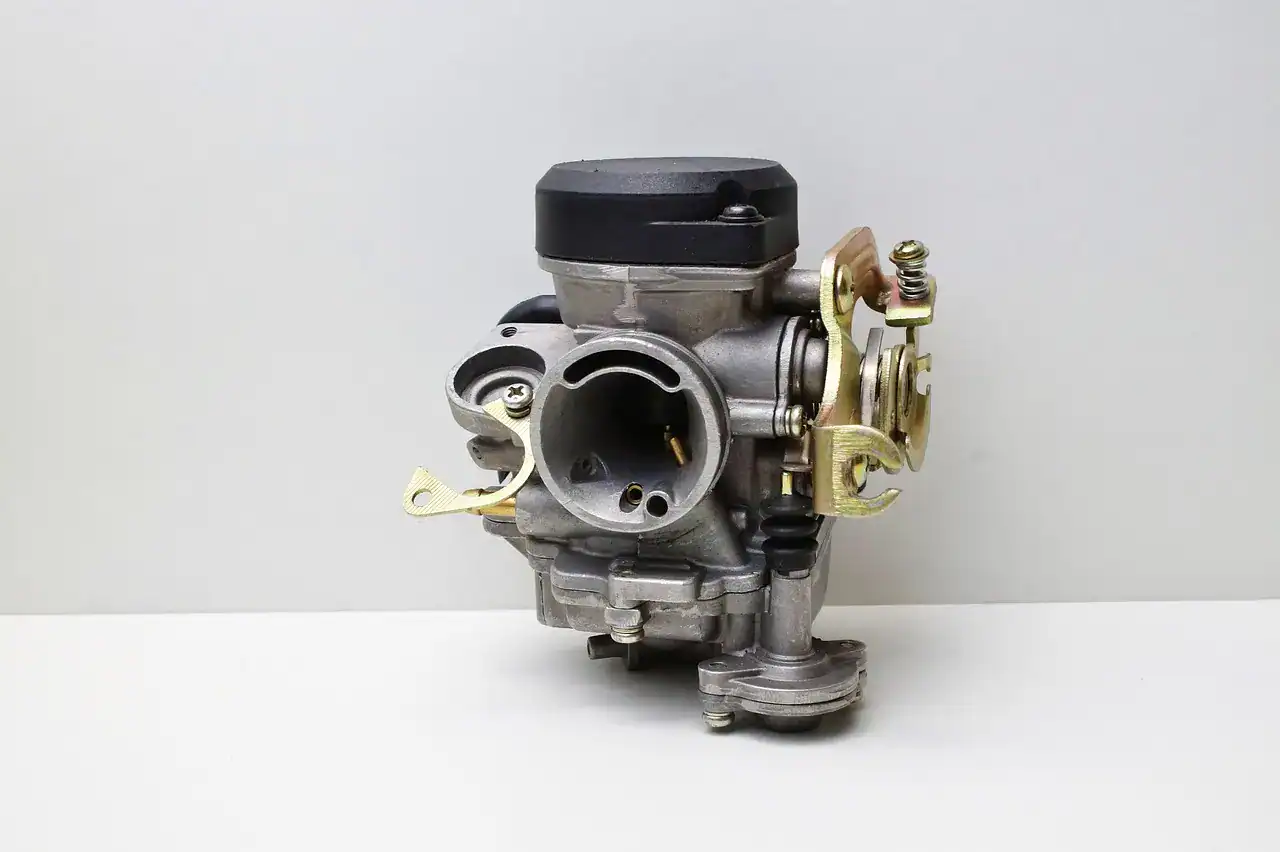
The Rhino 660 uses a Mikuni BSR42 carburetor, so idle trouble is usually fuel, air or the idle speed screw. A machine that runs fine at speed and quits at idle points to the idle circuit.
Start with the free items: a fouled plug, a dirty air filter element and an air leak at the intake boot. Yamaha lists sucked-in air as a carburetor-area cause of starting and idle trouble.
- Warm the engine at 1,000 to 2,000 rpm for a few minutes, with an occasional rev to 4,000 to 5,000 rpm. It is warm when it answers the throttle quickly.
- Take off the seats and the console, clip a diagnostic tachometer to the spark plug lead and turn the throttle stop screw until idle sits at 1,450 to 1,550 rpm.
- If it still stalls, Yamaha’s idle list is: starter plunger not returning, pilot jet loose or clogged, pilot air jet clogged, throttle cable play wrong, carburetor flooded.
A starter plunger that sticks leaves the choke circuit open and the engine runs rich, which fits owner reports of a Rhino that smells of fuel or sputters unless the choke is pulled. Treat the link as a likely cause, not a certainty.
Yamaha says the idle screw is the only carburetor adjustment an owner should make. Jets, fuel level and float work are dealer jobs, and the manual warns against changing factory settings without the know-how.
Rhino 660 hesitates or has no power under load
Yamaha tells you to rule out the starting and idle causes first, then look at the medium and high-speed list. The free items come first again: air filter, plug and fuel quality.
The next stop is the V-belt, because oil or grease on the belt makes the machine feel flat. After that the list turns to shop work: main jet, jet needle clip position, fuel level, valve clearance and piston rings.
Valve clearance, measured cold, is 0.10 to 0.15 mm (0.0039 to 0.0059 in) intake and 0.15 to 0.20 mm (0.0059 to 0.0079 in) exhaust per the shop manual. The owner’s manual leaves valve adjustment to a Yamaha technician.
Rhino 660 revs up but moves slowly: V-belt and clutch
The Rhino 660 has a V-belt automatic transmission with a wet, centrifugal clutch. A machine that revs without pulling usually has a worn belt, water in the belt case or a dragging brake. It is rarely the gearbox.
- Release the parking brake fully. Yamaha says a dragging brake wears the rear brake and the V-belt early.
- After a water crossing, pull the V-belt case drain plug under the driver’s seat. If water runs out, Yamaha says to have a dealer inspect, because the water may reach other engine parts.
- Inspect the belt for cracks, wear, scaling and chipping. Oil or grease on it means check the primary and secondary sheaves too.
- Measure belt width. The shop manual lists 33.2 mm (1.31 in) as the specification and 29.9 mm (1.18 in) as the service limit. At or below the limit, replace it.
If a new belt still slips, Yamaha’s list points to the primary sheave cam, slider and weights, and to the clutch springs and shoes. Those are teardown jobs.
The owner’s manual also covers a related trap. It calls for API SE, SF, SG or higher oil, bans oil marked ENERGY CONSERVING II or higher, and warns against chemical additives, to prevent clutch slippage. Use the oil grades in the numbers table below.
Rhino 660 4WD or differential lock will not engage
The Rhino 660 has an On-Command switch with 2WD and 4WD, and a separate differential gear lock switch for 4WD-LOCK. Yamaha says to stop the vehicle before changing between them, in either direction.
The 4WD indicator light may not come on until the vehicle starts rolling, because of the differential’s synchronizing mechanism. A light that stays off while moving is a real symptom.
- Check the main fuse and the 3 A four-wheel-drive fuse.
- Test battery voltage (12.8 V or more at 68°F), then the main switch.
- Check four-wheel-drive relays 1, 2 and 3, then the On-Command and differential lock switches, then the gear motor, then the wiring for continuity.
That is Yamaha’s order from the shop manual. Relay, switch and gear motor tests need the manual’s procedures, and replacement is dealer-level for most owners. In 4WD-LOCK, the owner’s manual says to drive slowly and leave extra room to turn.
Rhino 660 overheating, coolant light and fan problems
If the coolant temperature warning light comes on while you ride, stop the engine as soon as it is safe and let it cool for about 10 minutes. Yamaha says overloading can cause overheating, so cut the load.
Never open the radiator cap hot. Cover it with a thick rag and let the pressure out first. The owner’s manual flowchart then checks the coolant level, looks for leaks and tops up.
- Check the coolant level in the reserve tank and radiator. The system holds 2.50 L (2.64 US qt) and the manual says to change coolant every 24 months.
- Look at the radiator and oil cooler for clogging or damage, and check the engine oil level and quality.
- Fan not turning: check the main fuse, the battery (12.8 V or more), the main switch, the fan motor, the fan circuit breaker, thermo switch 3 and the wiring, in that order.
- Check the warning light itself. With the lever in neutral, turn the key to START: the light should come on briefly. If it does not, have a dealer inspect the circuit.
Yamaha does not publish the fan switch temperature in the manuals we opened, and we will not repeat the numbers from parts listings. If overheating returns after the level is right, the owner’s manual says to have a dealer inspect the cooling system.
Neutral, reverse and other lights that will not come on
With the drive select lever in neutral, the neutral light should be on. Yamaha’s start-up note says that if it is not, a dealer should inspect the circuit. It is worth a quick look at the fuses first.
Yamaha’s shop manual order for a dead indicator is the main and signaling fuses, battery voltage, the main switch and then wiring continuity. A reverse light that blinks while you ride means the speed sensor circuit needs a check.
Rhino 660 clunks, whines or smells like gear oil
Start with what you can see. Inspect the axle boots, two per side front and rear, for holes or tears, and look for oil weeping from the final gear case and the differential. Both gear cases take SAE 80 API GL-4 hypoid oil.
Yamaha lists the final gear case at 0.25 L (0.26 US qt) and the differential at 0.32 L (0.34 US qt). A burnt gear-oil smell is a leak onto a hot part until proven otherwise.
Broken rear axles come up in owner searches. Yamaha’s manuals cover boots and driveline inspection, not a specific cause, so treat oversize tires and torn boots as the first suspects. Stock tires are 25x8-12 front and 25x10-12 rear, and our tire size calculator shows what a bigger set changes.
For a rumble, whine or clunk, the shop manual lists damaged bearings, wrong gear lash, damaged or broken gear teeth, a broken drive shaft, lack of lubrication and foreign objects. It admits that jerky behavior is extremely difficult to diagnose.
Dust, air filter and engine wear on a Rhino 660
The Rhino 660 uses a wet air filter element. Dust that gets past a dirty or badly seated element wears the engine, and Yamaha says never to run the engine with the element removed, because it also upsets carburetor jetting and can cause overheating.
The air filter case has a check hose at the bottom. If dust or water collects in it, empty the hose and clean the element and case. The maintenance chart calls for more frequent cleaning in wet or dusty areas.
Engine oil is where wear shows up. The capacity is 1.90 L (2.01 US qt) without a filter change and 2.00 L (2.11 US qt) with one. If the engine smokes or knocks, run the compression test described above.
On public land, keep the spark arrester clean. The owner’s manual has you remove the three tailpipe bolts, brush off the carbon and torque the bolts to 9.5 N·m (6.9 lb-ft). It also notes that federal law bars removing noise control parts such as the muffler or air cleaner.
Yamaha Rhino recall and safety repair: what CPSC says
The CPSC recall notice 09-172 is dated March 31, 2009. It announced a free repair for all Rhino 450, 660 and 700 off-highway recreational vehicles, and Yamaha agreed to suspend sales of those models until they were repaired.
CPSC counted about 120,000 Rhino 450 and 660 models distributed nationwide since fall 2003, plus about 25,000 Rhino 700 models in the program. It reported more than 50 incidents investigated, 46 driver and passenger deaths involving the 450 and 660, and hundreds of injuries.
The notice says most of the incidents were rollovers, many involved unbelted occupants, and many rollovers appear to have happened in low-speed turns on level terrain.
What the repair changed
- A spacer on the rear wheels.
- Removal of the rear anti-sway bar.
- Half doors and added passenger handholds where they were not already fitted, to help keep arms and legs inside in a rollover.
- A free helmet offer.
The notice told owners to stop using the vehicles until a dealer made the repair. Nets are not mentioned on that page, so do not count on nets as part of the program.
How to check yours
CPSC’s page lists Yamaha at 800-962-7926 and the CPSC hotline at 800-638-2772. Those are 2009 numbers. Yamaha’s own recall page would not open for us, and the CPSC page does not say whether the program is still open, so call a Yamaha dealer with the VIN and ask what was done and what is still available.
You can also look for the three changes: wider rear track from the spacers, no rear anti-sway bar and half doors with handholds. A Rhino missing them has probably never had the repair.
Rules from the owner’s manual that matter more than any repair
- Seat belts on for driver and passenger, always.
- An approved motorcycle helmet, with eye protection, gloves, boots and long clothing recommended.
- Operators 16 and older with a valid license, one passenger only, and nobody in the cargo bed.
- Drive straight up and down slopes. The manual lists a 15-degree maximum slope and warns against sharp, high-speed turns.
- Never on public streets or roads, even dirt or gravel ones. Never in water deeper than the floorboards.
Our guides on what to wear when riding an ATV and off-road trail etiquette and rules cover gear and trail manners.
Yamaha Rhino 660 numbers worth knowing
| Item | Value | Source |
|---|---|---|
| Engine | Liquid-cooled 4-stroke SOHC single, 660 cm³, 100 x 84 mm, 9.1:1 compression ratio | Owner’s manual, specifications |
| Carburetor | Mikuni BSR42 | Owner’s manual |
| Spark plug | NGK DPR8EA-9, gap 0.8 to 0.9 mm (0.031 to 0.035 in), torque 17.5 N·m (12.7 lb-ft) | Owner’s manual |
| Idle speed | 1,450 to 1,550 rpm, warm, with a tachometer | Owner’s manual |
| Valve clearance (cold) | Intake 0.10 to 0.15 mm, exhaust 0.15 to 0.20 mm | Service manual |
| Compression (sea level) | 1,324 kPa (188 psi) standard, 1,150 kPa (164 psi) minimum, 1,480 kPa (210 psi) maximum | Service manual |
| Engine oil | API SE, SF, SG or higher; 10W-30, 5W-30 or 20W-40; 1.90 L (2.01 US qt), 2.00 L (2.11 US qt) with filter | Owner’s manual |
| Gear case oil | SAE 80 API GL-4 hypoid: final 0.25 L (0.26 US qt), differential 0.32 L (0.34 US qt) | Owner’s manual |
| Cooling system | 2.50 L (2.64 US qt); change coolant every 24 months | Owner’s manual |
| V-belt width | 33.2 mm (1.31 in) spec, 29.9 mm (1.18 in) service limit | Service manual |
| Battery | 12.8 V or more open-circuit at 68°F; sealed 12 V | Service and owner’s manuals |
| Fuses | Main 30 A, headlight 15 A, ignition 10 A, DC jack 10 A, 4WD 3 A, carburetor heater 10 A, signaling 10 A, backup 10 A | Owner’s manual |
| Tires | 25x8-12 front, 25x10-12 rear, tubeless | Owner’s manual |
| Load and towing | 878 lb vehicle load limit, 400 lb cargo bed, 1,212 lbf trailer pull, 110 lbf tongue weight, 2-inch receiver | Owner’s manual, p. 6-12 |
| Weight and fuel | 1,122 lb with oil and a full tank, 7.93 US gal tank | Owner’s manual |
| Safety limits | 1 operator + 1 passenger, 16 or older with a license, 15-degree maximum slope | Owner’s manual, safety section |
The figures come from two manuals: the YXR660FA owner’s manual and the 2004 YXR660FAS shop manual. Check the decal and manual for your own model year before you buy a part.
Heavy loads change the drivetrain’s workload. The owner’s manual says not to go above low range when carrying heavy loads or towing, to brake earlier and to avoid hills and rough ground with a load.
Buying a used Rhino 660: inspection checklist
Most Rhino 660 trouble shows up on a cold start and a short drive. Ask the seller not to warm the machine before you arrive. If you are new to side-by-sides, our side-by-side explainer covers what to expect.
No price figure here, because we could not verify one from a primary source. Compare local listings and subtract the repairs your inspection finds.
| What to check | What good looks like | Red flag |
|---|---|---|
| Free repair done? | Spacers fitted, no rear sway bar, half doors and handholds in place; dealer confirms by VIN | None of that and no paperwork: call Yamaha before you ride it |
| Cold start | Starts promptly, idles steady at roughly 1,500 rpm after warm-up | Needs choke to run after warm-up, or the seller refuses a cold start |
| Compression | At least 1,150 kPa (164 psi), near 1,324 kPa (188 psi) is healthy | Below minimum: rings, valves or gasket, and a rebuild bill |
| V-belt and takeoff | Pulls away smoothly; belt not cracked, oily or narrower than 29.9 mm | Revs rise before it moves, or it grabs and slips |
| 4WD and diff lock | Lights come on after a stop and a switch; machine behaves differently in each mode | 4WD light never comes on, or switching needs repeated tries |
| Cooling | Warning light flashes on at START; fan runs when hot; coolant clean | Milky oil, oily or low coolant, light never checks |
| Driveline | Boots intact, gear cases dry, no clunk or whine | Torn boots, wet cases, noise under load |
| Frame and cage | Straight welds, clean rear differential mounts | Cracks, rough repairs or crash damage; owners report rear mount cracks, though no Yamaha or CPSC page we opened covers it |
| Belts and paperwork | Seat belts work, VIN and title match, service records | Missing belts, unclear VIN or ownership |
Do the checks in this order and take notes. A single red flag is a negotiating point. Two in the driveline or engine rows are usually a reason to walk.
Bring a multimeter and, if the seller allows it, a compression gauge. Ten minutes with those tells you more than any hour reading.
Test-drive checklist
- Start it cold. Brake on, neutral, no throttle. It should fire in a few seconds.
- Watch the lights. Neutral should light in neutral and the coolant light should flash on at START.
- Check the idle. It should hold steady without help from the throttle.
- Take off gently. It should pull away smoothly, not rev and then lurch.
- Shift through every range with the machine stopped: low, high, neutral and reverse.
- Try 4WD and diff lock after stopping for each change.
- Make tight turns. Listen for clicks from the front axles.
- Let it idle hot. The fan should run and the machine should not push out coolant.
- Check the fluids. Milky oil or low coolant changes the offer.
Walk away if you see these
- The seller refuses a cold start.
- The engine knocks, smokes heavily or will not idle.
- Coolant is oily, missing or bubbling.
- The drive select lever feels damaged or will not go into gear.
- The frame, cage or suspension mounts show crash damage or rough welding.
- The VIN or ownership paperwork is unclear.
Yamaha Rhino 660 questions
What compression should a Rhino 660 have?
Yamaha’s 2004 YXR660FAS service manual lists 1,324 kPa (188 psi) standard, 1,150 kPa (164 psi) minimum and 1,480 kPa (210 psi) maximum at sea level. Test warm, throttle wide open, with a charged battery.
What oil does a Rhino 660 take?
The owner’s manual lists API SE, SF, SG or higher in 10W-30, 5W-30 or 20W-40, depending on temperature. It warns against oil marked ENERGY CONSERVING II or higher and against additives, because the clutch is wet.
How much can a Rhino 660 tow?
The owner’s manual lists a trailer pull of 1,212 lbf (550 kgf) with a 110 lbf (50 kgf) tongue weight limit. Tongue weight counts toward the 878 lb vehicle load limit.
Is the Rhino 660 street legal?
Yamaha’s owner’s manual says never to operate it on any public street, road or highway, even a dirt or gravel one. Check your state OHV agency’s rules too, but the manual’s rule comes first.
Is the Rhino recall still open?
The CPSC notice dated March 31, 2009 does not say. Call a Yamaha dealer with your VIN and ask what repairs were done and what is still available.

I'm Suryashankar Dasgupta, the founder of Off-Road Handbook. I've been off-roading for years in the USA, including California and Texas, and have ridden mountain and desert terrain abroad. I've also driven a Jeep Compass for more than seven years, so I know the day-to-day side of Jeep ownership first-hand, from the Uconnect screen to the warning lights. Every guide here is researched from manufacturer owner's manuals, NHTSA recall and service-bulletin records and other trusted sources, checked against them before it is published, and corrected when we find a mistake. You can read how we work in our editorial policy: https://offroadhandbook.com/editorial-policy/
Like our off-road guides? Add Off-Road Handbook as a Google Preferred Source so our latest Jeep, ATV, UTV, trail, recovery, and off-road troubleshooting articles can appear more often in your Google Search experience.
Add us as a Preferred Source