What to Wear ATV Riding: The Essential Safety Gear Checklist
Last updated on October 20th, 2026 at 09:28 am
This post contains Amazon affiliate links. As an Amazon Associate I earn from qualifying purchases, at no extra cost to you.
For ATV riding, wear a DOT-certified helmet, eye protection, gloves, a long-sleeved shirt or jacket, long pants and over-the-ankle boots. The ATV Safety Institute (ATVSI) and the CPSC ATV safety guide both name these items as the protective-gear baseline.
Chest, back, elbow and knee protection is an upgrade for rocky or fast trails. Below you will find a gear table, a helmet check, advice by weather, a state-rule table and a tool that builds your list.
What to wear on every ATV ride

ATVSI says riders should wear a quality motorcycle helmet, eye protection, gloves, boots, a long-sleeved shirt or jacket and long pants. The CPSC lists the same items. Neither source claims any gear gives complete protection; the point is to lower your risk.
The first six rows below are that baseline. The last rows are optional upgrades that riding guides recommend, so they are labeled as such.
| Gear | What to look for | Basis |
|---|---|---|
| Helmet | DOT-certified full-face or off-road style that fits snugly and fastens every time. Shop on Amazon | Core: ATV Safety Institute (ATVSI), CPSC ATV safety guide |
| Eye protection | Impact-rated goggles, or a full-face helmet with a rated shield. The insurer guide lists V-8, VESC-8 or Z87.1 ratings. Shop on Amazon | Core: ATV Safety Institute (ATVSI); ratings from American Family Insurance gear guide |
| Gloves | Full-finger with padded knuckles and grip. Shop on Amazon | Core: ATV Safety Institute (ATVSI); features from American Family Insurance gear guide |
| Long-sleeved shirt or jacket | Abrasion-resistant, with sleeves that do not flap. Wear it even on hot days. | Core: ATV Safety Institute (ATVSI), CPSC ATV safety guide; hot-day advice from American Family Insurance gear guide |
| Long pants | Sturdy riding pants or heavy jeans, not baggy legs that can catch on controls. | Core: ATV Safety Institute (ATVSI), Can-Am (BRP) what-to-wear guide |
| Over-the-ankle boots | Boots, not sneakers. The OEM guide calls close-toed shoes the minimum and over-the-ankle boots the recommended choice. Shop on Amazon | Core: ATV Safety Institute (ATVSI); footwear detail from Can-Am (BRP) what-to-wear guide |
| Chest and back protector | Optional upgrade for rocky, fast or aggressive riding. Shop on Amazon | Upgrade: American Family Insurance gear guide |
| Knee, elbow and shin guards | Optional upgrade that fits under or over riding pants. Shop on Amazon | Upgrade: American Family Insurance gear guide |
Fit matters as much as the item. A helmet that rocks on your head, gloves that bunch on the throttle or boots that are too stiff to shift in will not get worn, and gear you do not wear protects no one.
Buy from a dealer or retailer that lets you try sizes. Check that your outer layer still fits over any padding before you leave the store.
How to check an ATV helmet before every ride
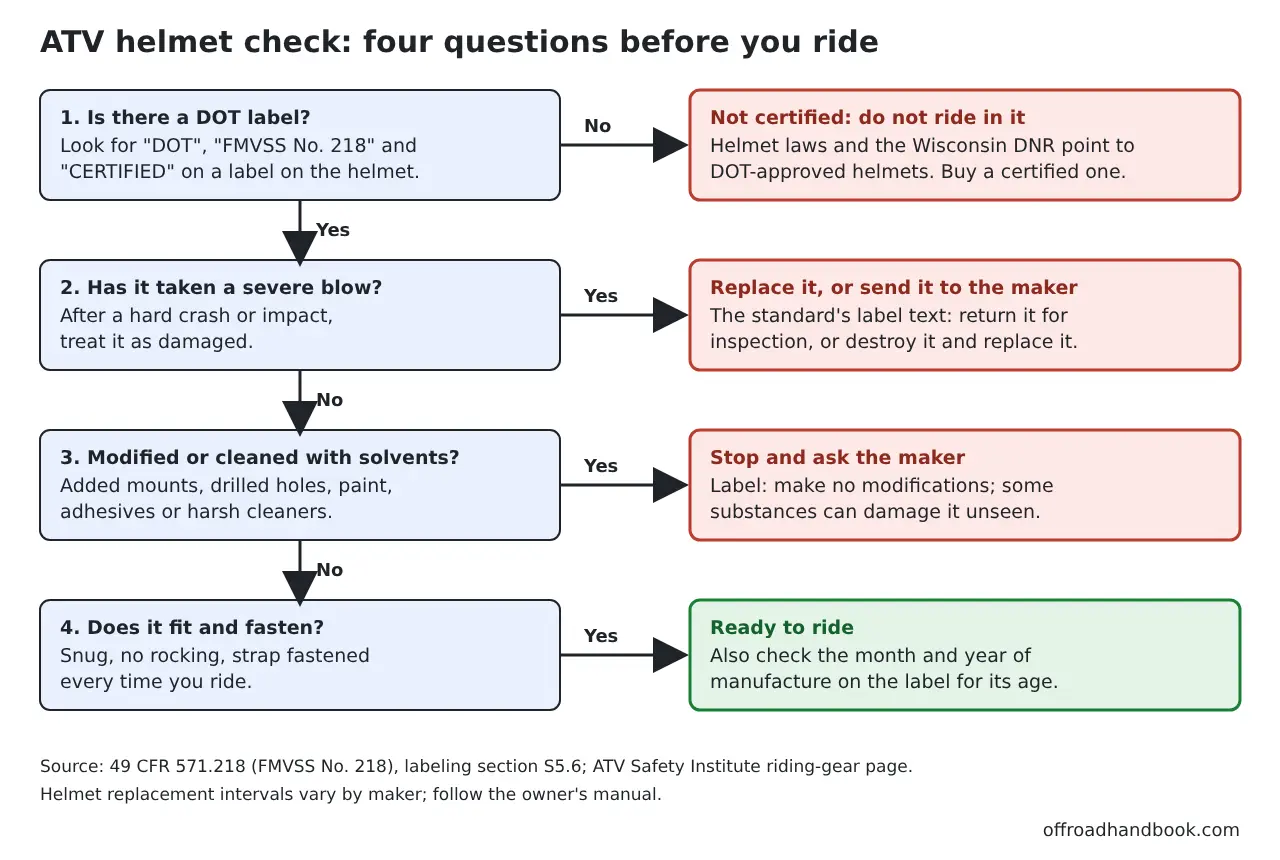
ATVSI asks for a motorcycle helmet, and the federal standard for those, 49 CFR 571.218 (FMVSS No. 218), applies to helmets "designed for use by motorcyclists and other motor vehicle users." A compliant helmet carries a label with "DOT," "FMVSS No. 218" and "CERTIFIED."
The same standard requires the maker to print the month and year of manufacture on the helmet and to tell you what to do after a hit. The required text says that after a severe blow you should return the helmet to the manufacturer for inspection, or destroy it and replace it.
It also says some common substances can damage a helmet without visible damage, so use only the cleaning agents the maker lists. Full-face designs typically offer the most protection, according to the American Family Insurance gear guide; an open-face or half helmet leaves your jaw exposed.
Eye protection, gloves and boots
Dust, mud and branches reach your face at trail speed. A full-face helmet with a shield is one option; goggles are the usual choice with an open-face or off-road helmet. Pick rated impact-resistant eyewear and make sure it seals against the helmet.
Choose gloves with padded knuckles and a grip you can still feel the throttle through. For boots, the OEM guide above is plain: close-toed shoes are the minimum, and over-the-ankle boots are the recommended choice for support.
Jackets, pants and layers
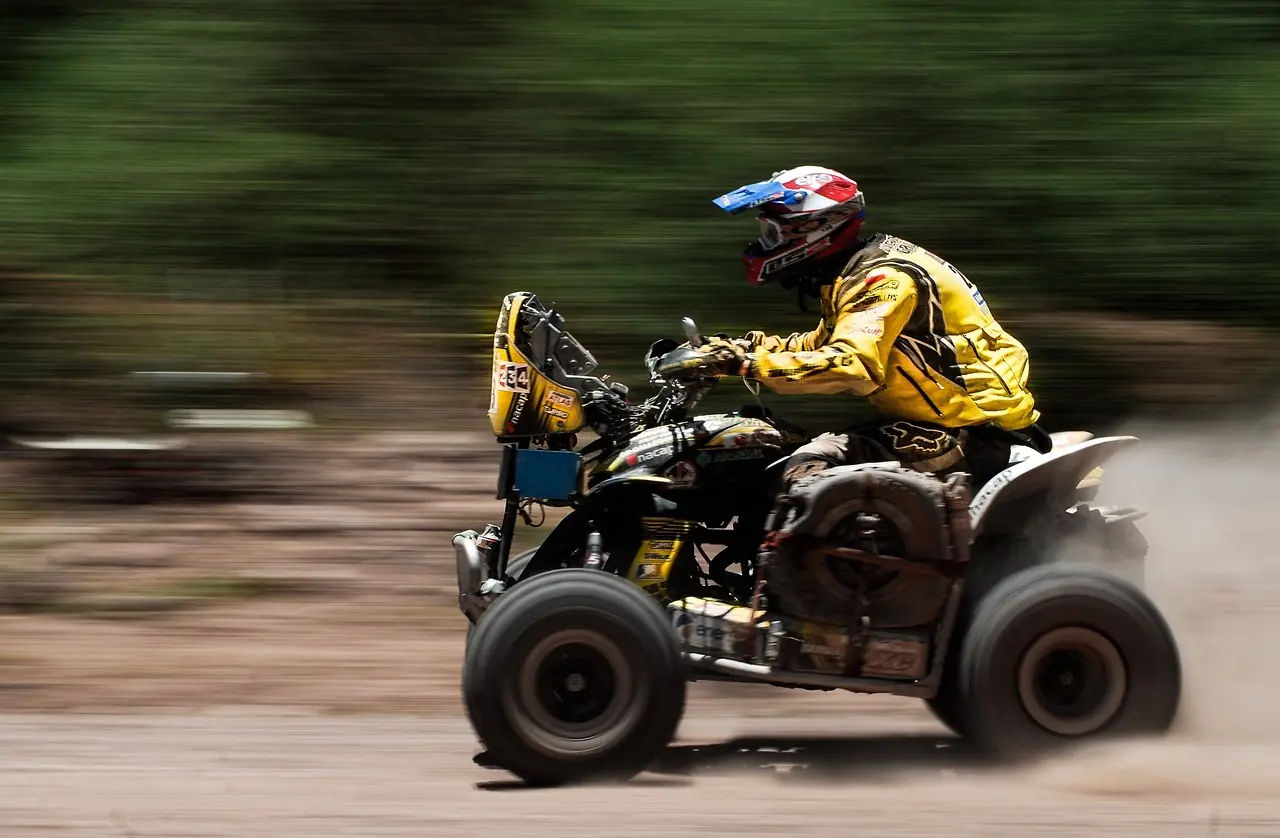
Long sleeves and long pants are on the ATVSI and CPSC lists for a reason: a fall at any speed drags skin across dirt and rock. The American Family Insurance gear guide advises full-length clothing even on hot days, plus a sturdy jacket with adjustable sizing.
Avoid loose, flapping clothing that can snag on the machine, as Can-Am warns. A snug riding jersey and pants, or sturdy jeans in a pinch, work better than baggy cargo pants.
Chest, back and knee protection
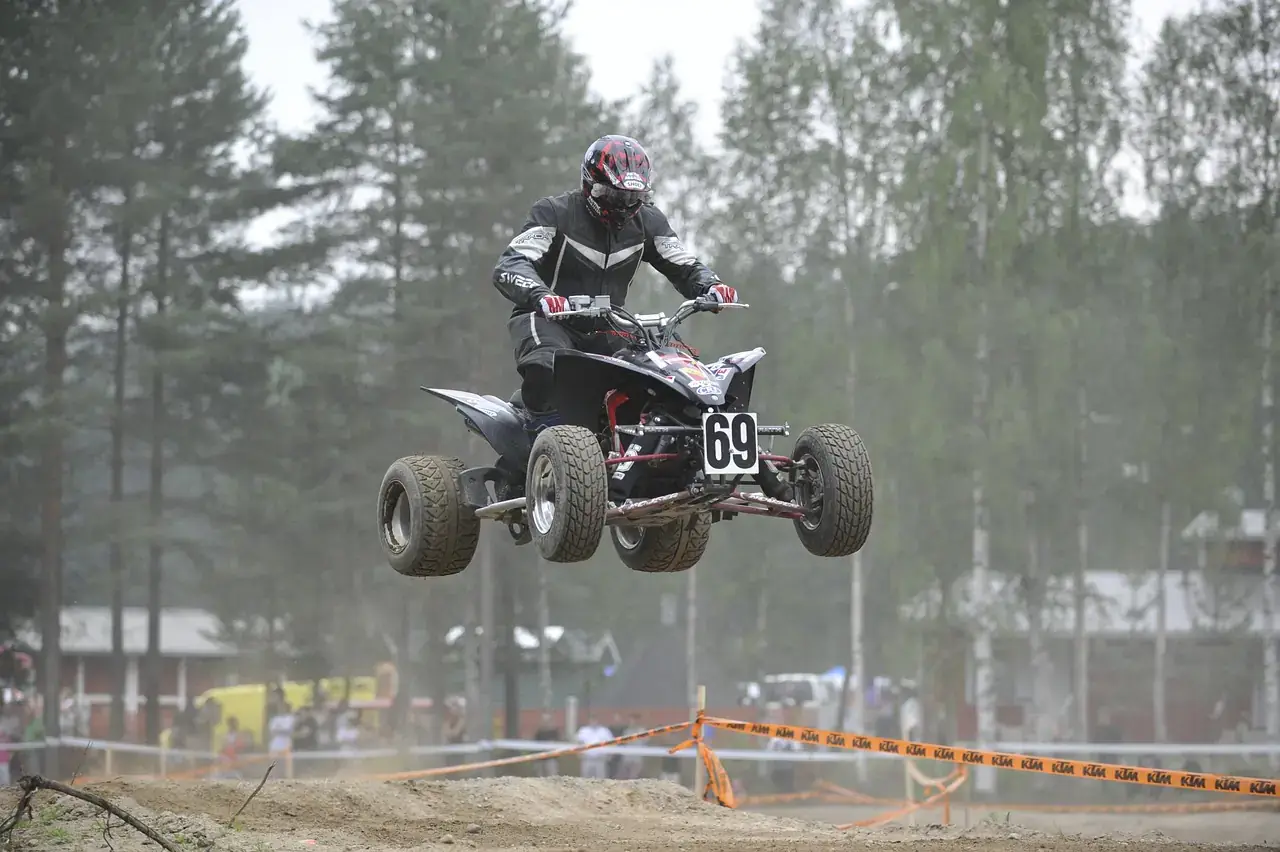
The American Family Insurance gear guide lists knee and shoulder padding, chest and back plates, and ATV-specific shin guards as added protection. These are upgrades rather than the ATVSI baseline, and they suit rocky terrain, fast open ground and jumps more than a slow trail ride.
A roost guard and an impact protector do different jobs. A motorcycle protective-equipment overview notes that roost protectors are meant for flying debris and are of no use in a fall or collision, so choose body armor if falls are your concern.
What to add for heat, cold, rain and ride type
Start from the baseline and change what the conditions demand. The table keeps the long sleeves and long pants in every case and only adds or swaps items.
Sources are named in the right-hand column. Where a tip comes from a retailer or insurer guide rather than ATVSI or the CPSC, it is a practical recommendation, not a safety standard.
| Conditions | Add or swap | Source |
|---|---|---|
| Hot or desert | Keep long sleeves and pants; choose breathable layers and a vented helmet. Carry water. | American Family Insurance gear guide; Can-Am (BRP) what-to-wear guide |
| Cold or winter | Base layer, insulating mid-layer and waterproof outer. Confirm your jacket still fits over the layers. Add a neck gaiter or balaclava under the helmet. | American Family Insurance gear guide; Junk Brands gear guide |
| Wet and muddy trails | Waterproof outer layer, spare gloves and socks in a waterproof bag, and a change of clothes for the end of the ride. | Can-Am (BRP) what-to-wear guide; Junk Brands gear guide |
| Rocky or aggressive riding | Add a chest and back protector, knee and shoulder padding and shin guards. | American Family Insurance gear guide |
| Guided tour | Ask the operator what it supplies. Bring long pants, long sleeves and closed-toe shoes at the least; boots are better. | Can-Am (BRP) what-to-wear guide |
Cold changes more than comfort. Numb hands and wet feet reduce control, and the Junk Brands guide says comfort and control disappear quickly once they get cold or wet. Pack the spare gloves before you need them.
For rides in an unfamiliar area, check the trail rules first. Our trail etiquette guide covers right of way, group riding and what to carry.
Build your ATV gear list
The list uses the same sources as the tables above: the ATVSI and CPSC baseline, plus the upgrade and weather advice from the cited rider guides. It is a planning aid, not a legal checklist.
Before you ride, always check the helmet and age rules where you will be riding. State law and land-manager rules can be stricter than any gear list.
Helmet laws and age rules
Helmet and age rules differ by state, so check your state OHV agency before you ride. These examples show how different they can be.
The CPSC adds that most ATVs are designed for one rider and that you should never carry more passengers than there are seats.
| Jurisdiction | What it says | Source |
|---|---|---|
| Federal (CPSC guidance) | Riders younger than 16 should ride only age-appropriate youth-model ATVs, never adult ATVs. Avoid paved roads and never ride after drinking alcohol. | CPSC ATV safety guide |
| Minnesota | A person under 18 may not ride as a passenger or operator on public land, public waters or a public road right-of-way without a safety helmet approved by the commissioner of public safety, and must wear a seat belt if the maker provides one. | Minnesota Statutes 84.9256, subdivision 2 |
| Wisconsin | Riders under 18 must wear a helmet by law, even on private property, according to the state DNR, which urges every ATV or UTV operator and passenger to wear a DOT-approved helmet. | Wisconsin DNR (Aug. 31, 2023) |
Why it matters: the CPSC counted 81,800 ATV-related injuries treated in emergency departments in 2018 and 591 ATV-related deaths in 2016, its most recent figures on that page. The Wisconsin DNR reported 22 ATV fatalities by August 31, 2023, and 20 of those crashes were confirmed as no helmet worn.
For how one state organizes its rules, see our guides to ATV trails in Maine and Texas. If you are weighing a side-by-side instead of a quad, our side-by-side explainer covers how it differs.
FAQs
A DOT-certified helmet, eye protection, gloves, a long-sleeved shirt or jacket, long pants and over-the-ankle boots. That is the baseline from the ATV Safety Institute and the CPSC. Chest, back and knee protection are upgrades for harder riding.
Neither the ATV Safety Institute nor the CPSC lists sneakers; both call for boots. Can-Am says close-toed shoes are the minimum and over-the-ankle boots are the recommended choice for support.
The ATV Safety Institute says riders should wear a quality motorcycle helmet, and state laws apply on top of that. Minnesota and Wisconsin both require one for riders under 18, and Wisconsin says that applies even on private property.
An insurer's gear guide recommends goggles or other impact-rated eyewear if you are not wearing a full-face helmet. With a full-face helmet, the shield is your eye protection, so make sure it is in good condition.
After a severe blow. The federal helmet standard's label text says to return the helmet to the manufacturer for inspection, or destroy it and replace it. Check the month and year of manufacture on the label and follow the maker's replacement advice.
Can-Am suggests spare waterproof gear and a change of clothes, since wet feet can ruin the day. The free off-road checklist on this site covers the rest of what to pack.
Related guides
- Off-Road Trail Etiquette and Rules Every Beginner Should Know
- Free off-road checklist
- Free off-road calculators

I'm Suryashankar Dasgupta, the founder of Off-Road Handbook. I've been off-roading for years in the USA, including California and Texas, and have ridden mountain and desert terrain abroad. I've also driven a Jeep Compass for more than seven years, so I know the day-to-day side of Jeep ownership first-hand, from the Uconnect screen to the warning lights. Every guide here is researched from manufacturer owner's manuals, NHTSA recall and service-bulletin records and other trusted sources, checked against them before it is published, and corrected when we find a mistake. You can read how we work in our editorial policy: https://offroadhandbook.com/editorial-policy/
Like our off-road guides? Add Off-Road Handbook as a Google Preferred Source so our latest Jeep, ATV, UTV, trail, recovery, and off-road troubleshooting articles can appear more often in your Google Search experience.
Add us as a Preferred Source