Jeep Smells, Overheating or Electrical Issues After Off-Roading
Last updated on October 25th, 2026 at 10:54 am
Slow, heavy trail driving is hard on cooling systems, brakes, and batteries. Engine speed is high, vehicle speed is low, and there’s very little air moving through the radiator. Add mud, dry grass, and a lot of stop-start, and it’s no surprise that smells, overheating, and electrical gremlins show up after a trail day.
This guide covers what’s normal, what isn’t, and what to check for each symptom.
Burning smell after off-roading
Pinpoint where the smell is coming from before you assume the worst. The most common sources, roughly in order:
| Smell | Likely source | What to do |
|---|---|---|
| Smoky, earthy, like a bonfire | Mud, grass, or leaves on the exhaust or skid plates | Stop and clear it out. Dry grass packed on a hot exhaust is a real fire risk |
| Hot, metallic, sharp | Overheated or dragging brakes | See the brake smell section below |
| Acrid, like burning paper | Clutch slipping on climbs (manual transmission) | Use low range and avoid slipping the clutch |
| Burning oil | Oil leaking onto the exhaust | Look for fresh oil on the engine, transmission, or transfer case |
| Sweet, syrupy | Coolant | See the coolant section below |
| Burning plastic or electrical | Wiring or a component overheating | Stop, switch off, and look for melted insulation or a failed accessory |
After dusty or grassy trails, check the tops of the skid plates and around the exhaust and catalytic converter before you park, especially on dry vegetation.
Brake smell after a steep descent
Riding the brakes down a long or steep hill heats the pads and rotors until they smell. That smell is a warning sign that you’re close to brake fade, where the brakes get noticeably weaker.
- Use 4L and a low gear on steep descents and let engine braking do most of the work. Many newer Jeeps also have hill descent control.
- Brake firmly in short bursts rather than dragging the pedal the whole way down.
- If you smell hot brakes, stop somewhere safe and let them cool. Avoid holding the brake pedal hard on a hot rotor for long periods.
- If the pedal feels soft or goes further to the floor than normal, the brake fluid may have overheated. Let everything cool completely and get the fluid checked before normal driving.
- Afterwards, look for glazed pads, a warped-feeling pedal, or one wheel much hotter than the others, which points to a sticking caliper.
4x4 overheats only when crawling
If the temperature is fine on the highway but climbs when you crawl, the cause is almost always not enough airflow for the heat being produced. At walking pace, the radiator depends entirely on the fan.
- Check the radiator and condenser for mud, grass, and bugs. Clean them gently from the engine side outwards.
- Check the fan. On a mechanical fan with a clutch, the fan should roar and pull hard when the engine is hot. On an electric fan, make sure it comes on and runs at high speed.
- Check the coolant level in the reservoir with the engine cold.
- Use 4L. Crawling in 4H makes the engine and an automatic transmission’s torque converter work much harder and produce more heat.
- Watch the transmission temperature on automatics. Low-speed crawling heats transmission fluid fast, and some Jeeps show a transmission temperature warning before the engine gauge moves.
- Consider what’s in front of the radiator. Winches, light bars, and grille covers all reduce airflow.
If the gauge heads toward hot, stop, put it in park or neutral, and let it idle with the heater on full to shed heat, unless it’s already overheating badly, in which case switch off. Never open a hot radiator cap.
Coolant smell after off-roading
A sweet smell means coolant is escaping somewhere. After a hard trail day, a small amount may be pushed out of the overflow when the engine is very hot. That’s not a leak, but it does tell you the system was working hard. A diesel smell near the fuel filter on a 2005 or 2006 Liberty CRD is a different problem; see our Jeep Liberty diesel problems guide.
- Check the coolant level once the engine is completely cold.
- Look for wet spots or crusty residue on the radiator, hoses, hose clamps, water pump, and heater hoses.
- Check the lower radiator area for a puncture from a stick or rock, and look for hoses rubbing on anything after a lift.
- A sweet smell inside the cabin, a damp passenger footwell, or a greasy film on the inside of the windshield can mean a heater core leak.
- White smoke from the exhaust with a sweet smell and falling coolant level needs a professional check.
If the cabin heat is weak or uneven too, the hose test and heater core costs are in our Jeep Grand Cherokee climate control guide.
Fan keeps running after you switch off
On many modern vehicles, the electric cooling fan can keep running for a few minutes after the engine is switched off to bring the temperature down. After a hot, slow trail day, that’s normal.
It’s worth checking if the fan runs for a long time every time, or drains the battery. The usual causes are a faulty coolant temperature sensor, a stuck fan relay, a low coolant level making the engine run hot, or a clogged radiator.
Jeep starts then dies after a trail ride
If the engine starts and then stalls, think about what the trail did to it.
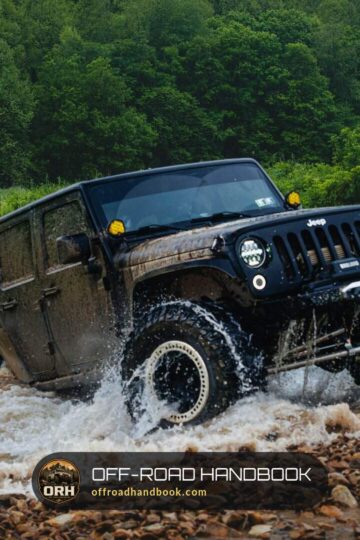
- Water in the intake. If you did a deep water crossing and the engine stalled in or just after it, don’t keep cranking. Water in the cylinders can bend engine parts. Check the air filter and intake for water and get help if you find any.
- Clogged air filter. Dusty trails can choke a filter in a single day. Check it.
- Wet or muddy electrical connectors. Mud and water can get into sensor connectors, especially at the crankshaft and camshaft position sensors. A fault code will usually point to the one involved.
- Fuel. Low fuel on steep angles can starve the pump. Also check for a damaged fuel line or tank from a rock strike.
- Battery and charging. A weak battery or damaged alternator wiring can cause stalling, especially with lights and accessories running.
Scan for codes before clearing anything. They are the fastest way to narrow down the problem. If it stalled while moving, our guide to why a Jeep shuts off while driving covers the order of checks and the NHTSA stall recalls.
Wrangler auxiliary battery keeps dying
Wrangler JLs with Engine Stop-Start (ESS) have a small auxiliary battery alongside the main one to support the stop-start system. When it starts to fail, the most common early sign is an “ESS Unavailable” message showing up more often. Owners also report random warning lights, the radio cutting out, and the main battery running down.
- Test both the auxiliary and the main battery. A failing auxiliary battery can pull the main one down.
- Replace the auxiliary battery with the correct part for your Jeep. They are small and a common wear item.
- Check any accessories you’ve added. Light bars, fridges, dash cams, and winches wired directly to the battery can drain it when parked.
- Keep the battery terminals and ground cables clean and tight. Off-road vibration loosens them.
If your key fob stopped being detected after you changed its battery, see our guide on why a Jeep key fob is not detected.
If only the USB ports quit, see the Wrangler USB port guide for the three USB fuses Jeep lists and which ports carry data. If the touchscreen freezes or goes dark instead, follow the Jeep touchscreen reset and recall checklist. If the battery drains with the lights left on, see why Jeep interior lights will not turn off.
FAQs
At walking pace there’s almost no airflow through the radiator, so everything depends on the fan and a clean radiator. Mud in the radiator, a weak fan clutch or electric fan, low coolant, and crawling in 4H instead of 4L are the usual causes.
It’s common, but it means the brakes are very hot and close to fading. Use 4L, a low gear, and engine braking, and stop to let them cool if you smell them.
Most often it’s mud or grass burning off the exhaust. Clear it out, because dry grass on a hot exhaust can start a fire. Check the brakes, clutch, and for oil leaks if the smell continues.
The stop-start system isn’t available. It often appears when the auxiliary battery or the main battery is weak, and it can also appear in normal conditions such as when the engine is still cold.
Related guides: easy fixes when a Jeep is overheating, why a Wrangler smells like antifreeze, why Wranglers have two batteries, how to clean your Jeep after off-roading.
If the transmission temperature light came on, see Wrangler automatic shifting problems for the limp-mode reset and which bulletins apply.
Related guides
- ATV and UTV Troubleshooting: Bogging, No-Start, Overheating, Belts
- Jeep Problems After Mud or Water: Shaking, Brakes, ABS and Smells
- Jeep Gladiator Rubicon vs Mojave Off Road: Which Trim Fits the Trail?
If the engine will not start after a trail day, work through our Grand Cherokee no-start checklist.

I'm Suryashankar Dasgupta, the founder of Off-Road Handbook. I've been off-roading for years in the USA, including California and Texas, and have ridden mountain and desert terrain abroad. I've also driven a Jeep Compass for more than seven years, so I know the day-to-day side of Jeep ownership first-hand, from the Uconnect screen to the warning lights. Every guide here is researched from manufacturer owner's manuals, NHTSA recall and service-bulletin records and other trusted sources, checked against them before it is published, and corrected when we find a mistake. You can read how we work in our editorial policy: https://offroadhandbook.com/editorial-policy/
Like our off-road guides? Add Off-Road Handbook as a Google Preferred Source so our latest Jeep, ATV, UTV, trail, recovery, and off-road troubleshooting articles can appear more often in your Google Search experience.
Add us as a Preferred Source