Can a 2WD Vehicle Drive Forest Service Roads? What You Need
Last updated on October 18th, 2026 at 03:40 pm
Often yes, but it depends on the road, not just your drivetrain. The Forest Service rates every National Forest System road from maintenance level 1 to 5. Levels 3, 4 and 5 are maintained for standard passenger cars in the normal season of use, and level 2 roads are maintained only for high-clearance vehicles. Four-wheel drive matters less than clearance, tires and weather.
A 2WD pickup or crossover with decent tires will handle most graded gravel roads. It can struggle or get stuck on a level 2 road that is rutted, rocky, steep or wet. Level 1 roads are closed to motor vehicles. Here is how to tell them apart before you leave pavement.
What the Forest Service maintenance levels mean for your vehicle
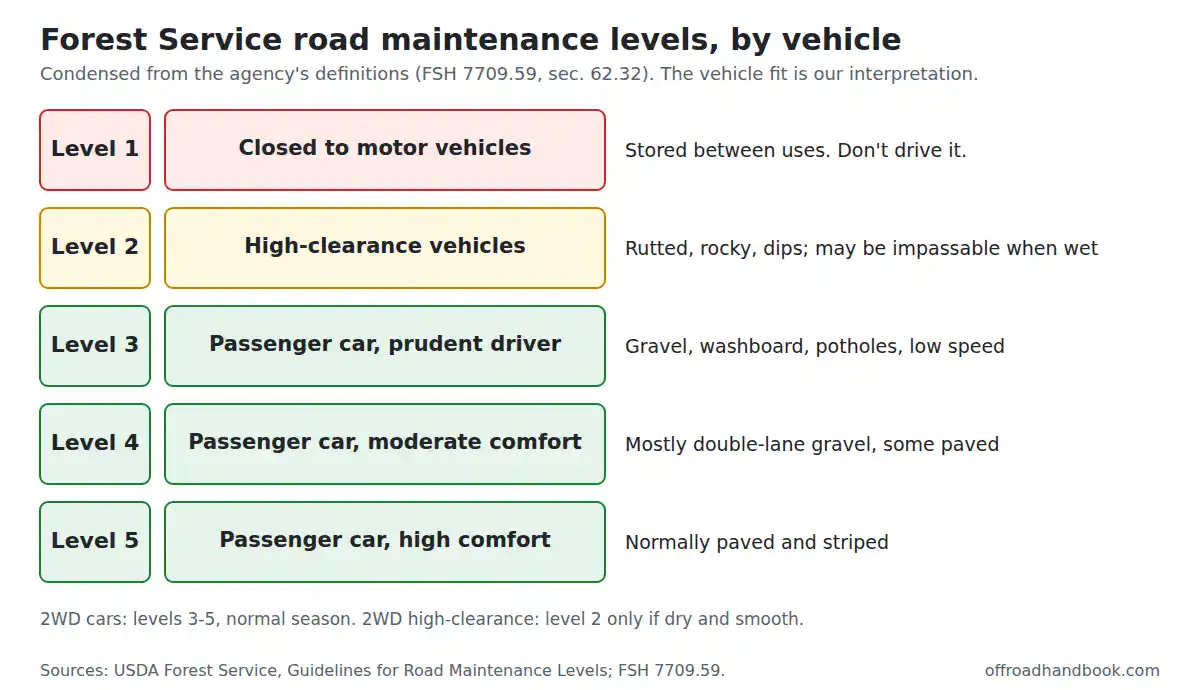
The agency defines the five levels in its Road System Operations and Maintenance Handbook (FSH 7709.59, section 62.32) and explains them in its Guidelines for Road Maintenance Levels. The table below condenses those definitions and adds a practical vehicle column. The last column is our own interpretation of the agency language, not an official rating.
| Maintenance level | What the Forest Service says | Typical surface and character | Practical fit for your vehicle |
|---|---|---|---|
| 1 | Roads in storage between intermittent uses; managed with a "prohibit" strategy | Any construction standard; may be overgrown or deliberately deteriorating | Closed to motor vehicles. Do not drive it, whatever your rig. |
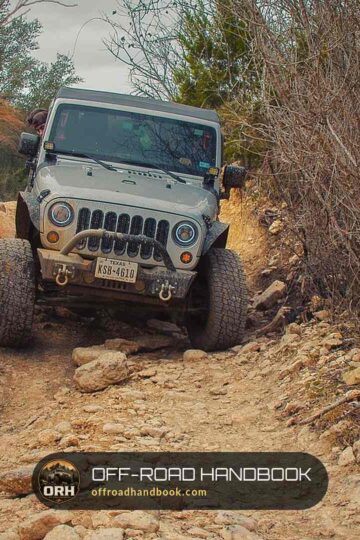
| 2 | Open for high-clearance vehicles; passenger car traffic and comfort are "not considerations" | Native or pit-run surface, dips and cross-drains, little or no signing, surface smoothness not considered; may be impassable in bad weather | High-clearance 2WD can manage dry, smooth sections. 4WD and all-terrain tires add margin on ruts, rocks, grades or wet ground. Cars are not appropriate. |
| 3 | Open and maintained for a prudent driver in a standard passenger car; comfort is not a priority | Usually single-lane gravel with turnouts, low speeds, potholes and washboarding, warning signs | Passenger cars, crossovers and 2WD trucks in the normal season. Slow down for washboard and potholes. |
| 4 | Moderate comfort at moderate speeds for passenger cars | Mostly double-lane gravel, often dust-treated; some paved | Any street-legal car. Gravel and speed are the main hazards. |
| 5 | High comfort and convenience for passenger cars | Normally double-lane and paved, striped; some are dust-treated gravel | Any street-legal car. |
Sources: USDA Forest Service, Guidelines for Road Maintenance Levels (quoting FSH 7709.59, sec. 62.32); FSH 7709.59, Road System Operations and Maintenance. The "practical fit" column is our own summary.
Note the wording: levels 3 to 5 are maintained for passenger cars during the "normal season of use." After a storm, a washout or snowmelt, a level 3 road can be worse than the agency intends. Level 2 roads, by definition, "may not be passable during periods of inclement weather."
Check the MVUM before you go
Each national forest publishes a Motor Vehicle Use Map (MVUM), the legal document for where motor vehicles may travel. Roads and trails that are not on it are closed to motorized use, even if they look well worn. Some forests, such as the Black Hills, note that violations can bring fines up to $5,000 and up to six months in jail under federal law.
The MVUM also limits which vehicles may use a route. Classes include highway-legal vehicles only, all vehicles, and size-limited ATVs or UTVs. A route shown as open does not mean it is maintained or suitable for your vehicle, so use the map for legality and the forest office for current conditions. Wayne National Forest in Ohio shows how this plays out: its OHV trails stop at 50 inches wide, so Jeeps stay on roads, as our guide to Ohio 4x4 trails explains. Our guide to off-road trail etiquette and rules covers staying on designated routes and sharing the trail.
If you plan to camp, motor vehicle use off roads for dispersed camping is allowed only where the MVUM designates it, generally up to 300 feet from the road centerline. Rules vary by forest, so read the legend for your unit.
What your vehicle actually needs
Ground clearance
Clearance is the main difference between a level 3 road and a level 2 road. Crowned centers, rocks and deep ruts hit differentials, exhaust and low plastic. Measure your own lowest point rather than trusting a spec sheet; our guide to checking if your ground clearance is enough shows how.
Tires
Gravel and sharp rock punish tires more than pavement does. Make sure every tire, including the spare, is in good condition and inflated to the pressure on your door-jamb placard before leaving pavement. Some drivers air down for traction and comfort on washboard, but only with a compressor to air back up; see our off-road tire pressure guide. All-terrain tires resist punctures and cuts better than most highway tires, though street tires can work on dry gravel (what works and what does not). Carry a plug kit and know how to use it.
2WD versus 4WD
Four-wheel drive helps you get going on loose, steep or slick ground. It does not help you brake, steer or avoid a slide, and it does not add clearance. If you have 4WD, learn how to shift into 4-Low before you need it on a hill.
Recovery and safety gear
- Full-size spare, jack that works on soft ground, and lug wrench
- Tire plug kit and a 12-volt compressor
- Shovel, traction boards or sturdy boards, and gloves
- A recovery strap rated for your vehicle, used only with proper recovery points (see kinetic rope vs snatch strap vs tow strap)
- Extra water, food, warm clothing and a paper map or offline map, because cell service is often absent
- Tell someone your route and return time
Weather, mud and water
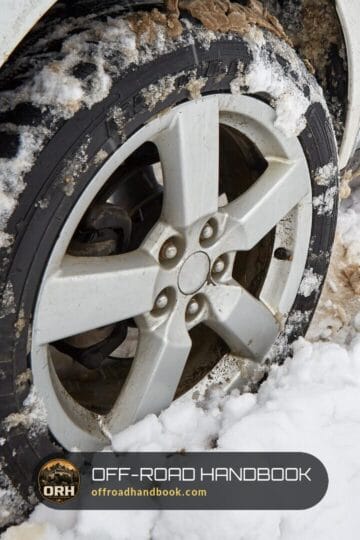
Rain changes the rating. Many forest roads use native or pit-run surfaces that turn slick and rutted when wet, and a 2WD vehicle with street tires may not climb out. If the forecast shows heavy rain, snow or freezing temperatures, pick another day or another road. Clay-rich soil and mud also pack into wheel wells and brakes; read our notes on problems after mud or water.
Do not enter moving or unknown-depth water. Before any crossing, use our water fording depth checker and walk the crossing when you can do so safely.
When to turn around
- The road narrows, gets rougher or steeper than you expected, and you cannot see a place to turn around ahead
- You are scraping the underbody repeatedly, or the ruts are deeper than your clearance
- Water is running across the road, or the surface is slick mud or fresh snow
- You see a closure sign, gate or a route not shown on the MVUM
- You have no cell service and no recovery option if you get stuck
- Light is fading or the weather is changing
Turning around while you can is far cheaper than a tow from a remote forest road. If you do get stuck, stay with the vehicle unless you know where help is. Planning a trip near Las Vegas? Our guide to legal Las Vegas off-road trails shows which BLM routes need high clearance.
FAQ
Can a front-wheel-drive car drive on Forest Service roads?
On level 3, 4 and 5 roads in the normal season, yes. The agency maintains them for standard passenger cars. Level 2 roads are not suitable for passenger cars, and level 1 roads are closed.
How do I find out the maintenance level of a road?
Ask the ranger district for the maintenance level and current conditions. Some Motor Vehicle Use Maps list it, but many roads are not signed with their level.
Do I need high clearance for every dirt road?
No. Many graded gravel roads are fine for regular cars. High clearance is the baseline for level 2 roads, which have little maintenance and may have rocks, ruts and dips.
Is 4WD required on a level 2 road?
Not by definition. The Forest Service describes level 2 as for high-clearance vehicles, not four-wheel drive. Conditions such as steep grades, mud or snow can make 4WD worth having.
Can I drive any road that appears on a map app?
No. Map apps often show closed or unauthorized routes. The MVUM is the legal reference.
In Georgia, for example, only one national forest OHV system within about 90 miles of Atlanta lists full-size 4x4s; see our guide to legal off-road trails near Atlanta.
Safety note
Remote forest roads can be hours from help. Check closures, fire restrictions and weather with the local ranger district before you go, and do not rely on a phone signal.
Sources
- USDA Forest Service, Guidelines for Road Maintenance Levels (National Technology & Development Program)
- USDA Forest Service, FSH 7709.59, Road System Operations and Maintenance Handbook, sec. 62.32
- Black Hills National Forest, Motor Vehicle Use Map FAQs
- Cibola National Forest, MVUM dispersed camping and motor vehicle use notice

I'm Suryashankar Dasgupta, the founder of Off-Road Handbook. I've been off-roading for years in the USA, including California and Texas, and have ridden mountain and desert terrain abroad. I've also driven a Jeep Compass for more than seven years, so I know the day-to-day side of Jeep ownership first-hand, from the Uconnect screen to the warning lights. Every guide here is researched from manufacturer owner's manuals, NHTSA recall and service-bulletin records and other trusted sources, checked against them before it is published, and corrected when we find a mistake. You can read how we work in our editorial policy: https://offroadhandbook.com/editorial-policy/
Like our off-road guides? Add Off-Road Handbook as a Google Preferred Source so our latest Jeep, ATV, UTV, trail, recovery, and off-road troubleshooting articles can appear more often in your Google Search experience.
Add us as a Preferred Source