Jeep JK 3.8 Upgrades: Best Gears, Intake, Exhaust and Tuner
Last updated on October 18th, 2026 at 09:41 am
The best upgrade for a 3.8-liter Jeep JK is regearing the axles to suit your tire size. The engine makes about 202 hp and 237 lb-ft, and bigger tires make that feel even weaker, so matching the gearing to the tires gives the biggest everyday difference. Tuners, intakes and exhausts add smaller, mostly vendor-claimed gains.
The checker below shows your cruise rpm and the ratio that restores factory gearing. The table underneath ranks every upgrade by how much evidence supports it.
3.8 JK facts: engine, gearing and what changed in 2012
The 3.8-liter V6 powered the JK Wrangler through 2011 with a six-speed manual or a four-speed automatic. Spec listings such as Autobytel give 202 hp at 5,200 rpm and 237 lb-ft at 4,000 rpm. The 2012 Wrangler owner’s manual lists only the 3.6-liter engine, so a JK with a 3.8 is a 2007 to 2011 truck.
| Model (2011) | Transmission | Factory axle ratio |
|---|---|---|
| Two-door Sport and Sahara, Unlimited Sport and Sahara | 6-speed manual | 3.21 or 3.73 |
| Two-door Sport and Sahara, Unlimited Sport and Sahara | 4-speed automatic | 3.73 |
| Rubicon, two-door and Unlimited | 6-speed manual or 4-speed automatic | 4.10 |
3.8 JK cruise rpm and gear ratio checker
Arithmetic only: rpm = mph × 336.13 × axle ratio × gear ÷ tire diameter. Factory ratios are from the 2011 Jeep Wrangler owner’s manual towing chart; the 0.69 fourth gear is from Quadratec’s transmission guide. Measure your real tire diameter, and keep in mind the manual warns that a different tire size gives false speedometer and odometer readings.
Upgrade ranking: what the evidence supports
| Upgrade | What it changes | Evidence | Watch for |
|---|---|---|---|
| Regear both axles | Restores acceleration and keeps the automatic from hunting on larger tires | Arithmetic plus owner reports; this is gearing, not horsepower | Speedometer and odometer error until recalibrated; the manual warns about this |
| Tuner or power module | Shift points, tire-size correction, throttle response | Vendor claim of up to 25 hp for one Stage 2 module; no dyno data on the page | Module needs 91 octane, a 180-degree thermostat and a free-flow exhaust |
| Cold air intake | Airflow and sound | Owners describe gains as small on this engine | Keep it from drawing hot engine-bay air |
| Cat-back exhaust | Sound, a little clearance | Owners say little change without headers | Fix leaks first |
| Supercharger or turbo kit | Large power increase | No independent dyno data found | Cost, heat, fuel and emissions legality; verify fitment with your transmission |
| Lift and larger tires | Capability, not speed | Jeep manual warns about false speedometer readings | Early ESC activation; adds load the 3.8 already struggles with |
1. Regear the axles for your tire size
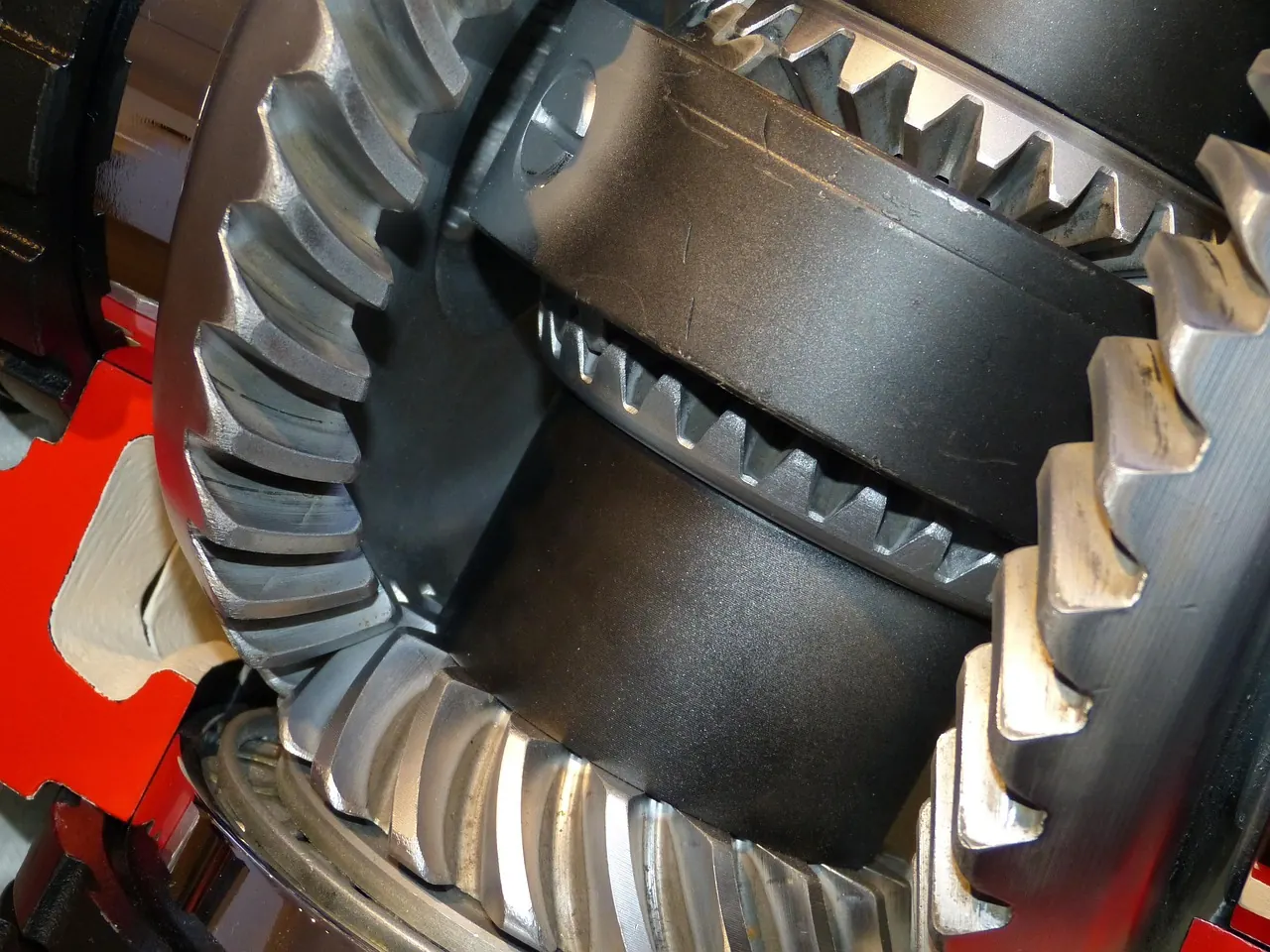
Taller tires act like a numerically lower axle ratio. The engine turns fewer rpm at highway speed and has less leverage, so the automatic shifts more often. Fitting a lower gear (numerically higher ratio) restores that leverage.
The checker above does the math. Keeping factory rpm needs a ratio of factory ratio times new tire diameter divided by stock diameter. Owners often go one step higher on a heavy 3.8, which is a choice about feel, not a Jeep spec.
Both axles must match, and setup needs correct pinion depth and backlash, so most owners use a shop that does Jeep axles. No source gives a verified price for the job, so get written quotes.
Afterwards, recalibrate the speedometer. The Jeep manual says tires of a different size can give false speedometer and odometer readings. A tuner can fix this and update shift points.
2. Tuner or power module
For a 3.8, a tuner is mostly useful for correcting tire size and shift behavior. The Jet Stage 2 module listing claims up to 25 hp, but the listing shows no dyno data and requires 91-octane fuel, a 180-degree thermostat and a free-flow exhaust. It is listed as 50-state legal under CARB E.O. D-234-5.
3. Intake and exhaust
Owner discussions describe the gains from an intake or cat-back as small without other changes. If you add one, choose a design that keeps intake air cool and keeps clearance for trails.
4. Lift, bigger tires and ESC
Jeep’s manual notes that vehicles modified with larger tires or lifts may see early stability-control activations, and describes a button procedure to turn ESC off permanently on 4WD models. It also warns that any modification can affect roadworthiness and safety.
If you are comparing the newer engine, our 3.6 Jeep JK upgrade guide covers it. For tire math, use the tire size calculator and the regear calculator, and read the full calculator list.
FAQs
Regearing the axles to match your tires. It restores the acceleration lost to larger tires. A tuner is a good second step to correct the speedometer and shift points.
Use the checker above. To match factory rpm, multiply your factory ratio by new tire diameter divided by stock diameter. Many owners step higher on a 3.8, but that is a preference rather than a Jeep spec.
Spec listings give about 202 hp at 5,200 rpm and 237 lb-ft at 4,000 rpm.
Owners describe the gain as small. Regearing makes a bigger difference.
The 3.8-liter V6 ran in the JK through 2011. The 2012 Wrangler owner’s manual lists only the 3.6-liter engine.

I'm Suryashankar Dasgupta, the founder of Off-Road Handbook. I've been off-roading for years in the USA, including California and Texas, and have ridden mountain and desert terrain abroad. I've also driven a Jeep Compass for more than seven years, so I know the day-to-day side of Jeep ownership first-hand, from the Uconnect screen to the warning lights. Every guide here is researched from manufacturer owner's manuals, NHTSA recall and service-bulletin records and other trusted sources, checked against them before it is published, and corrected when we find a mistake. You can read how we work in our editorial policy: https://offroadhandbook.com/editorial-policy/
Like our off-road guides? Add Off-Road Handbook as a Google Preferred Source so our latest Jeep, ATV, UTV, trail, recovery, and off-road troubleshooting articles can appear more often in your Google Search experience.
Add us as a Preferred Source