CFMOTO ZForce 800 Trail Problems: Water, Overheating and EPS
Last updated on October 21st, 2026 at 08:56 pm
This post contains Amazon affiliate links. As an Amazon Associate I earn from qualifying purchases, at no extra cost to you.
The CFMOTO ZForce 800 Trail’s most common problems are water in the CVT after a crossing, overheating from a mud-packed radiator, hard starting from a weak battery, blown fuse or fuel fault, and rough idle from a dirty air filter or throttle body. Nearly all of them start with free checks: drain the CVT, wash the radiator, test the battery and fuses, and read the blink codes.
Overheating that continues after the radiator is clean, lost steering assist and anything brake-related belong with a dealer. Every service number below comes from the CFMOTO ZFORCE 800/800EX owner’s manual, recalls come from the CPSC, and anything that is only an owner report is labeled that way.
ZForce 800 Trail problems at a glance
Start with the row that matches what the machine is doing. The checks are in the order a mechanic would run them, free ones first.
| Symptom | Check first (free) | Likely cause | Dealer? |
|---|---|---|---|
| Power loss, slipping or burnt smell | CVT drain bolt, CVT inlet, belt | Water or dirt in the CVT, glazed belt | If water is found, yes |
| Gauge in the red zone | Radiator fins, coolant reservoir, fan fuse F6 | Mud-packed radiator, low coolant, fan circuit | If it persists after cleaning |
| Cranks but will not start | Fuel pump prime, fuses F2 and F5, plug, MIL codes | Fuel, spark or crank-sensor fault | No spark or codes |
| No crank, clicking or dead dash | Brake pedal, Neutral, battery, main fuse F1 | Weak battery, loose ground, blown fuse | Neutral light stays off |
| Rough idle, hesitation, stalling | Air filter, moisture catch tube, battery, codes | Dirty filter or throttle body, low voltage | Idle speed or sensor faults |
| Soft or weak brakes | Fluid level, pad wear, brake test after water | Wet brakes, worn pads, old fluid | Yes, for any brake service |
| Shaking above about 20 mph | Tire pressure, wheel nuts, tire and wheel runout | Tire or wheel runout, loose nuts, bearings | If bearings or wheel are bad |
| Heavy steering or EPS warning | Restart once, battery and charging | EPS or sensor fault | Yes |
| Rear squeak or clunk | Grease fittings, shock and bushing play | Dry pivots, worn bushings | If play remains |
The table is a map, not a verdict. If the machine shows two symptoms at once, such as overheating and a burnt-belt smell, work through the CVT row first, since both involve the same drive system.
Everything in the table can be checked with basic hand tools and a meter. Anything marked for a dealer is there because the manual says so or because it needs a scan tool or special procedures.
Which ZForce 800 this guide covers
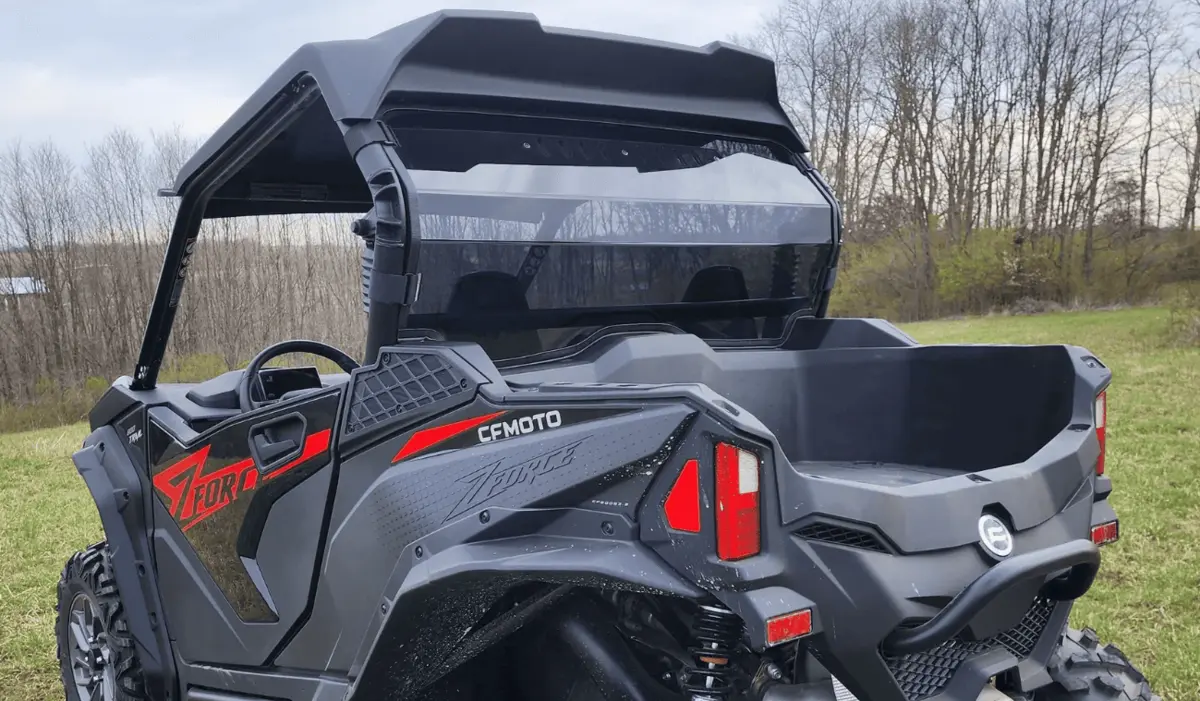
The Trail is the 50-inch-wide ZFORCE 800. CFMOTO’s ZFORCE 800 owner’s manual used here covers the 800 and the wider 800EX, which share the 800 cc V-twin, CVT and EFI system. Service numbers such as plug gap, fuse ratings and intervals come from that book.
Tire size, tire pressure and fuse layout can differ by model year and trim, so check the labels on your own machine. The manual’s width is the EX’s 59 inches, not the Trail’s 50.
| Spec | 2020 ZFORCE 800 Trail |
|---|---|
| Engine | 800 cc four-stroke, liquid-cooled V-twin, SOHC, fuel injected |
| Output (as listed) | 62 bhp at 6,700 rpm, 53 lb-ft at 6,000 rpm |
| Drive | CVT, 2WD/4WD, front differential lock |
| Width / wheelbase | 50 in / 80 in |
| Ground clearance | 11.2 in |
| Dry weight | 1,228 lb |
| Fuel tank | 7.1 gal |
| Tires | 26x9-14 front, 26x11-14 rear |
| Brakes / steering | Hydraulic disc front and rear / power steering |
Output claims are the least reliable numbers in this class. The figures that matter for diagnosis are the service numbers in the next table, which come straight from CFMOTO’s manual.
Engine oil is SAE 15W-40, 2.9 L with a filter change. The front differential and rear gearcase take SAE 80W90 GL-4, 0.30 L and 0.25 L at a periodic change, replaced every 100 hours or 3,000 km.
| Item | Value from the manual | Interval or note |
|---|---|---|
| Spark plug | NGK DCPR8E, gap 0.8–0.9 mm, 20 N·m | Inspect at 100 h or 3,000 km; replace every 200 h or 6,000 km |
| Idle speed | 1,300 ± 100 rpm | EFI machine; a dealer sets it |
| Battery | 12 V, 30 Ah, maintenance-free | Check terminals every 50 h or monthly |
| Coolant | CFMOTO premixed, 2.9 L total, reservoir 0.3 L | Replace every 2 years, 6,000 km or 200 h |
| Drive belt | — | Replace every 100 h or 3,000 km |
| CVT inlet, outlet, drain tube | — | Clean and drain every 20 h or 750 km |
| Air filter | Paper element | Replace at 20 h or 750 km, then every 100 h; clean the moisture catch tube when needed |
| Brake fluid | DOT 3 or DOT 4 | Replace every 2 years |
| Wheel nuts | 55 N·m front and rear | Brake pads: dealer replaces at 1.5 mm lining |
| Tire pressure | Manual lists 10 psi front, 14 psi rear | Use your machine’s tire label if it differs |
| Wading limit | 30 cm (12 in) | Never deeper or in fast water |
The manual defines severe use as frequent immersion in mud, water or sand, racing, long low-speed heavy work, extended idle and short cold-weather trips. Riders in those conditions should service more often than the chart.
Diagnosis flowchart
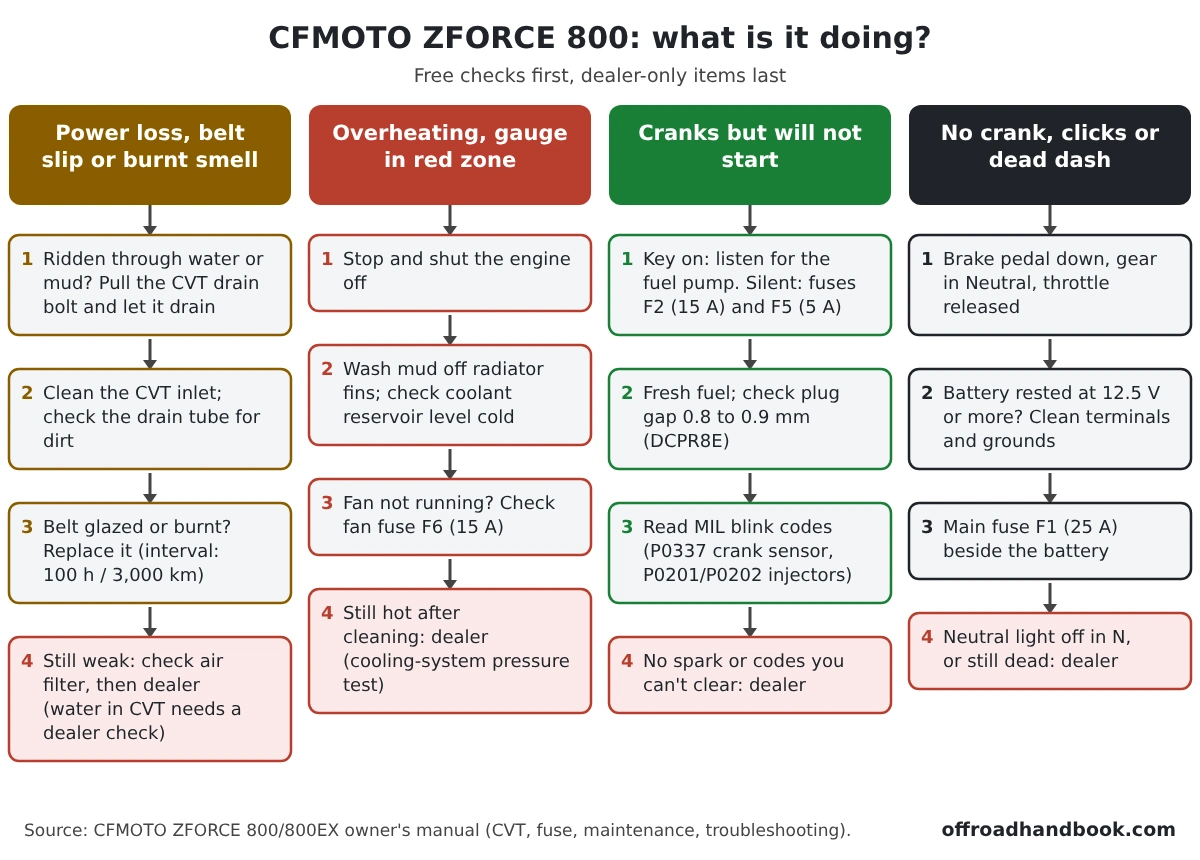
Read the chart top to bottom in the column that fits. Each step is a free check except the last one, which is the point to stop and call a dealer.
The fuse numbers and amp ratings are from the manual’s fuse table, which is repeated in full further down.
ZForce 800 symptom checker
Pick what the machine is doing and whether it just went through water or deep mud. You get the checks in order, built only from the manual-based steps in this guide.
What is your ZForce 800 doing?
Based on the CFMOTO ZFORCE 800/800EX owner’s manual sections quoted in this post. It narrows the checks; it does not replace a dealer diagnosis.
Treat the output as a starting order of checks, not a diagnosis.
The checker only asks two questions because the order of checks matters more than the number of inputs. The sections below explain the reasoning and the fix for each problem.
1. Power loss, slipping or burnt smell after water or mud
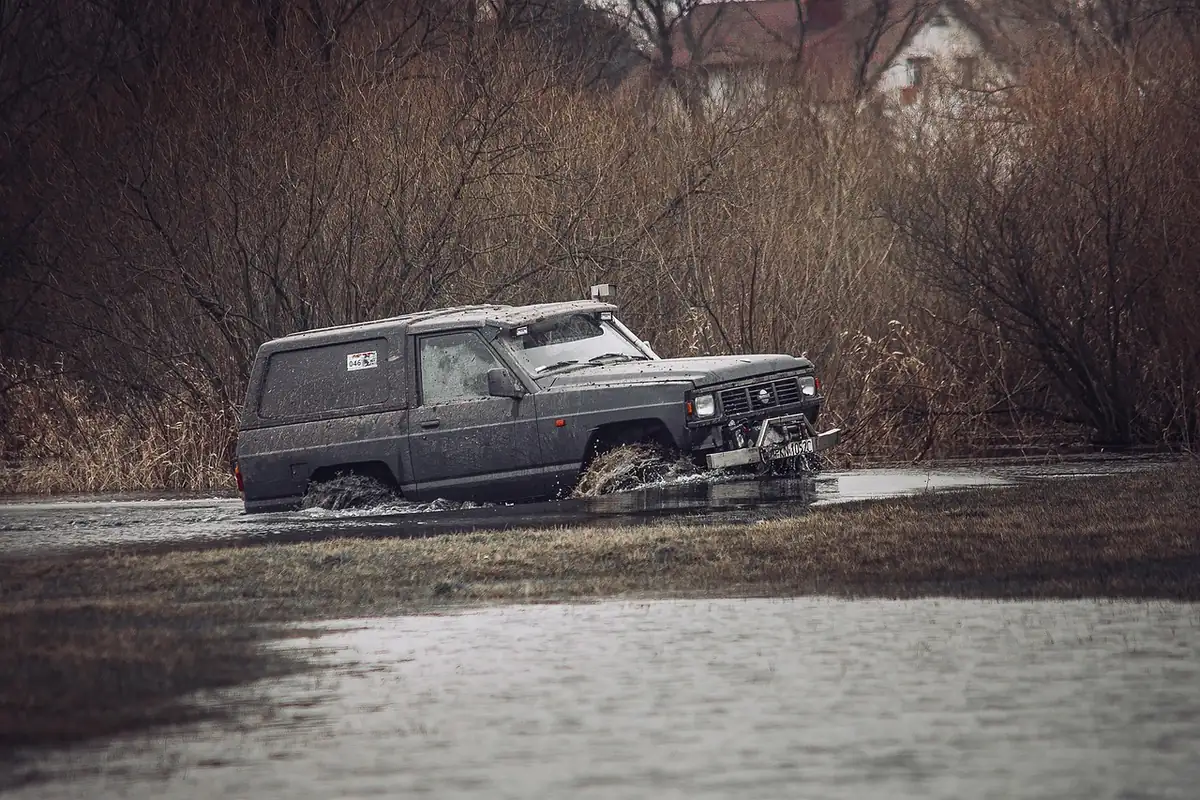
The usual picture is revs rising without the machine pulling, jerky takeoff or a burnt-rubber smell after a crossing or a long, slow climb. The manual’s order of suspects is water in the CVT housing, dirt in the CVT inlet or drain tube, a glazed or burnt belt, and a clogged air filter.
- Park, shut the engine off and remove the CVT drain bolt to let any water out.
- Remove and clean the CVT inlet if water or dirt is present.
- Inspect the belt for glazing or burn marks. The manual replaces the belt every 100 hours or 3,000 km.
- Check the air filter and clean the moisture catch tube.
The manual adds that residual water can damage other engine components, so have a dealer check the machine after you drain it. If a large amount of water is in the air filter housing, the dealer should check for water in the crankcase.
The manual’s wading limit is 30 cm (12 in), well under the “knee deep” that owner posts often describe. If the machine is submerged, do not start it; have it transported to a dealer. Our hydrolock guide and water depth checker cover the details.
Belt burn is not only a water problem. The manual lists high-range slow driving, steep starts, towing and plowing as causes, and says to use low range for those jobs and to warm the engine in cold weather.
2. Overheating
Overheating on a ZForce 800 comes down to a mud-packed radiator, low coolant, an overloaded or slowly driven machine, or a fan circuit that is not working. The manual puts radiator cleanliness on the pre-ride checklist for that reason.
- If the gauge is in the red zone, stop and shut the engine off; the manual says to stop immediately.
- Wash mud and debris off the radiator fins.
- With the engine cold, check the coolant reservoir is between the upper and lower marks. Never open the radiator cap or loosen the drain plug on a hot engine.
- Check fan fuse F6 (15 A) in the fuse box in front of the steering column.
- Cut the load, and use low range for slow, heavy work.
Use CFMOTO premixed coolant. The system holds 2.9 L and the manual replaces it every two years, 6,000 km or 200 hours. Tap or distilled water is a temporary fix only, and the manual wants the dealer to replace it and check the cooling system afterward.
If it still runs hot with a clean radiator and good coolant, the radiator cap and cooling-system pressure are the next inspection items (every 200 hours). That is dealer territory. The manual has no fan-switch test procedure, so none is listed here.
3. Will not start, or will not crank
Separate the two cases first. No crank means the starter is not turning: battery, grounds, main fuse or the start interlock. Cranks but no start means fuel, spark or the crank sensor.
The manual’s start sequence is brake pedal down, key to start, transmission in Neutral and throttle released, and never crank for more than 10 seconds. If the Neutral light stays off in Neutral, it tells you to have the dealer inspect the wiring or shift linkage.
No crank
- Test the battery. The manual recharges a low battery to 12.5 V, and the battery needs the specified charger because a conventional charger will damage it. A digital multimeter makes this check quick.
- Clean and tighten the battery terminals and the ground cable.
- Check main fuse F1 (25 A). It is beside the battery and mounted on the starter relay.
- If you pressed the brake and shifted to Neutral and it is still dead, see a dealer.
Cranks but will not start
- Turn the key on and listen for the fuel pump. If you hear nothing, check fuses F2 (15 A) and F5 (5 A).
- Replace old or watery fuel, and check the fuel tank vent line is not kinked or plugged.
- Pull the plug. Spec is NGK DCPR8E with a 0.8–0.9 mm gap, torqued to 20 N·m. A new NGK DCPR8E spark plug is cheap insurance.
- Make sure the ground cable and the crankshaft position sensor connector are tight; the manual lists both as no-start causes.
- Read the MIL blink codes. Crank sensor codes are P0336 and P0337.
The CFMoto forum starting guide follows the same order and also suggests checking compression and valve clearance on high-hour machines. The manual inspects valve clearance at the first 20 hours and then every 100 hours.
If there is no spark and no fuel pump prime with good fuses and a charged battery, stop. That points to the ECU, relays or wiring, which a dealer should diagnose.
4. Rough idle, hesitation and stalling
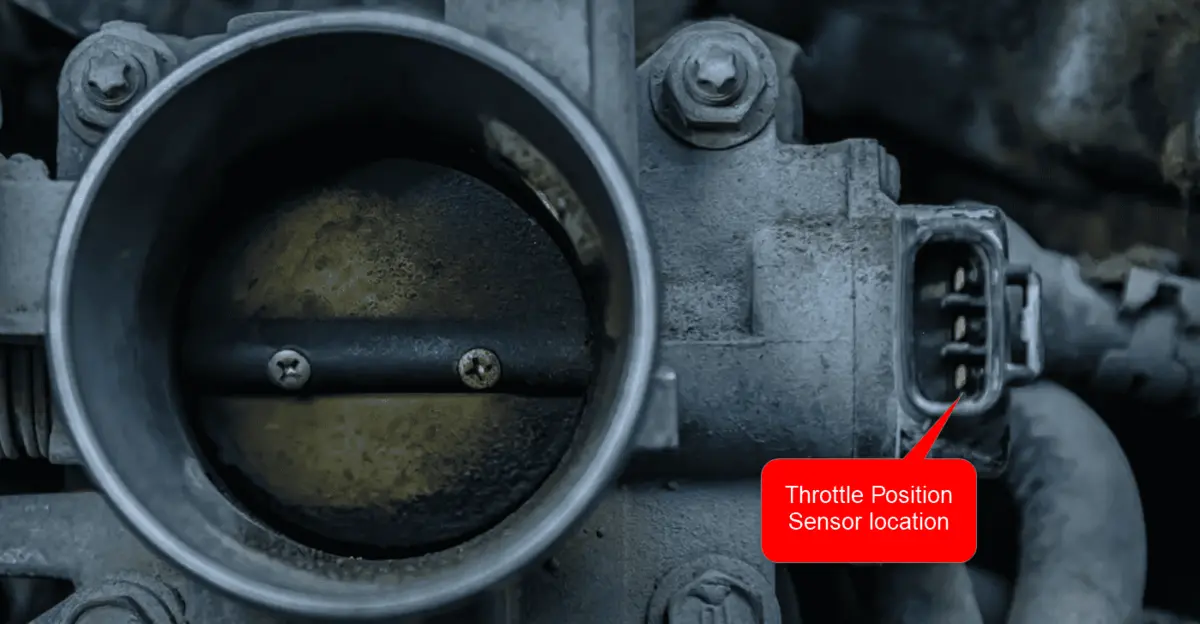
A dirty air filter is the first suspect in dusty or wet riding. One owner review on the ATV.com spec page describes a stall with no code that ended with an air filter “completely caked in dust.” It is a single report, but the check is free.
- Inspect the air filter and moisture catch tube; replace the element if it is clogged. The manual replaces it at 20 hours, then every 100 hours.
- Check battery voltage, since the manual lists low voltage as a cause of irregular running and stalling.
- Inspect the spark plug and gap.
- Check the fuel vent line and replace old fuel.
- Have the throttle body checked for dirt. The manual inspects it at 20 hours and every 100 hours and says to clean it as needed.
Idle speed is 1,300 ± 100 rpm and is not something to adjust on a fuel-injected machine. If a code for idle control (P0505) or lean running (P0171, P0174) shows, it is a dealer job.
5. Soft or weak brakes
Wet brakes are the most common reason for a soft first stop, so test them after any water and apply them several times to dry them out, as the manual says. After that, look at fluid level, pad wear and fluid age.
- Check the fluid level; low fluid lets air into the system and reduces braking.
- Check pad wear. The manual has the dealer replace pads when lining reaches 1.5 mm.
- Note the fluid age. Spec is DOT 3 or DOT 4, replaced every two years, and water in the fluid lowers its boiling point and can cause vapor lock.
The manual says brake service needs professional knowledge and should be done by a dealer, so bleeding and master cylinder work are not a driveway job here. A pedal that stays soft after fresh fluid points to the master cylinder or calipers.
6. Shaking above about 20 mph
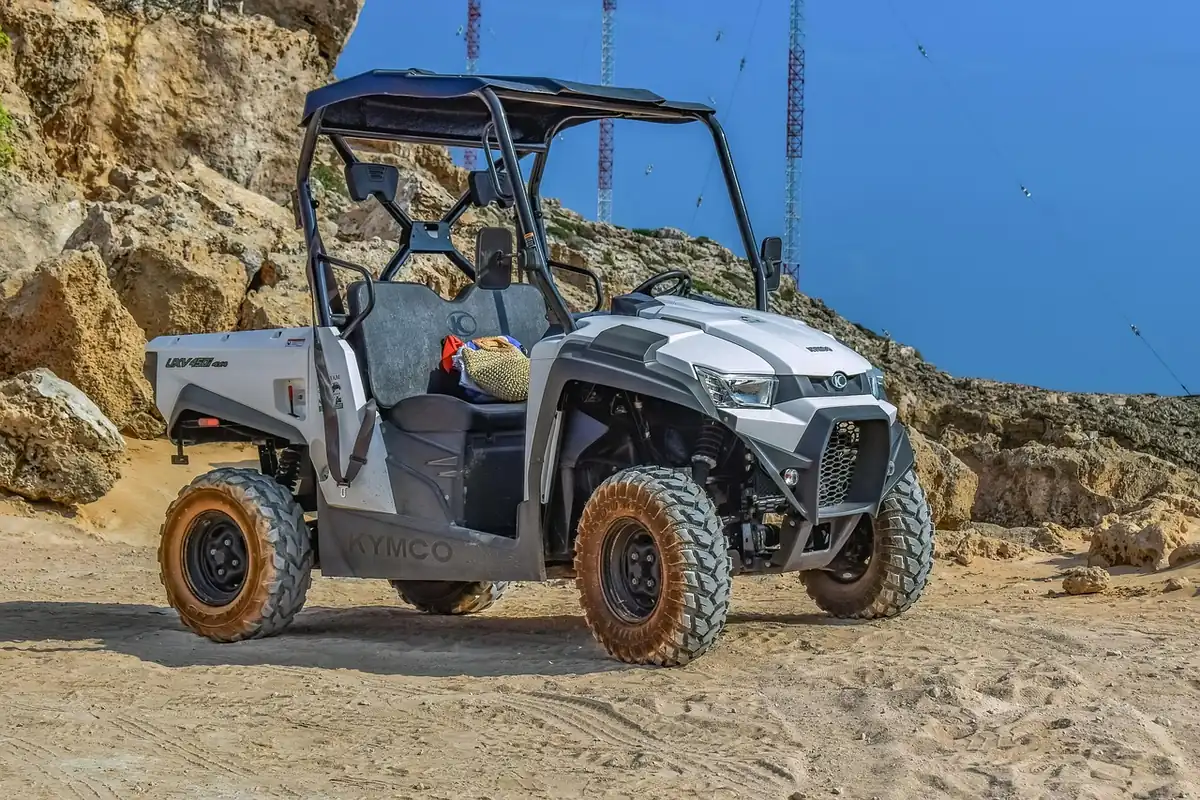
Shake that appears at a steady speed is almost always a wheel or tire issue, not the engine. A bead that is not seated evenly, a bent wheel, a bulge or loose nuts will all do it.
- Set pressures with a 0–15 psi tire gauge. The manual lists 10 psi front and 14 psi rear; use your tire label if it differs.
- Torque the wheel nuts to 55 N·m front and rear.
- Jack each wheel and spin it, watching for wobble, then check for bearing play. The manual inspects wheel bearings every 50 hours or 1,500 km.
- Check the drive shaft boots for tears.
A bead that has slipped can be fixed with the steps in our tire bead guide. Our tire pressure calculator is for larger tires, so follow the machine’s label for a stock UTV.
7. Heavy steering or an EPS warning
The Trail has power steering as standard, per the ATV.com spec sheet. The manual used here has no EPS section, so there is no sourced fuse or sensor test to give you here.
If assist drops out, stop, restart once, and check battery voltage and terminals, because low system voltage sets code P0562 and the whole electrical system depends on a good battery. Do not guess at fuses. If assist does not return, have a dealer read the EPS faults; steering still works without assist but takes more effort, so drive slowly home.
8. Rear suspension squeak or clunk
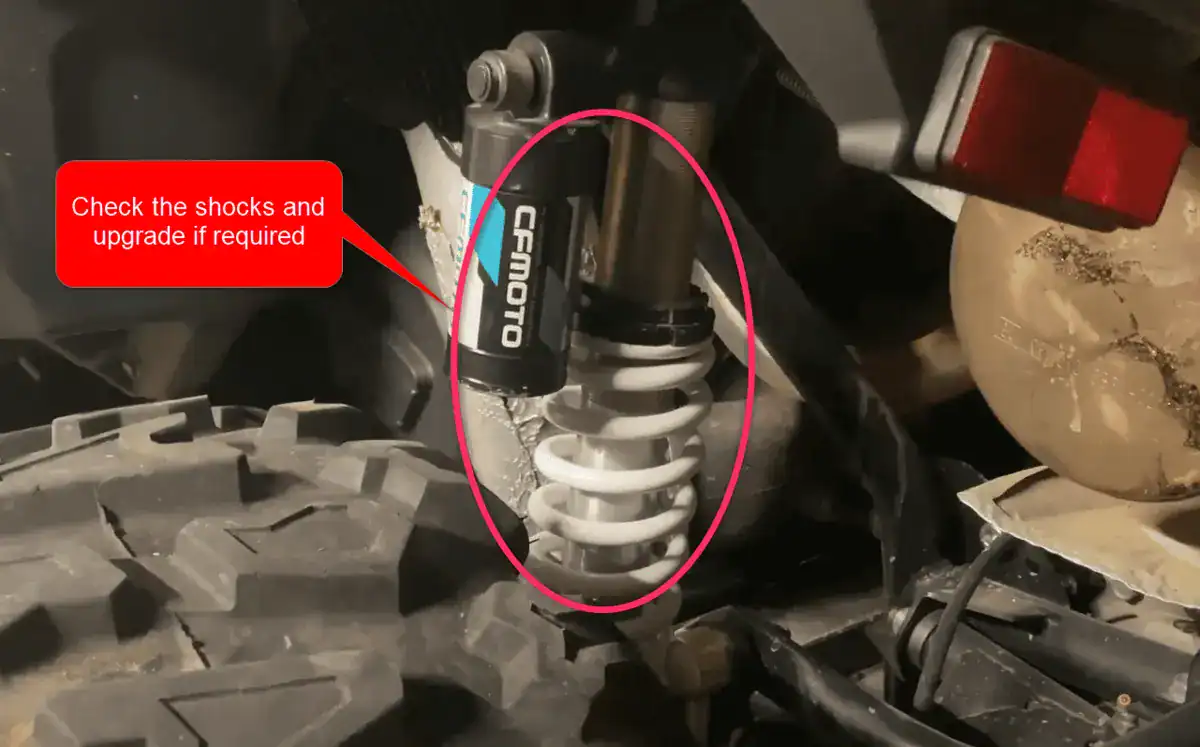
Squeaks from the rear usually mean dry pivots. The manual calls for lubricating the front and rear suspension and steering every 20 hours, 3 months or 600 km, and tie rod ends and pivots take grease.
Owners and used-buyer guides, such as OffroadingPro’s ZForce 800 list, flag the rear lower A-arms for wear, but no CFMOTO bulletin or manual page backs a specific defect. Grease the fittings, then check by hand for play at the A-arm bushings and shock mounts.
If you still have play or a clunk after greasing, have the bushings and shock mounts inspected. A loose wheel nut can feel like a suspension clunk, so confirm 55 N·m first.
Recalls that cover the ZForce 800 Trail
| Recall | Date | Models | Problem | Remedy |
|---|---|---|---|---|
| 19-711 | Oct 31, 2018 | 2018 ZFORCE 500 Trail, 800 Trail and 1000 (about 1,800 vehicles) | Throttle pedal can be pushed past the stop and not return to idle | Free dealer repair |
If you own a 2018, the recall is the first thing to check, because a stuck throttle is a crash hazard. For other years, a dealer can run the VIN for open recalls.
CFMOTO USA lists recalls under Customer Care, then Vehicle Recall, if you want to check the VIN yourself.
Fuse table
| Fuse | Circuit | Rating |
|---|---|---|
| F1 | Main fuse (beside the battery, on the starter relay) | 25 A |
| F2 | Fuel pump, EFI, ignition power, auxiliary starter relay | 15 A |
| F3 | Turn signal, position light, dashboard, horn, differential motor relay | 10 A |
| F4 | DC outlet, MP3, navigator | 15 A |
| F5 | ECU power supply | 5 A |
| F6 | Fan motor | 15 A |
| F7 | Headlight | 10 A |
A fuse that blows again right after replacement means a short, not a bad fuse. Stop there; the manual says to consult your dealer.
Reading the MIL blink codes
The manual describes reading codes without a scan tool. With the key on and no code, the MIL stays on for 5 seconds and goes out. With a code, it flashes the digits after the 5 seconds; ten blinks mean a zero.
Enter a code from your machine below. The list is every code in the manual’s EFI table.
ZForce 800 code lookup
Descriptions are from the CFMOTO ZFORCE 800/800EX owner’s manual EFI code table. The first check is general guidance, not a test procedure.
FAQs
There is one CPSC recall for the 800 Trail (2018 throttle pedal, 19-711). Reported problems cluster around water in the CVT, cooling and neglected filters, but no defect-rate data exists, so maintenance and recall checks matter most.
The manual’s limit is 30 cm (12 in), and never in fast-flowing water. If the machine is submerged, do not start it and have it transported to a dealer.
Water in the CVT housing is the usual cause. Pull the CVT drain bolt, clean the inlet, inspect the belt and have a dealer check the machine afterward.
Turn the key on and watch the MIL. After a 5-second steady light it blinks the code digits in turn, with ten blinks meaning zero. Use the lookup above to decode them.
The manual specifies an NGK DCPR8E with a 0.8–0.9 mm gap, torqued to 20 N·m.
Related guides
- ATV and UTV Troubleshooting: Bogging, No-Start, Heat and Belts
- Can-Am Defender Problems: 8 Common Issues and How to Fix Them
- Tracker 800 SX problems
- Massimo UTV problems
- Free off-road calculators

I'm Suryashankar Dasgupta, the founder of Off-Road Handbook. I've been off-roading for years in the USA, including California and Texas, and have ridden mountain and desert terrain abroad. I've also driven a Jeep Compass for more than seven years, so I know the day-to-day side of Jeep ownership first-hand, from the Uconnect screen to the warning lights. Every guide here is researched from manufacturer owner's manuals, NHTSA recall and service-bulletin records and other trusted sources, checked against them before it is published, and corrected when we find a mistake. You can read how we work in our editorial policy: https://offroadhandbook.com/editorial-policy/
Like our off-road guides? Add Off-Road Handbook as a Google Preferred Source so our latest Jeep, ATV, UTV, trail, recovery, and off-road troubleshooting articles can appear more often in your Google Search experience.
Add us as a Preferred Source